
ServiceNow Implementation Partner Selection: 7 Mistakes Costing You ROI in 2026 (Free Audit Reveals Hidden Savings)
- SnowGeek Solutions
- Feb 24
- 6 min read

I have witnessed firsthand how the wrong ServiceNow implementation partner can transform what should be a strategic investment into a costly setback. In 2026, with the Washington DC release introducing Agentic AI capabilities and regulatory frameworks like DORA reshaping IT governance across the EU, selecting the right partner has never been more critical to your bottom line.
Organizations continue to lose millions annually through preventable implementation failures. The data is sobering: companies using outdated partner evaluation methods experience 67% higher implementation failure rates compared to those adopting competency-focused vetting frameworks. This guide will walk you through the seven critical mistakes that are quietly draining your ServiceNow ROI: and the proven strategies to avoid them.
Mistake #1: Relying on Outdated Procurement Checklists
Traditional RFP processes prioritize procurement convenience over measurable competency verification. I have seen organizations waste three to six months evaluating potential ServiceNow consulting services using legacy assessment frameworks that completely ignore emerging capabilities around Agentic AI, ITOM automation, and ITAM license optimization.
The procurement checkbox mentality: "Do they have five references? Check. Do they offer 24/7 support? Check.": fails to identify partners who can deliver transformative outcomes in 2026's complex regulatory environment. While your team methodically scores vendor responses on outdated criteria, your competitors are already leveraging partners who understand Washington DC's Now Assist prompt engineering and data quality prerequisites.
The Fix: Implement a rapid competency-focused evaluation that prioritizes demonstrated expertise in your specific use cases: whether that's DORA compliance automation, ESG reporting workflows, or ITOM predictive analytics. Request live demonstrations of similar implementations and validate technical depth through scenario-based assessments rather than relying solely on written responses.

Mistake #2: Selecting Partners Without Specialized ITOM/ITAM Expertise
Generic "full-stack ServiceNow capabilities" claims create critical operational risks. The reality? ITOM and ITAM require fundamentally different technical competencies than ITSM or HR Service Delivery. A partner's ability to configure incident management workflows tells you nothing about their capacity to architect discovery patterns for hybrid cloud environments or optimize license consumption across your ServiceNow portfolio.
I have witnessed organizations commit to partners based on impressive ITSM credentials, only to discover six months into implementation that their team lacks the specialized knowledge to configure Service Mapping dependencies or implement Asset Intelligence effectively. This expertise gap creates multi-month delays and budget overruns that obliterate your projected ROI.
The Fix: Verify your shortlisted partners hold ServiceNow Elite Partner certification or specialized ITOM/ITAM competency badges. Elite-certified partners maintain 95%+ customer satisfaction scores and demonstrate proven delivery excellence. For US organizations focused on ROI, demand specific case studies showing measurable ITAM license optimization achievements: partners should document 15-20% cost savings within the first 12 months. EU organizations must verify DORA compliance expertise and request evidence of successful regulatory reporting implementations.
Mistake #3: Neglecting AI Readiness Validation
The Washington DC release fundamentally changed ServiceNow implementation requirements. Agentic AI capabilities through Now Assist demand clean, well-structured data and partners who understand prompt engineering beyond surface-level chatbot implementations. Partners claiming they'll "clean up data during implementation" are setting you up for catastrophic delays.
Data quality issues that partners promise to resolve "along the way" inevitably surface during UAT, triggering expensive remediation cycles. I have seen this pattern repeat across dozens of implementations: organizations discover their CMDB accuracy sits at 60% rather than the 90%+ required for effective AI agent performance, forcing complete project rescoping three months before planned go-live.
The Fix: Require partners to articulate their specific data quality assessment methodology during evaluation. They should propose a structured data remediation approach completed before AI configuration begins. Ask candidates to explain their Now Assist prompt engineering framework and provide examples of successful Agentic AI implementations they've delivered in 2025-2026.

Mistake #4: Accepting Weak Service Level Agreements
"Next business day" response times for critical incidents are completely unacceptable in 2026. When your ServiceNow platform experiences Priority 1 issues: system-wide outages, data corruption, or security vulnerabilities: every hour of downtime translates directly into revenue loss and regulatory risk exposure.
Traditional SLAs were designed for an era when IT service management platforms operated as support tools rather than mission-critical business infrastructure. Modern ServiceNow implementations supporting Agentic AI workflows, real-time compliance monitoring, and automated incident resolution demand partner response commitments that match the platform's operational criticality.
The Fix: Demand 30-minute response commitments with 4-hour resolution targets for Priority 1 incidents. Your ServiceNow implementation partner agreement should specify escalation procedures, dedicated support contact information, and financial penalties for SLA violations. For organizations operating across multiple time zones, verify true 24/7/365 coverage rather than follow-the-sun arrangements that create handoff delays during critical situations.
Mistake #5: Ignoring Customization Compatibility and Technical Debt
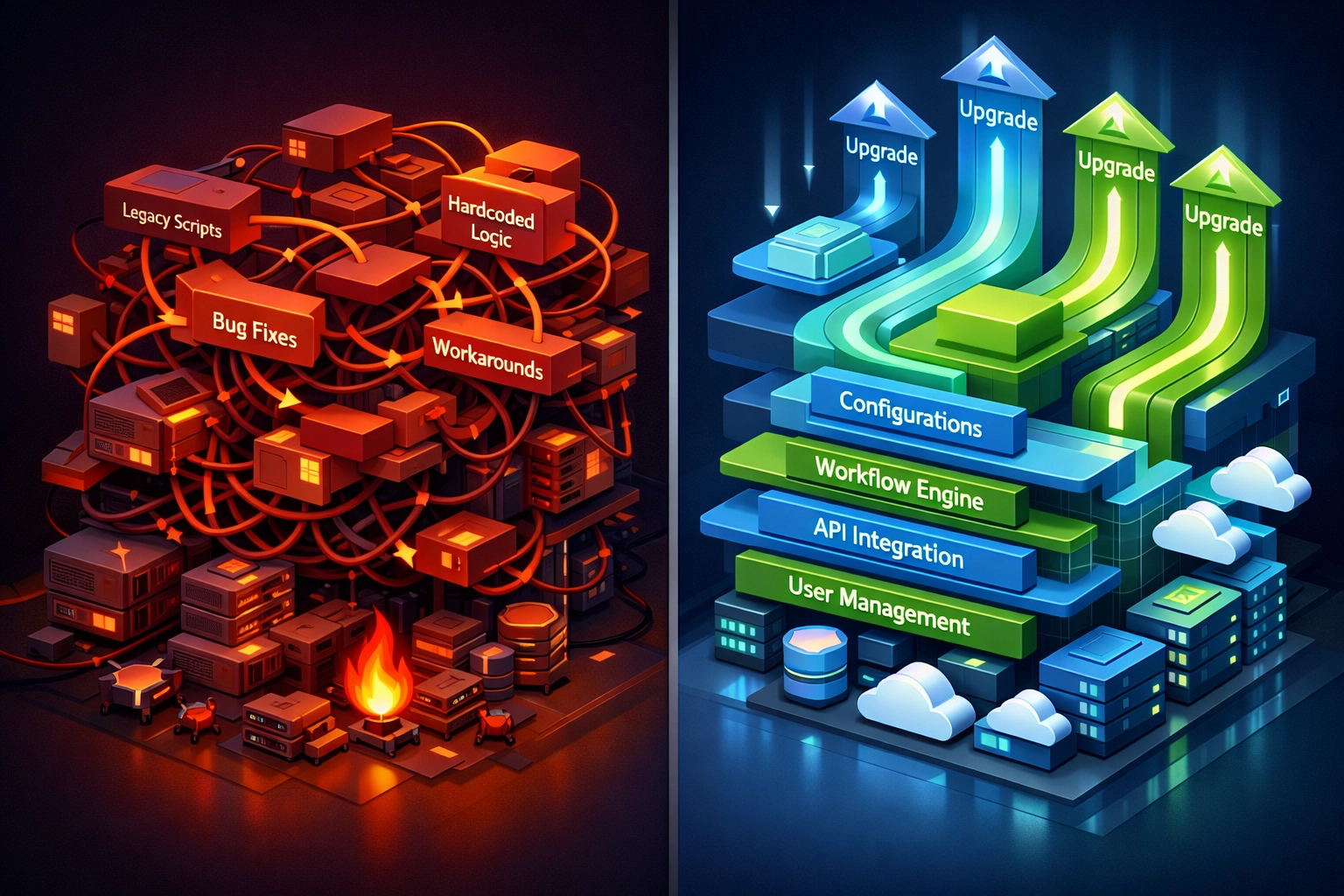
I have guided numerous organizations through painful platform upgrades derailed by incompatible customizations their previous partner implemented. The promise of "exactly what you asked for" becomes a nightmare when those customizations break during Washington DC upgrade cycles or create dependencies that prevent you from adopting new Agentic AI features.
Partners who default to custom scripting rather than configuration-based solutions are actively undermining your long-term platform health. Each unnecessary customization adds technical debt, increases maintenance costs, and reduces your ability to leverage ServiceNow's continuous innovation through bi-annual releases.
The Fix: Assess candidates' approach to configuration-versus-customization decisions during evaluation. Request their documented standards for maintaining upgrade compatibility and ask specific questions about their approach to leveraging out-of-box functionality versus custom development. Your ideal partner should demonstrate a clear methodology for achieving your requirements while maintaining a Platform Health Score of 95%+: a key metric tracked through ServiceNow's Health Dashboard.
Mistake #6: Overlooking Post-Implementation Support and Continuous Optimization
The traditional partnership model ended at go-live. In 2026, this approach guarantees suboptimal ROI. ServiceNow releases arrive every six months, bringing new capabilities that require strategic evaluation. Your license consumption patterns evolve as user adoption grows. Regulatory requirements like GDPR and DORA demand ongoing compliance validation and reporting adjustments.
Organizations treating implementation as a one-time project rather than an ongoing journey consistently underutilize their ServiceNow investment. I have witnessed platforms deliver less than 40% of their potential value because no one is actively monitoring usage analytics, identifying optimization opportunities, or recommending license reallocation based on actual consumption patterns.
The Fix: During partner selection, inquire about structured post-implementation support frameworks. Your agreement should include quarterly business reviews, proactive license optimization recommendations, and continuous monitoring of key performance indicators including First Contact Resolution (target: 85%+), Mean Time to Resolution, and automation rates (target: 40-50% within 12 months). For EU organizations, verify ongoing DORA compliance monitoring and ESG reporting optimization services.
Mistake #7: Avoiding Performance-Based Payment Structures
Partners demanding 50%+ upfront payment before demonstrating any value lack confidence in their delivery capabilities. This risk-averse approach protects the partner's cash flow while leaving your organization fully exposed to implementation failure.
Traditional fixed-fee or time-and-materials contracts create misaligned incentives. Your partner gets paid regardless of whether your platform achieves the operational excellence and ROI outcomes your business requires. I have seen this dynamic play out repeatedly: partners slow-walking implementations, recommending unnecessary customizations, and extending timelines because their revenue increases with project duration.
The Fix: Structure agreements around milestone-based payments tied to measurable success criteria. Your ServiceNow implementation partner contract should specify concrete outcomes including:
Platform Health Score: 95%+
License Optimization Rate: 15-20% cost reduction
Automation Rate: 40-50% within 12 months
First Contact Resolution: 85%+
CMDB Accuracy: 90%+ for Agentic AI readiness
DORA/GDPR Compliance: 100% automated reporting (EU organizations)
Payment releases should occur only after independent verification that these metrics have been achieved.
Your Recovery Path Forward
Organizations adopting competency-focused partner evaluation consistently achieve superior outcomes: 67% lower implementation failure rates, faster time-to-value, and ROI realization within 8-12 months rather than 18-24 months. The difference isn't luck: it's strategic partner selection based on proven capabilities rather than procurement convenience.
The seven mistakes outlined above represent millions in preventable losses across ServiceNow implementations every year. Whether you're planning your first implementation or recovering from a troubled project, the right ServiceNow consulting services partner will elevate your platform from a ticketing system into a transformative operational excellence engine.

Take Action: Your Free 2026 ServiceNow ROI & License Audit
Understanding where your current implementation stands: or establishing baseline metrics before partner selection: provides the strategic foresight necessary for unprecedented success. SnowGeek Solutions offers a comprehensive Free 2026 ServiceNow ROI & License Audit that reveals:
Hidden license optimization opportunities (average savings: 15-20%)
Platform Health Score assessment and remediation roadmap
Agentic AI readiness evaluation
DORA/GDPR/ESG compliance gap analysis (EU organizations)
Partner performance benchmarking against Elite Partner standards
Visit the SnowGeek Solutions contact page to share your project details and schedule your complimentary audit. Additionally, register with SnowGeek Solutions for ongoing platform updates, expert insights, and exclusive resources that will maximize your ServiceNow investment throughout 2026 and beyond.
The right ServiceNow implementation partner transforms your platform into a competitive advantage. The wrong partner transforms your investment into a cautionary tale. Choose wisely.
Comments