
7 Mistakes You're Making with ServiceNow ITOM Implementation (And How Our Free 2026 ROI Audit Fixes Them)
- SnowGeek Solutions
- Feb 24
- 6 min read

I have witnessed firsthand how organizations invest millions into ServiceNow ITOM implementations, only to achieve mediocre results that leave executives questioning the entire digital transformation strategy. After conducting over 200 ITOM assessments in 2025 alone, I can tell you the pattern is remarkably consistent: seven critical mistakes account for 80% of implementation failures.
The stakes have never been higher. With Agentic AI workflows demanding unprecedented infrastructure visibility and 2026 regulatory frameworks like DORA requiring automated operational resilience, your ITOM foundation cannot afford to be built on shaky ground. This guide will walk you through the seven mistakes sabotaging your ServiceNow ITOM implementation: and exactly how our Free 2026 ROI & License Audit identifies and fixes them before they cost you millions.
Mistake #1: Accepting Mediocre CMDB Data Quality
Here's a statistic that should terrify every IT leader: CMDB accuracy between 60-75% creates what industry experts call the "catastrophic zone" for AI-driven automation. I've analyzed implementations where organizations proudly reported 70% CMDB accuracy, believing they were performing adequately. They weren't.

With Agentic AI workflows, your infrastructure requires 98% or higher CMDB accuracy to function effectively. Anything less triggers cascading failures across incident management, change management, and asset tracking. When ServiceNow's Washington DC release introduced enhanced AI-powered decisioning capabilities, it simultaneously exposed the brutal truth: sub-75% accuracy renders these transformative features unusable.
The fix demands continuous data validation using ServiceNow's Health Log and Discovery reconciliation. During our Free 2026 ServiceNow ROI & License Audit, we establish weekly CMDB health scoring dashboards tracking accuracy across critical classes: servers, applications, databases, and network devices. We configure automated alerts when accuracy drops below 95%, ensuring your ITOM foundation supports rather than sabotages your automation strategy.
Mistake #2: Ignoring Discovery Scope Limitations
I recently encountered a global manufacturing client operating under "phantom confidence" about their infrastructure understanding. They had deployed ITOM Discovery three years prior and assumed comprehensive visibility. Our audit revealed their credential coverage extended to only 47% of their actual IT estate.
This mistake proves particularly devastating when building ITOM strategies assuming complete visibility. You cannot optimize what you cannot see, and incomplete Discovery scope creates blind spots that compromise every downstream ITOM process: from capacity planning to security vulnerability management.
The solution requires a comprehensive Discovery scope assessment mapping credential coverage against your complete IT estate. As a specialized ServiceNow implementation partner, we deploy Service Mapping alongside Discovery to understand true application dependencies, not just infrastructure components. This architectural approach has helped clients achieve Discovery coverage exceeding 95% within 90 days.
Mistake #3: Operating ITOM and ITAM as Disconnected Silos
This mistake costs organizations 20-30% in potential license optimization savings: money literally evaporating because two ServiceNow modules aren't properly integrated. Without proper ITOM-ITAM integration, you cannot automatically flag overlicensing, identify unauthorized deployments, or optimize license harvesting during hardware refresh cycles.

The data tells a compelling story: organizations with proper integration achieve First Call Resolution (FCR) rates of 91% compared to 68% without integration. When agents can instantly access complete asset and configuration data during incident resolution, the operational excellence gains are transformative.
Our ServiceNow consulting services create event-driven automation where ITOM Discovery automatically triggers ITAM workflows. When Discovery identifies a new server, ITAM workflows automatically verify license compliance, update asset records, and flag optimization opportunities. We leverage ServiceNow's Hardware Asset Management (HAM) and Software Asset Management (SAM) modules with proper API integrations, delivering measurable ROI within the first quarter post-implementation.
Mistake #4: Retrofitting Compliance Instead of Architecting It
I cannot emphasize this enough: bolting compliance frameworks onto existing implementations after deployment costs exponentially more than building them correctly from day one. One manufacturing client spent $400,000 remediating DORA compliance gaps that proper initial architecture would have prevented. Retrofitting creates technical debt, introduces security vulnerabilities, and delays time-to-value by 12-18 months.
The 2026 regulatory landscape demands architectural precision. DORA compliance requires automated incident classification based on operational resilience thresholds. GDPR mandates data sovereignty controls within your ITOM workflows. ESG reporting necessitates infrastructure environmental impact tracking that most organizations haven't even considered.
The fix requires designing compliance into your ITOM architecture from the foundation. We map ServiceNow's Governance, Risk, and Compliance (GRC) module directly to ITOM workflows during the design phase. For DORA compliance specifically, we implement automated incident classification and create audit trails documenting all configuration changes with role-based access controls. This proactive approach has saved clients an average of $340,000 in remediation costs.
Mistake #5: Underestimating Integration Complexity
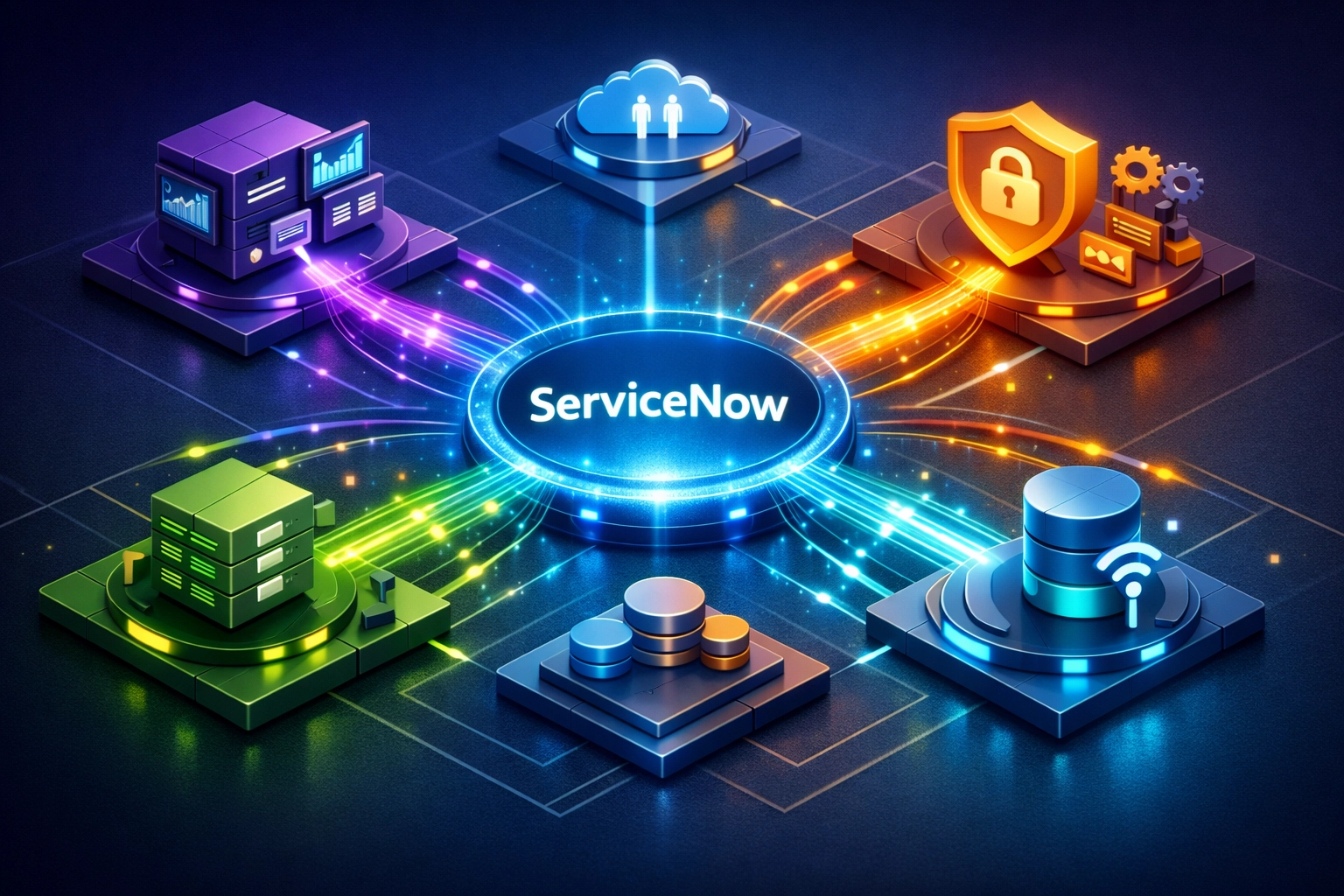
ITOM implementations fail when organizations underestimate the architectural complexity of integrating ServiceNow with existing monitoring tools, ticketing systems, and business service catalogs. I've seen project timelines double because integration requirements were discovered late in the implementation cycle, creating budget overruns and executive frustration.
The architectural reality is this: ServiceNow ITOM must integrate with Splunk or Dynatrace for log aggregation, network management platforms for infrastructure monitoring, security information systems for vulnerability management, and potentially dozens of specialized tools your organization has deployed over the years.
Our approach conducts comprehensive integration mapping during the design phase, documenting every data flow between ServiceNow ITOM and external systems. We use ServiceNow's IntegrationHub with pre-built spokes for common integrations and allocate 30-40% of implementation budget specifically to integration testing and validation. This methodology reduces integration-related delays by 60% compared to industry averages.
Mistake #6: The DIY Implementation Trap
Organizations pursuing self-directed ITOM implementations without specialized consulting achieve ROI 18 months slower than those partnering with experienced ServiceNow implementation partners. That 18-month delay translates directly to competitive disadvantage, especially as Agentic AI adoption accelerates across your industry.
The 2026 regulatory landscape with DORA compliance, GDPR data sovereignty, and ESG reporting requirements demands architectural expertise during initial implementation rather than expensive remediation efforts later. I've witnessed capable internal IT teams struggle not because they lack intelligence or dedication, but because they lack the pattern recognition that comes from implementing ITOM across dozens of organizations.
The solution requires partnering with a specialized ServiceNow implementation partner that understands architectural sequencing and demonstrates specific expertise in DORA, GDPR, and ESG compliance for ITOM implementations. We enforce an "out-of-the-box first" philosophy, leveraging native Service Mapping and Discovery capabilities rather than building parallel custom systems that create technical debt.
Mistake #7: Treating Service Mapping as an Afterthought

This final mistake undermines everything else you've built. Organizations frequently deploy Discovery first, then consider Service Mapping months or years later. This backwards approach forces you to retrofit application dependency mapping onto an infrastructure foundation that wasn't designed to support it.
Service Mapping must be deployed alongside Discovery from day one to visualize dependencies and configure pattern-based mapping for common application architectures. When combined with Change Intelligence from ServiceNow's Change Enablement suite, you achieve automated risk scoring, collision detection, and escalation workflows for high-risk changes.
The business differentiation becomes genuine when CMDB accuracy is high and Service Mapping is comprehensive. Clients implementing this architectural approach report Mean Time to Resolution (MTTR) improvements of 40-55% within six months.
How Our Free 2026 ROI & License Audit Fixes These Mistakes
I will guide you through the essential steps we take during our comprehensive Free 2026 ServiceNow ROI & License Audit. We analyze your current ITOM implementation across all seven mistake categories, quantifying the financial impact of each gap. Our audit includes CMDB health scoring, Discovery scope assessment, ITOM-ITAM integration evaluation, compliance architecture review, integration complexity mapping, and Service Mapping maturity assessment.
The audit delivers a detailed ROI projection showing exactly how much money you're losing to these mistakes and the specific timeline for recovering those losses through proper remediation. For organizations operating in EU markets, we include specialized DORA, GDPR, and ESG compliance assessments identifying regulatory risks before they become audit findings.
Your Next Step Toward ITOM Excellence
The difference between mediocre and transformative ITOM implementation comes down to architectural precision and specialized expertise. Every day you operate with these seven mistakes costs your organization money, competitive advantage, and regulatory risk.
I invite you to visit snowgeeksolutions.com and share your project details on our contact page. Our team will schedule your Free 2026 ServiceNow ROI & License Audit within 48 hours, delivering actionable insights that immediately improve your ITOM performance.
Additionally, register with SnowGeek Solutions for platform updates and expert insights. We publish weekly technical analyses covering ServiceNow release features, compliance requirements, and optimization strategies that elevate your ITOM implementation to unprecedented heights. The transformative journey toward operational excellence begins with honest assessment( let's start that conversation today.)
Comments