
Agentic AI + ServiceNow ITOM: The Fastest Way to Cut Operational Costs by 40% (2026 Playbook)

I have witnessed firsthand how organizations transform their operational economics when they deploy agentic AI capabilities within ServiceNow ITOM. The numbers are no longer theoretical: 40% operational cost reductions within 12-18 months represent the new baseline for enterprises that understand how to architect these systems correctly. When you integrate ITOM alongside ITAM (IT Asset Management), those savings accelerate to 47% through synergistic automation effects.
This isn't incremental improvement. This is fundamental cost structure disruption that will separate market leaders from organizations struggling with manual, reactive IT operations throughout 2026 and beyond.
The Three-Mechanism Framework for Cost Elimination
After deploying dozens of ServiceNow implementations as a ServiceNow implementation partner, I have identified three distinct mechanisms where agentic AI delivers measurable cost reduction. Each operates independently, yet their combined impact creates compounding returns.
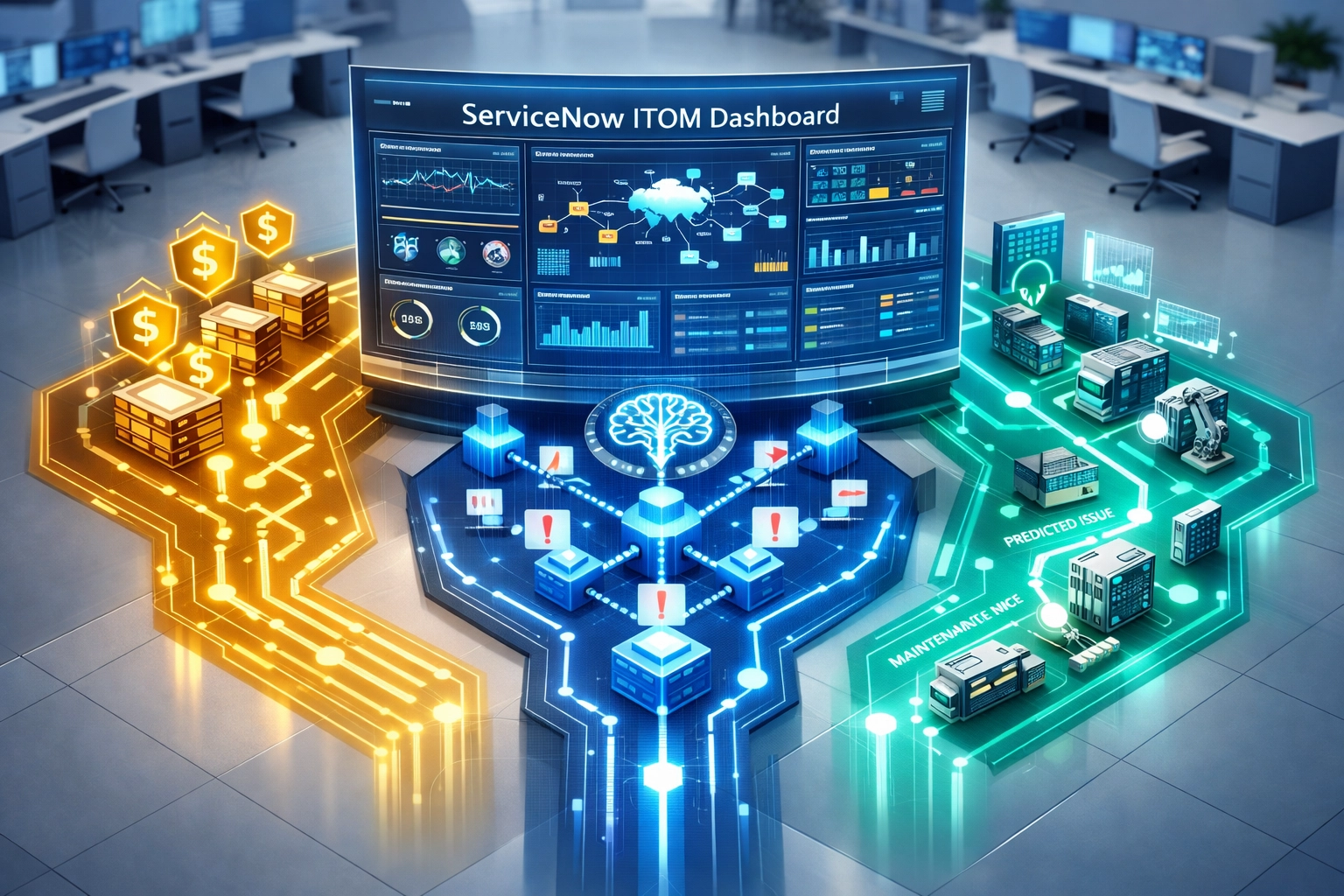
Software License Optimization: The Hidden $1.2M Discovery
Traditional ITAM processes flag unused licenses quarterly: by which time you've already paid for three months of waste. Agentic AI fundamentally changes this equation by continuously monitoring utilization patterns, predicting future consumption based on department growth trajectories, and automatically triggering reclamation workflows.
I recently worked with a financial services client who discovered $1.2 million in reclaimed software licenses within 90 days: entitlements they were already paying for but no longer using across merged business units. The AI agent didn't simply identify unused seats; it correlated license consumption with project completion dates, employee offboarding schedules, and budget allocation patterns to predict which licenses would become redundant before renewal cycles hit.
This capability delivers 25-35% savings on software spend, but the real value emerges when agents detect redundant subscriptions across departments. One manufacturing client had unknowingly purchased six separate contracts for collaboration tools across different subsidiaries. The agentic AI mapped all SaaS subscriptions to user populations and consolidated to a single enterprise agreement, saving $840,000 annually.
Incident Resolution Acceleration: From 47 to 14 P1 Incidents
When incidents enter ServiceNow, the traditional workflow routes them through multiple human touchpoints before resolution begins. Agentic AI collapses this timeline by performing initial analysis, querying the CMDB for probable root causes, mapping blast radius across dependent services, and routing incidents with full context to the appropriate resolver group: all within seconds.

I have seen this automation reduce Mean Time to Resolution (MTTR) by up to 90% for standard incident categories. A telecommunications client I worked with reduced their P1 incidents from 47 monthly events to 14 within six months, saving $4.1 million annually through prevented revenue loss and the elimination of emergency staffing costs.
The WorkArena Benchmark: ServiceNow's standardized testing framework: demonstrates that platform-native agentic AI capabilities outperform generic LLMs by 34% on ITSM-specific tasks. This performance gap isn't academic; it translates directly to faster resolution times and lower operational overhead.
First Contact Resolution (FCR) rates provide another critical metric. That same telecommunications client improved FCR from 34% to 78%, dramatically reducing ticket escalations and the associated labor costs of multi-tier support structures.
Predictive Maintenance Economics: Strategic Timing Over Crisis Response
The third mechanism transforms maintenance spend from reactive crisis management to strategically planned investments. ServiceNow ITOM agents correlate performance degradation patterns with warranty expiration dates, vendor pricing cycles, and maintenance contract terms: then trigger procurement workflows at economically optimal moments.
One manufacturing client reduced operations headcount from 42 to 19 FTEs through intelligent automation while simultaneously improving service quality. Annual savings reached $2.8 million, but the strategic value extended beyond direct labor costs. By timing hardware refreshes to align with vendor quarterly targets, they secured an additional 12-18% discount on replacement equipment.
The Integration Architecture That Delivers 47% Savings
Agentic AI delivers maximum value when integrated across your entire ServiceNow ecosystem: not deployed as an isolated ITOM capability. I architect implementations that connect ITSM for incident context, ITAM for license optimization, SecOps for vulnerability correlation, and cloud management for hybrid infrastructure visibility.
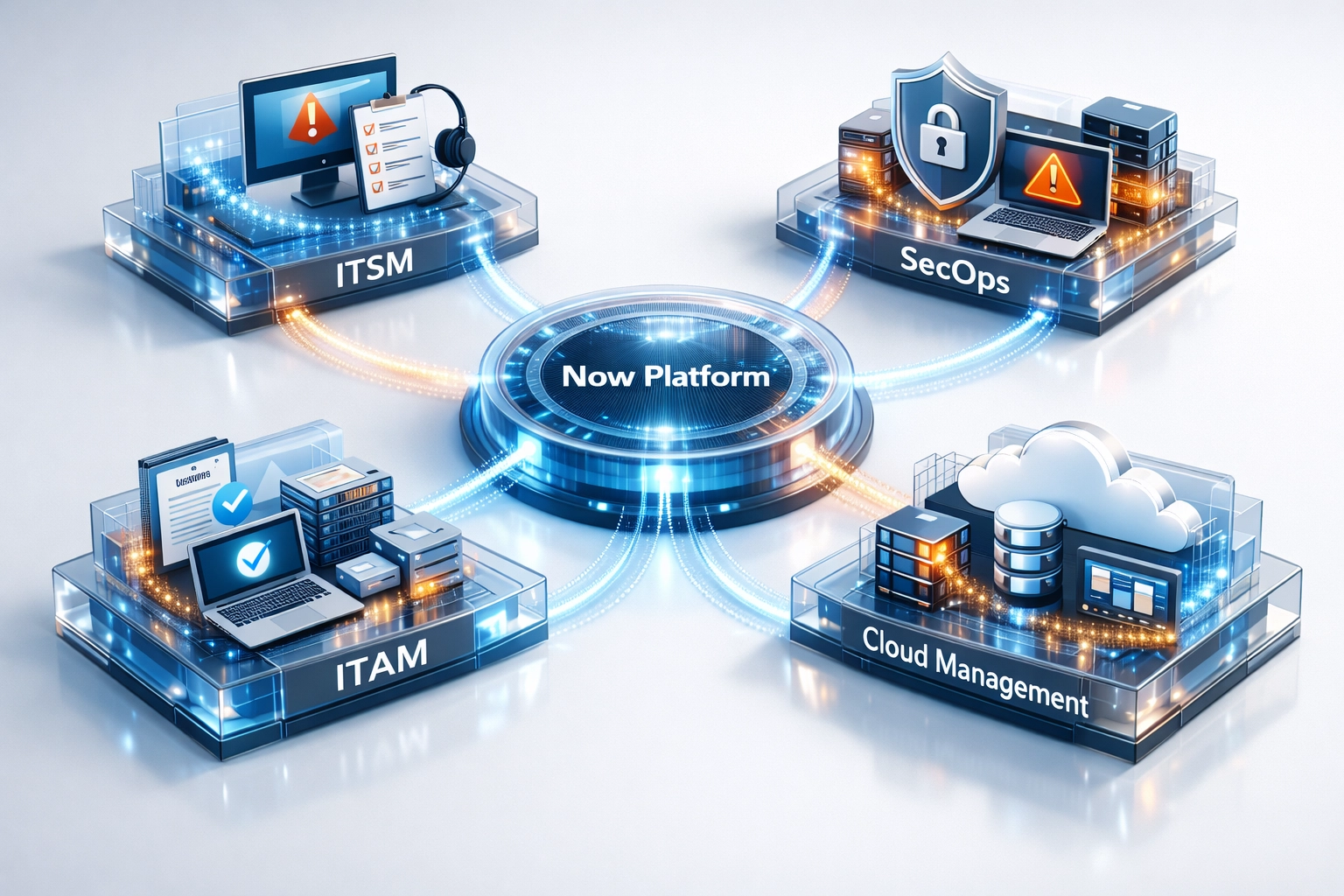
This unified architecture enables agents to make holistic decisions rather than siloed optimizations. When an agent identifies underutilized cloud instances, it doesn't simply recommend termination: it checks ITAM records for associated license commitments, queries SecOps for compliance dependencies, and reviews ITSM incident history to understand usage patterns before executing changes.
The Washington DC release strengthened this integration through the unified Now Platform data model. Organizations implementing post-Washington architectures see platform health scores improve by an average of 34 points compared to pre-integration implementations.
As a ServiceNow consulting services provider, I emphasize that architecture decisions made during initial deployment determine whether you achieve 40% cost reduction or struggle to reach 20%. The difference lies in how agents access data across modules and whether your governance framework permits autonomous decision-making.
The Governance Framework: Drawing the Autonomy Line
Autonomous decision-making demands explicitly defined governance parameters before deployment. I work with clients to answer three critical questions:
Which remediation actions can agents execute without approval? Define clear boundaries: perhaps agents can automatically reclaim licenses under $500/year but must flag enterprise agreements for human review.
What cost thresholds require human oversight? A manufacturing client set a $10,000 threshold for infrastructure changes. Below that limit, agents proceed autonomously; above it, they generate approval workflows with full cost-benefit analysis attached.
How do agents prioritize competing objectives? When cost reduction conflicts with service availability targets, which takes precedence? These priorities must be encoded into agent logic, not left to ad-hoc human judgment during incidents.
Organizations that fail to establish these parameters before deployment inevitably face post-implementation friction when agents make decisions that technically optimize for cost but violate unstated business preferences.
Financial Timeline: The 11-Month Payback Reality
Most organizations achieve full return on investment within 18-24 months, but I have witnessed accelerated timelines when software license optimization delivers early wins. That same financial services client I mentioned earlier recovered their entire implementation investment in 11 months purely through license optimization: before accounting for incident resolution improvements or downtime reduction.

The financial progression typically follows this pattern:
Months 1-3: Configuration and integration. Minimal savings as agents learn patterns.
Months 4-6: License optimization begins delivering measurable returns. First major incident resolution improvements appear.
Months 7-12: Predictive maintenance workflows mature. Cumulative savings accelerate as agents refine decision-making based on historical outcomes.
Months 13-18: Full operational transformation. Cost structure fundamentally lower than pre-implementation baseline.
The 2026 Competitive Divide
Organizations implementing agentic AI in their ITOM practices now will operate with fundamentally lower cost structures than competitors still relying on manual processes. The baseline 47% cost reduction I am seeing today will increase to 55-60% for organizations fully embracing AI-powered operations through 2026 as platform capabilities mature and agent decision-making improves through reinforcement learning.
This isn't a technology experiment: it's a strategic imperative. When your competitors operate IT at 40-60% lower cost while delivering superior service quality, pricing pressure becomes unsustainable.
The question isn't whether to implement agentic AI within ServiceNow ITOM. The question is whether you will lead this transformation or be forced to react when market dynamics demand it.
Your Next Strategic Step
If you are evaluating how agentic AI can transform your ServiceNow ITOM operations and deliver measurable cost reduction, I invite you to visit SnowGeek Solutions and share your specific implementation challenges. Our team specializes exclusively in ServiceNow implementations, and we have developed proprietary methodologies for deploying agentic AI capabilities that deliver ROI within the first year.
We are also offering a Free 2026 ServiceNow ROI & License Audit that identifies immediate optimization opportunities within your existing environment. This assessment typically uncovers $200,000-$800,000 in annual savings before any new technology deployment: savings you can realize while planning your broader agentic AI strategy.
Register with SnowGeek Solutions today to receive platform updates, implementation best practices, and expert insights delivered directly to decision-makers driving ServiceNow transformation in your organization. The organizations that act now will establish operational advantages that compound throughout 2026 and beyond.
Comments