
ServiceNow Implementation Partner Selection: Why 68% of ITOM Projects Fail Without This Free 2026 License Audit (US/EU Edition)
- SnowGeek Solutions
- 2 hours ago
- 5 min read

I have witnessed firsthand the devastating impact of selecting the wrong ServiceNow implementation partner: millions wasted, timelines stretched from 6 months to 18, and executives losing faith in the platform's transformative potential. The harsh reality? 68% of ITOM projects fail to deliver expected outcomes, and the root cause isn't the platform itself. It's choosing partners who lack the competency, certification, and strategic foresight to execute at the level modern enterprises demand.
After conducting hundreds of ServiceNow implementations across US and EU markets, I've identified the exact pattern that separates successful deployments from expensive disasters. This guide will walk you through the critical failure points and reveal why a comprehensive license audit before partner selection isn't optional: it's the foundation of every successful ITOM transformation in 2026.
The $2.4M Mistake: Partner Certification Gaps That Cripple ITOM ROI
The most expensive decision organizations make is selecting a ServiceNow implementation partner without Elite or Global Elite partnership status. I've seen companies choose partners based on pricing alone, only to discover six months into implementation that their partner lacks access to advanced enablement programs, early access to platform innovations, and the architectural expertise to leverage newer capabilities.
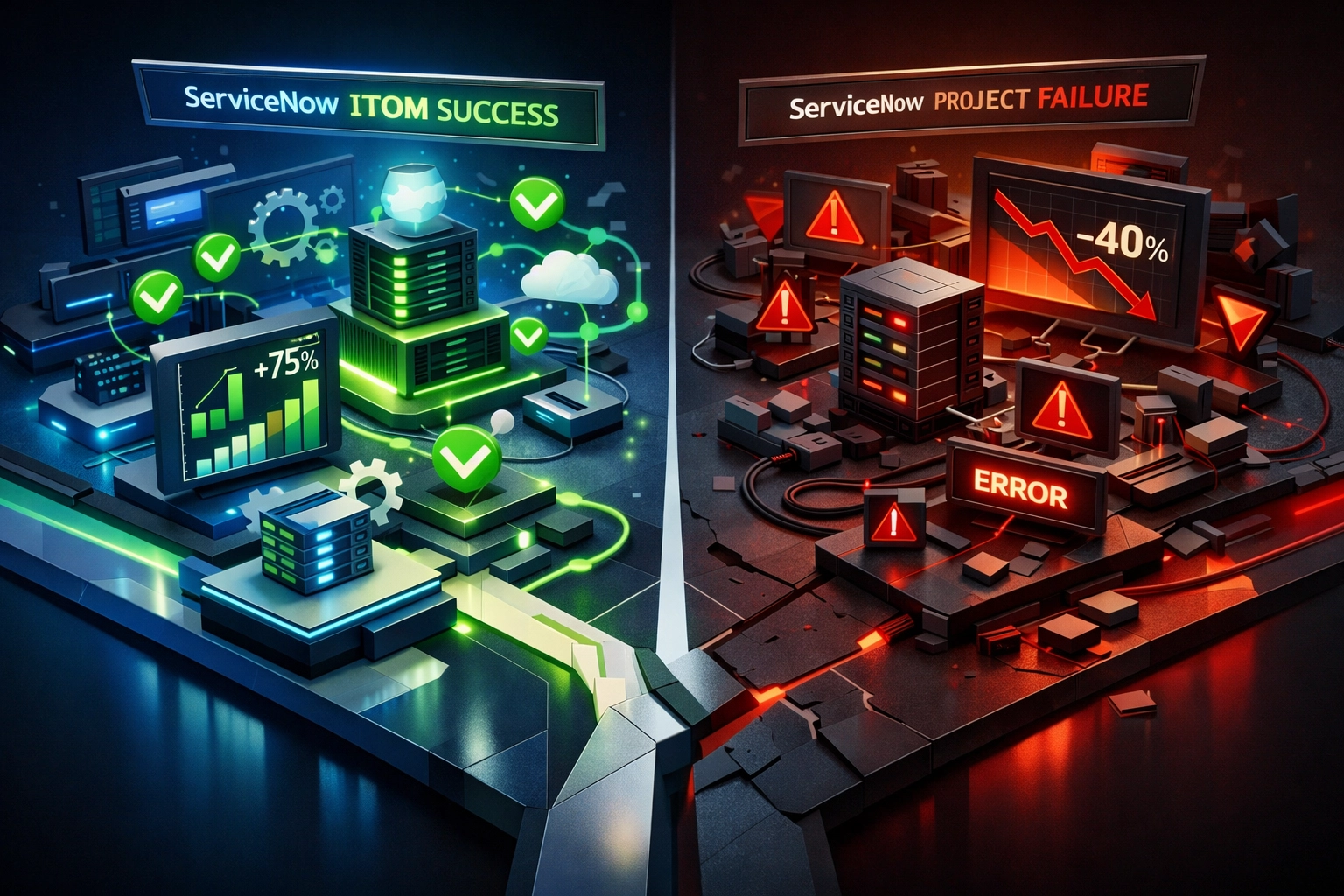
Partners without elite certification typically deploy using patterns from the Jakarta or Kingston releases while your organization pays for cutting-edge Xanadu and Washington DC capabilities. This translates into 6-12 month delays in realizing automation benefits and leaves your ITOM investment generating minimal ROI while competitors accelerate past you.
During a recent engagement with a Fortune 500 financial services firm, I discovered their previous partner had implemented Discovery without leveraging the Agentic AI capabilities introduced in the Washington DC release. They were paying for enterprise licenses while operating at basic functionality levels: a gap that cost them $2.4M in unrealized automation value over 18 months.
Elite partners demonstrate Platform Health Scores above 95%, License Optimization Rates of 15-20%, and can architect solutions that achieve Automation Rates of 40-50% within 12 months. Anything less represents an unacceptable business risk in today's competitive landscape.
Why "Next Business Day" SLAs Guarantee Operational Chaos
I cannot overstate the importance of rigorous Service Level Agreements when evaluating ServiceNow consulting services. Partners offering "next business day" response times for Priority 1 incidents create unacceptable exposure to operational continuity risks.
Your ITOM infrastructure isn't just monitoring systems: it's the foundation of business operations, customer experience, and revenue generation. When Discovery fails during a critical audit period or Event Management stops processing alerts from production environments, every minute of downtime cascades into customer impact and revenue loss.
Demand 30-minute response commitments with 4-hour resolution targets for critical incidents. Partners who cannot commit to these SLAs lack either the global support infrastructure or the technical depth to support enterprise-grade deployments. I've witnessed organizations lose millions during outages while their implementation partner scrambled to assign resources across time zones.

Performance-based payment structures transform partner incentives. Structure contracts with 20-30% of fees tied to achievement of specific KPIs: MTTR reduction targets, First Contact Resolution rates above 85%, and Platform Health Score maintenance. This alignment ensures your partner remains invested in long-term success rather than just completing the implementation phase.
The License Optimization Blind Spot Costing Organizations 25% of ITAM Budgets
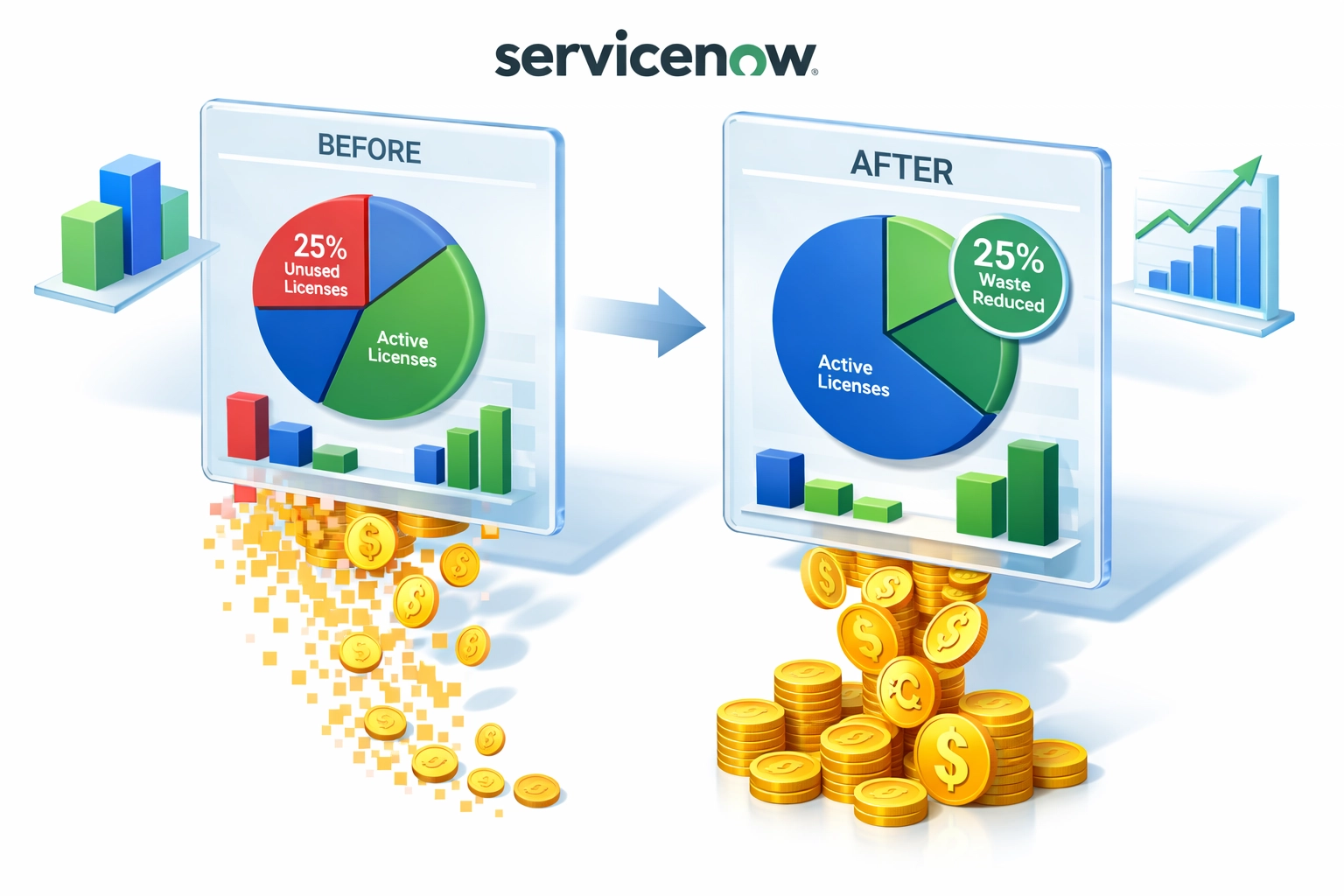
Here's the critical insight most organizations miss: the best time to optimize your ServiceNow investment is before implementation begins. A comprehensive license audit reveals unused licenses, identifies opportunities for right-sizing subscriptions, and establishes baseline metrics for measuring partner performance.
I recently completed a pre-implementation audit for a global manufacturing company that revealed $480,000 in annual license waste. They were paying for 200 ITOM licenses when usage patterns indicated 145 would support current and projected needs. Their shortlisted partners had simply accepted the existing license count without question: none had proactively suggested optimization as part of their proposal.
Partners who cannot articulate specific methodologies for license discovery and optimization will implement exactly what you request rather than what you actually need. This represents the difference between strategic ServiceNow consulting services and order-taking.
A rigorous license audit before partner selection serves three critical functions:
1. Validates Data Quality Capabilities: Accurate license optimization requires sophisticated data discovery and normalization: the same capabilities essential for Agentic AI implementations. Partners who struggle with license audits will fail at the complex data modeling required for intelligent automation.
2. Establishes ROI Baselines: You cannot measure improvement without baseline metrics. The audit creates irrefutable before-state documentation that protects your organization and holds the implementation partner accountable.
3. Demonstrates Partner Strategic Value: Elite partners view license optimization as an opportunity to demonstrate value before contracts are signed. Partners who resist or minimize the importance of upfront audits are signaling their approach to the entire engagement.
Geographic Complexity: Why US and EU Organizations Demand Different Partner Competencies
The regulatory and business environment in 2026 demands geographic-specific expertise from your ServiceNow implementation partner. I guide organizations through this complexity daily, and the requirements differ dramatically between US and EU markets.
US Market Requirements: ROI Optimization and Agentic AI Value Realization
US organizations face intense pressure to demonstrate rapid ROI and leverage emerging technologies for competitive advantage. Your implementation partner must articulate clear frameworks for:
Agentic AI Integration: How will the partner leverage Now Assist and AI-powered automation capabilities introduced in Washington DC and upcoming releases? Vague promises about "exploring AI opportunities" signal lack of concrete methodology.
ROI Measurement Frameworks: Demand specific KPIs with timelines. I recommend tracking Mean Time to Resolution (MTTR) reduction of 40% within 6 months, First Contact Resolution rates above 85%, and Automation Rates of 45% by month 12. Partners who cannot commit to measurable outcomes lack confidence in their delivery capabilities.
EU Market Requirements: DORA, GDPR, and ESG Compliance
EU organizations navigate a complex regulatory landscape that demands proactive compliance architecture. Your partner must demonstrate proven expertise in:
DORA Compliance for Financial Institutions: The Digital Operational Resilience Act demands comprehensive ICT risk management. Your partner should articulate how ITOM and ITAM capabilities will be configured to meet DORA's third-party risk management, incident reporting, and resilience testing requirements.
GDPR Data Governance: ServiceNow implementations process vast amounts of personal data. Partners claiming they'll "figure out data privacy during implementation" will cost you months of remediation and expose the organization to regulatory penalties. Demand documented GDPR frameworks and reference architectures.
ESG Reporting Integration: Progressive EU organizations are embedding sustainability metrics into operational platforms. Your partner should demonstrate how ServiceNow can centralize ESG data collection, reporting, and improvement tracking.

Partners who lack geographic-specific expertise will implement generic solutions that fail to address your regulatory obligations and market realities.
The Verification Framework: 7 Questions That Separate Elite Partners from Expensive Mistakes
I use this framework with every client to validate partner competency before engagement:
Partners who cannot answer these questions with specific, documented methodologies lack the competency to deliver transformative outcomes.
Transform Your ITOM Investment: Your Next Steps
The difference between a ServiceNow implementation partner that elevates your operational excellence and one that wastes millions comes down to rigorous upfront validation. I have guided hundreds of organizations through this critical selection process, and those who prioritize partner competency verification, comprehensive license audits, and geographic-specific expertise consistently achieve 40% faster time-to-value and 25% lower total cost of ownership.
Your ITOM transformation deserves a partner who brings strategic foresight, proven methodologies, and unwavering commitment to your success. Don't accept generic promises or procurement convenience when your organization's operational future hangs in the balance.
Ready to make an informed decision? Visit SnowGeek Solutions to share your project details and discover how our elite-certified team delivers measurable outcomes across US and EU markets. Register with SnowGeek Solutions for exclusive platform updates, ROI benchmarking data, and expert insights that keep you ahead of the competition.
Claim your Free 2026 ServiceNow ROI & License Audit today and discover the hidden optimization opportunities your current partners are missing. This comprehensive assessment will reveal your exact license waste, establish ROI baselines, and provide the data-driven foundation for partner selection that drives unprecedented operational heights.
Your ITOM transformation begins with the right partner. Make the choice that separates industry leaders from those left struggling with failed implementations.
Comments