
7 ServiceNow ITOM Mistakes Costing Your Company $500K+ in 2026 (Free ROI Audit Reveals the Truth)
- SnowGeek Solutions
- Feb 18
- 5 min read

I have witnessed firsthand how ServiceNow ITOM implementations crumble under the weight of architectural mistakes that most organizations don't recognize until their annual spend has ballooned beyond control. As we navigate 2026, the stakes have never been higher: especially with DORA compliance audits intensifying across the EU and heightened ESG scrutiny forcing IT leaders to account for every dollar, every asset, and every compliance gap.
This guide will walk you through the seven critical ITOM mistakes that are draining budgets, exposing organizations to regulatory penalties, and sabotaging your ServiceNow investment. More importantly, I'll show you exactly how to fix them before your next quarterly review.
Mistake #1: Accepting Mediocre CMDB Data Quality
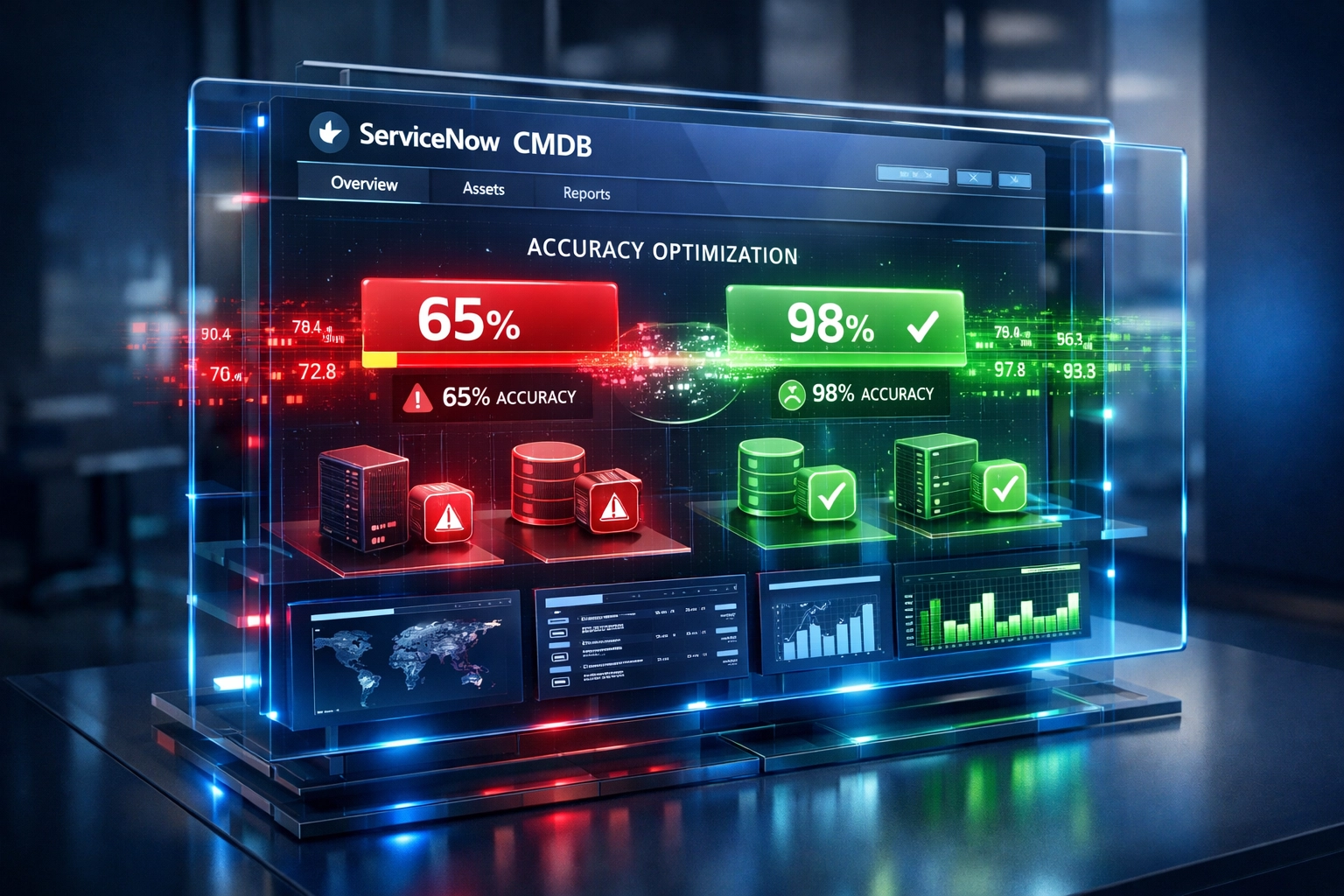
Here's the uncomfortable truth: if your CMDB accuracy sits between 60-75%, you're operating in what I call the "catastrophic zone" for AI-driven automation. The ServiceNow Washington DC release demands 98% or higher accuracy for Agentic AI workflows to function effectively. Anything less, and your predictive AI capabilities will fail spectacularly.
I've watched organizations invest six figures into AI-enabled operations, only to discover their CMDB data quality couldn't support the most basic automation workflows. The financial impact? Conservative estimates suggest $200K-$400K in wasted AI investments when deployed on weak data foundations.
The Fix: Implement continuous data validation workflows using ServiceNow's Health Log and Discovery reconciliation. Establish weekly CMDB health scoring dashboards that track configuration item accuracy across critical classes: servers, applications, databases, network devices. Configure automated alerts when accuracy drops below 95%. This isn't optional anymore; it's the foundation of everything else in your ITOM strategy.
Mistake #2: Running Incomplete Discovery Audits
Shadow IT exposure represents one of the most significant blind spots I encounter during ITOM assessments. Organizations conduct basic discovery scans without comprehensive network traffic analysis, cloud spend reconciliation, or legacy system integration assessments: and the results are staggering.
One financial services client discovered $2.3 million in untracked cloud spend simply by extending discovery scope to include proper network traffic analysis. That's not an outlier; it's the norm when organizations fail to implement comprehensive discovery patterns.
The Fix: Deploy ServiceNow Discovery with full credential coverage across your infrastructure. Enable Service Mapping for complete application dependency maps. Integrate Cloud Insights with discovery patterns to capture multi-cloud assets automatically. Schedule quarterly discovery audits specifically targeting shadow IT exposure through anomaly detection. Your ServiceNow consulting services partner should be architecting this from day one, not as a phase-two afterthought.
Mistake #3: Failing to Integrate ITOM with ITAM
When ITOM and ITAM operate as isolated modules rather than interconnected value engines, organizations typically leave $3.2 million in annual optimization opportunities on the table. I've reviewed dozens of implementations where integration happened as an afterthought, creating massive inefficiencies in license management, asset tracking, and cost allocation.
The Fix: Create event-driven automation where ITOM Discovery automatically triggers ITAM workflows. When Discovery identifies a new CI, automation should immediately initiate license assignment, compliance verification, and cost allocation processes. Leverage Hardware Asset Management and Software Asset Management modules with proper API integrations. This level of ITOM-ITAM synergy is what separates mature implementations from expensive failures.

Mistake #4: Retrofitting Compliance Instead of Architecting It
Here's where 2026 becomes particularly brutal: bolting compliance frameworks onto existing implementations costs exponentially more than building them correctly from the start. I recently consulted with a manufacturing client who spent $400K remediating compliance gaps that proper initial architecture would have prevented entirely.
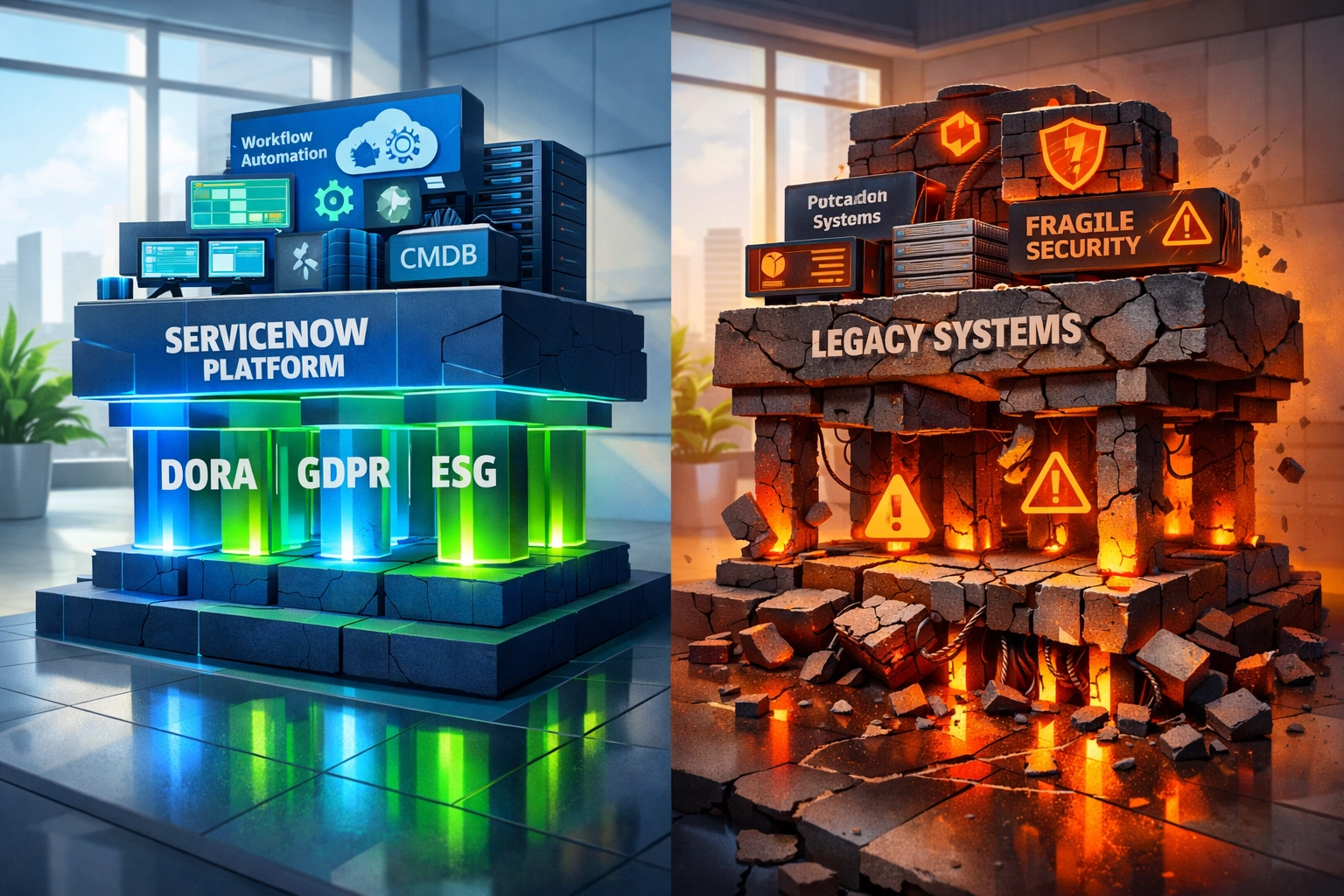
With DORA compliance requirements now enforceable across the EU and ESG reporting standards tightening globally, retrofitting compliance is no longer just expensive: it's potentially catastrophic for your regulatory standing.
The Fix: Design compliance into your ITOM architecture from day one. Map ServiceNow's Governance, Risk, and Compliance module to ITOM workflows. For DORA compliance, implement automated incident classification tagging events based on operational resilience thresholds. Create audit trails documenting all configuration changes with business justification. Architect ESG tracking of IT asset energy consumption and lifecycle management into your CMDB structure initially. Your ServiceNow implementation partner should be embedding these frameworks into the technical architecture, not treating them as reporting add-ons.
Mistake #5: Skipping AI Implementation (or Deploying Without CMDB Readiness)
Organizations make two fatal errors with AI: they either bypass AI capabilities entirely, or they implement them on weak data foundations. Both paths lead to the same destination: underutilized platforms and frustrated teams.
Additionally, alert-to-incident automation without proper tuning creates too many incidents, causing L1 teams to drown in tickets and leadership to lose trust in ITOM capabilities. I've seen this pattern destroy otherwise solid implementations.
The Fix: Before deploying AIOps, achieve 98%+ CMDB accuracy (see Mistake #1). Implement proper alert tuning and anomaly detection by training on sufficient historical data, tuning sensitivity appropriately, and segmenting metrics by CI class and environment to reduce false positives. The Washington DC release offers unprecedented AI capabilities, but only if your data foundation supports them.

Mistake #6: Underestimating Change Management Complexity
Organizations without automated change risk scoring experience 30-50% higher deployment failure rates, resulting in $600K-$1.5M in annual losses for mid-market enterprises. That's not theoretical: those are real numbers from real implementations I've assessed.
Change management complexity compounds rapidly as your ServiceNow environment matures. What worked with 50 changes per month collapses under 500 changes per month without proper automation and risk scoring.
The Fix: Implement sophisticated Change Intelligence workflows with automated change risk scoring. Build comprehensive runbooks that integrate with your CMDB and incident management systems. Leverage ServiceNow's predictive intelligence capabilities to identify high-risk changes before they reach production. This is where experienced ServiceNow consulting services demonstrate their value: architecting change management workflows that scale with your organization.
Mistake #7: Attempting DIY Implementation Without Specialized Expertise
I'll be direct: organizations attempting self-directed ITOM implementations without specialized consulting services achieve ROI metrics 18 months slower than those working with experienced ServiceNow implementation partners. The regulatory landscape in 2026 demands specialized knowledge that DIY teams simply don't possess, leading to expensive remediation cycles.
The Fix: Partner with specialized ServiceNow consulting services that understand DORA compliance requirements, GDPR data sovereignty rules, and ESG reporting standards as architectural requirements rather than afterthoughts. Look for partners who demonstrate deep technical expertise in ITOM-ITAM integration, AI readiness assessments, and compliance-first architecture.
Your Next Step: The 90-Day ITOM Health Assessment
These seven mistakes compound over time, creating technical debt that becomes exponentially more expensive to remediate. I recommend conducting a comprehensive ITOM health assessment within the next 90 days, evaluating CMDB accuracy, discovery scope, ITOM-ITAM integration maturity, compliance readiness, AI implementation status, change management effectiveness, and overall architectural soundness.
Take action today: Visit the SnowGeek Solutions contact page to share your ITOM challenges and schedule your Free 2026 ServiceNow ROI & License Audit. Our team will identify exactly where your implementation is leaking value and provide a detailed remediation roadmap tailored to your environment.
Register with SnowGeek Solutions for ongoing platform updates, expert insights, and access to our exclusive 2026 ITOM compliance framework. The difference between a $500K mistake and a transformative ITOM implementation often comes down to the expertise guiding your architecture decisions.
Don't wait until your next audit reveals these gaps( by then, you've already paid the price.)
Comments