
Are You Overpaying Your ServiceNow Implementation Partner? This Free Audit Reveals Hidden License Waste
- SnowGeek Solutions
- 2 hours ago
- 5 min read

I have witnessed firsthand how organizations hemorrhage budget on ServiceNow implementations that promise transformation but deliver mediocrity. The uncomfortable truth? Most enterprises overpay by 30-40% on ITAM and ITOM licensing alone: not because ServiceNow is overpriced, but because their implementation partner lacks the strategic foresight to optimize what they're actually deploying.
If your partner hasn't conducted a comprehensive license audit in the past six months, you're almost certainly leaving hundreds of thousands of dollars on the table. This guide will walk you through the hidden cost traps I've seen drain IT budgets and show you exactly what a rigorous audit should reveal.
The $680K Question Nobody's Asking
When I audit ServiceNow environments for mid-market enterprises, I consistently uncover $420,000 to $680,000 in annual waste. These aren't theoretical savings: they're real dollars flowing to licenses that sit dormant, modules with overlapping functionality, and integrations built three different ways because nobody mapped the ecosystem properly.
Your ServiceNow implementation partner should be laser-focused on license efficiency from day one. If they're not presenting you with a detailed utilization report every quarter, they're either incompetent or comfortable with your overspending.

Five Red Flags Your Partner Is Costing You Money
1. Vague ROI Projections Without Baseline KPIs
A competent ServiceNow consulting services provider establishes clear metrics before deployment. I'm talking about:
Mean Time to Resolution (MTTR) baseline measurements
First Call Resolution (FCR) rates across your current service desk
Infrastructure discovery accuracy percentages in your existing CMDB
Incident volume trends over the previous 12 months
If your partner kicked off your ITOM implementation without documenting these baselines, you have no way to prove ROI. You're paying for transformation theater, not measurable operational excellence.
During the Vancouver release cycle, I helped a financial services client establish MTTR baselines showing 147-minute average resolution times. Post-deployment with properly configured Event Management and Predictive Intelligence, we drove that down to 52 minutes: a 64% improvement that we could only quantify because we measured properly at the start.
2. Missing License Optimization Analysis
Elite ServiceNow implementation partners conduct license audits every 90 days. They should identify:
Duplicate functionality across purchased modules (e.g., organizations paying for both Discovery and Service Mapping when workflows only leverage one)
Deprecated licenses still being invoiced despite feature consolidation in newer releases
Inactive user licenses consuming budget for employees who left the organization or shifted roles
Module-level utilization rates compared to industry benchmarks
I recently audited an organization running 340 ITAM licenses with only 187 active users actually engaging the platform over a 60-day period. That's $180,000 annually in shelfware: money that could fund Agentic AI capabilities or advanced automation workflows.

3. Lack of Module-Specific Expertise
Here's a statistic that should terrify any IT leader: non-Elite certified partners demonstrate 67% higher implementation failure rates and take 2.3 times longer to deliver measurable value. Yet organizations continue engaging generalist partners who promise comprehensive ServiceNow consulting services without specialized depth in ITOM, ITAM, or CMDB health.
During the Washington DC release, ServiceNow introduced significant enhancements to Cloud Observability and AIOps capabilities. A partner without Elite certification in IT Operations Management wouldn't know how to architect event correlation rules that reduce noise by 40-50%, let alone integrate with your existing monitoring stack to maximize ROI.
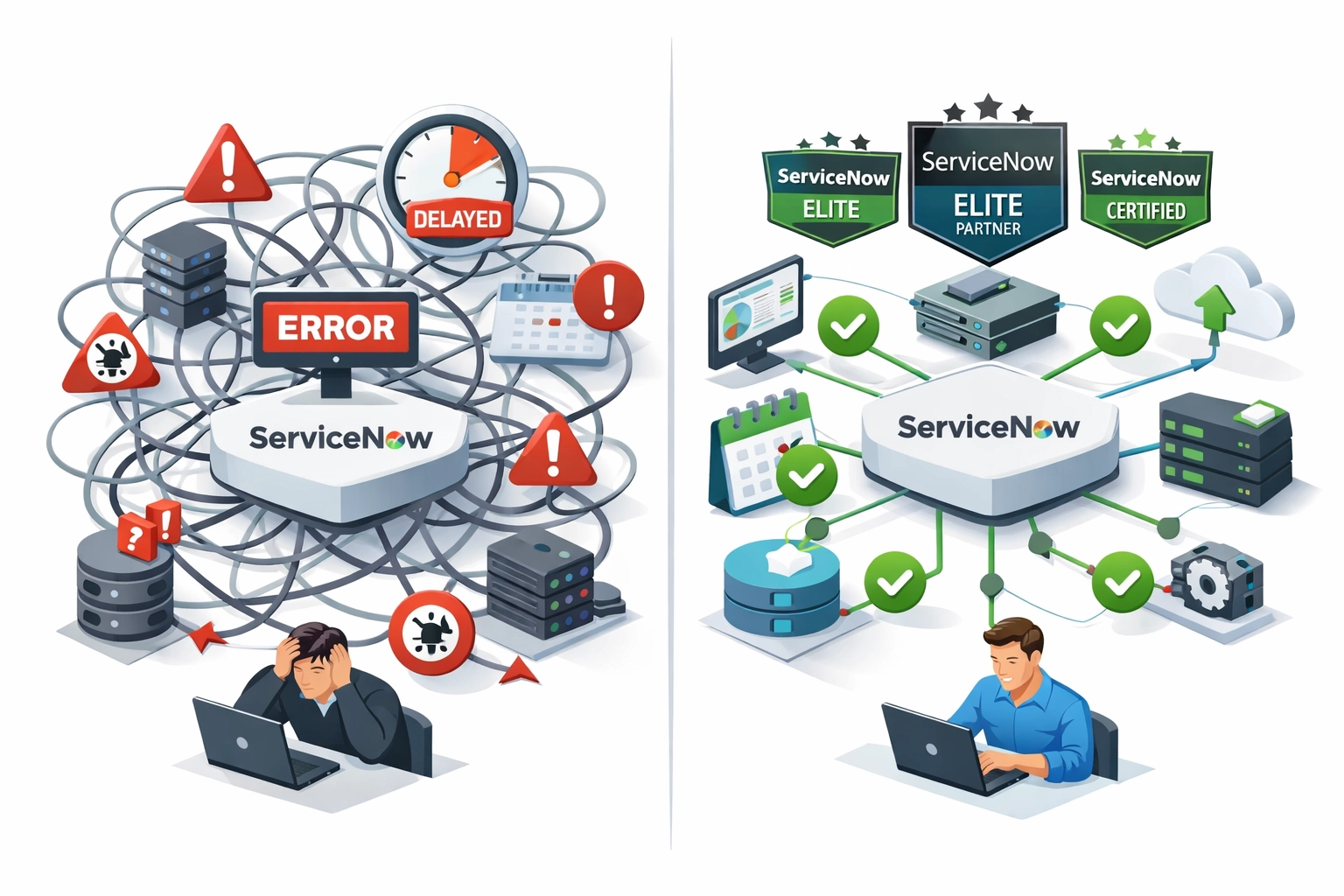
I demand to see Elite certifications for every module your partner proposes to implement. Anything less is accepting second-tier outcomes at first-tier pricing.
4. No Infrastructure Cost Visibility Framework
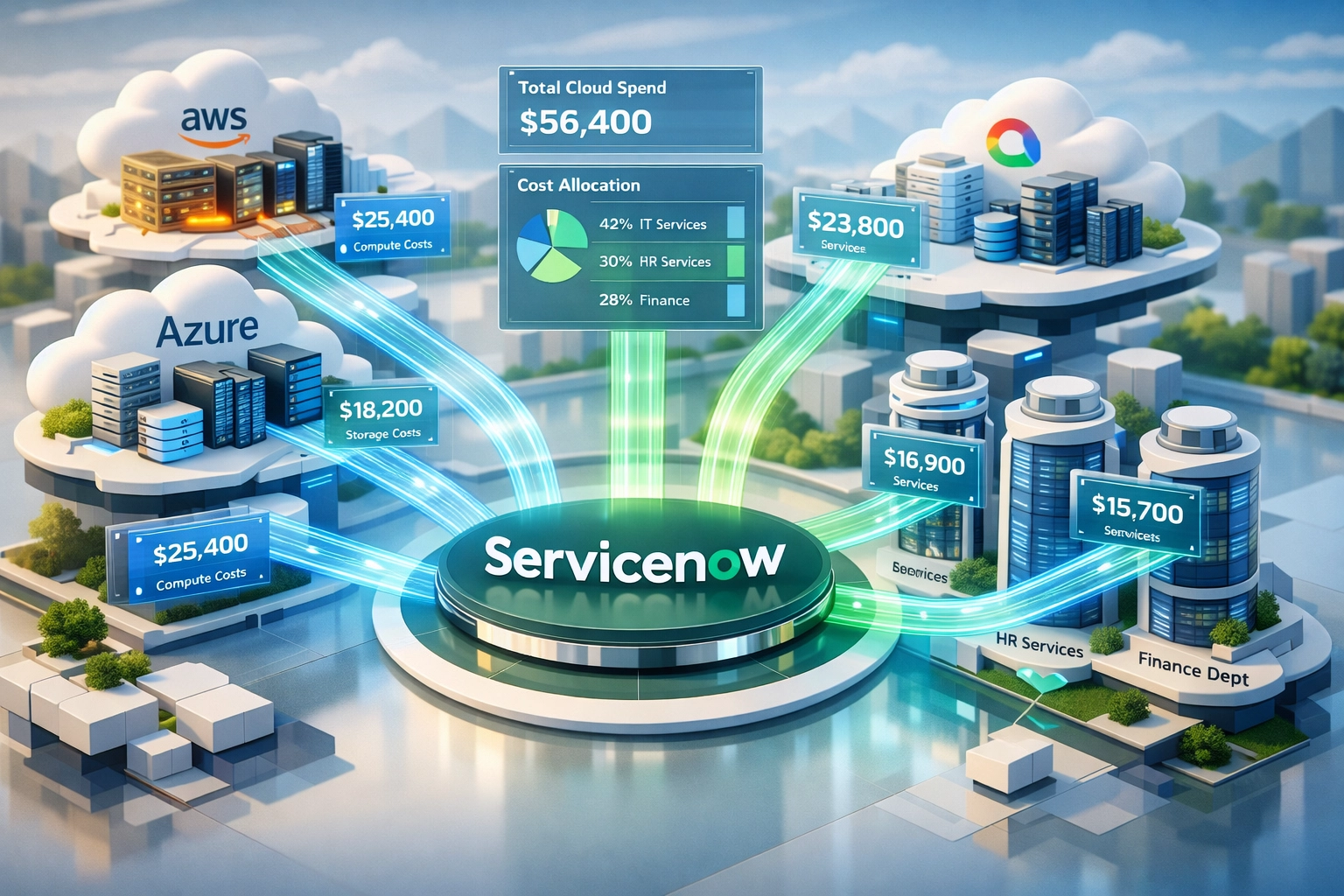
Your ITOM deployment should deliver real-time cloud spend allocation tied to business services. If your implementation partner hasn't configured Service Mapping to connect infrastructure costs to the applications consuming them, you're flying blind on one of ServiceNow's most transformative capabilities.
In the Xanadu release, ServiceNow enhanced Cloud Insights to provide granular cost attribution across multi-cloud environments. I've used these features to help clients identify cloud resource waste averaging 22-28% of total cloud spend: money hemorrhaging because nobody connected ServiceNow ITOM data to FinOps workflows.
5. Incident Prevention Isn't Part of the Strategy
Reactive incident management is expensive. Proactive incident prevention through Event Management and Predictive Intelligence drives 30-50% reductions in P1/P2 incidents when configured properly. If your partner positioned ServiceNow as a glorified ticketing system rather than an operational intelligence platform, they fundamentally misunderstand what you purchased.
I've architected event correlation engines that analyze 40,000+ events daily and suppress 87% of noise before it generates unnecessary tickets. This requires deep ITOM expertise, integration with APM tools, and sophisticated ServiceNow consulting services: capabilities your partner should bring or explicitly acknowledge they lack.
What a Rigorous Audit Should Reveal
When I conduct a free ServiceNow ROI and license audit, I'm evaluating six critical dimensions:
License Utilization Analysis: Active user counts versus purchased licenses, with engagement scoring based on login frequency, workflow completion rates, and module-specific feature adoption.
Module Efficiency Assessment: Feature utilization rates benchmarked against industry standards. For example, if you're only using 40% of ITAM's asset lifecycle management capabilities, we need to discuss whether you need the full license tier or if workflow gaps are preventing adoption.
Integration Architecture Review: API call optimization, redundant integration identification, and data flow efficiency. I commonly find organizations running three separate integrations to the same CMDB because different teams built point solutions without enterprise architecture oversight.
CMDB Health Score: Configuration accuracy, relationship mapping completeness, and data staleness metrics. Your CMDB should maintain 95%+ accuracy for service mapping to deliver value: anything less undermines every downstream process.
Compliance and Governance Posture: Particularly critical for EU organizations navigating DORA compliance requirements. Your ServiceNow implementation partner should configure audit trails, data retention policies, and access controls that satisfy regulatory frameworks by design.
ROI Initiative Identification: I typically uncover 12-18 specific optimization opportunities within the first 90 days of an audit, each with projected timeline and financial impact.
The Real Cost of Settling for "Good Enough"
I've seen too many organizations accept mediocre ServiceNow implementations because they don't know what excellence looks like. Your platform should deliver:
45-60% MTTR reduction within six months post-deployment
30%+ decrease in reactive incidents through predictive capabilities
95%+ service mapping accuracy for critical business services
$400K+ in annual license optimization for typical mid-market deployments
These aren't aspirational goals: they're the baseline expectations for competent ServiceNow consulting services backed by Elite-certified expertise in ITOM and ITAM.
Your Next Step Toward Operational Excellence
If anything in this analysis resonated with your current ServiceNow experience, you owe it to your organization to understand exactly where your budget is leaking. I offer a free 2026 ServiceNow ROI and License Audit that reveals:
Specific license waste by module and user cohort
Integration efficiency opportunities with projected savings
Compliance gaps (critical for DORA, GDPR, ESG reporting requirements)
ITOM optimization roadmap with 90-day quick wins
This isn't a sales pitch disguised as an audit: it's a comprehensive technical assessment that gives you ammunition to either hold your current partner accountable or make an informed decision about switching to ServiceNow consulting services that actually maximize your platform investment.
Visit the SnowGeek Solutions contact page to share your current implementation details and schedule your free audit. I'll personally review your environment and provide actionable recommendations within 10 business days. Additionally, register with SnowGeek Solutions for platform updates, release-specific optimization strategies, and expert insights that keep you ahead of the curve as ServiceNow continues evolving its ITOM, ITAM, and Agentic AI capabilities.

Your ServiceNow investment deserves a partner who views license efficiency, operational excellence, and measurable ROI as non-negotiable outcomes. Anything less is overpaying: not just financially, but in unrealized potential that compounds every quarter you settle for mediocrity.
Comments