
7 Mistakes You're Making with ServiceNow ITSM Implementation (and How to Fix Them in 2026)
- SnowGeek Solutions
- Feb 18
- 6 min read

I've witnessed hundreds of organizations invest heavily in ServiceNow ITSM only to watch their implementations stumble: not because the platform lacks capability, but because they repeat the same avoidable mistakes. After guiding enterprises through complex ITSM transformations across finance, manufacturing, and retail sectors, I can tell you that the difference between a transformative deployment and a costly failure comes down to seven critical decisions.
With the Xanadu release introducing AI-powered predictive intelligence and enhanced workflow automation, 2026 presents unprecedented opportunities to elevate your ITSM maturity. But these advanced capabilities will only magnify existing process flaws if you don't address foundational mistakes first.
This guide will walk you through the seven most damaging ServiceNow ITSM implementation errors I encounter regularly: and more importantly, how to fix them before they derail your digital transformation.
Mistake #1: Treating ITSM as a Tool Deployment Instead of Business Transformation
The single biggest mistake I see organizations make is approaching ServiceNow as a technical project rather than a business process revolution. Teams rush into configuration workshops without first defining their service delivery model, and the results are predictable: they automate broken workflows at digital speed.
I've analyzed implementations where Mean Time to Resolution actually increased by 23% in the first quarter post-go-live because teams simply documented their existing chaos instead of redesigning it. Your incident management process isn't supposed to mirror your email chains: it's meant to replace them with something measurably better.
How to fix it: Facilitate process discovery workshops with cross-functional stakeholders before touching the ServiceNow interface. Map your current incident, request, change, and problem workflows against ITIL 4 best practices and identify gaps. Align every configuration decision with specific business outcomes: faster resolution times, improved employee experience, or reduced operational costs. The Washington DC release includes enhanced Process Optimization capabilities that can help you baseline current performance and track improvements against industry benchmarks.

Mistake #2: Skipping Stakeholder Alignment and Business User Engagement
IT departments love designing ITSM systems in isolation, creating interfaces that make perfect sense to technicians but confuse everyone else. I've walked into organizations three months post-implementation where Finance teams still email IT for software requests because they "don't trust" the Service Portal.
When stakeholders aren't engaged early, you build a system optimized for your team's internal processes rather than your users' actual needs. The platform becomes a technical achievement nobody uses.
How to fix it: Bring business stakeholders into the conversation during the design phase, not after deployment. Conduct role-based workshops with Finance, HR, Operations, and end users to understand their service expectations and pain points. Demonstrate how the Service Catalog will simplify their request experience compared to email chains and spreadsheets. Use ServiceNow's Now Assist features in Xanadu to show how AI-powered search and conversational interfaces make self-service genuinely intuitive. When users see the value proposition clearly, adoption becomes organic rather than forced.
Mistake #3: Overcomplicating the Initial Rollout
Ambition is admirable, but attempting to deploy Incident Management, Problem Management, Change Management, Knowledge Management, Service Catalog, Asset Management, and Service Portal simultaneously is a recipe for paralysis. I've watched this approach increase project timelines by 140% and training requirements by 300%: overwhelming both implementation teams and end users.
Complexity kills momentum. Your users need quick wins that build confidence in the platform, not a feature tsunami that leaves them confused about where to start.
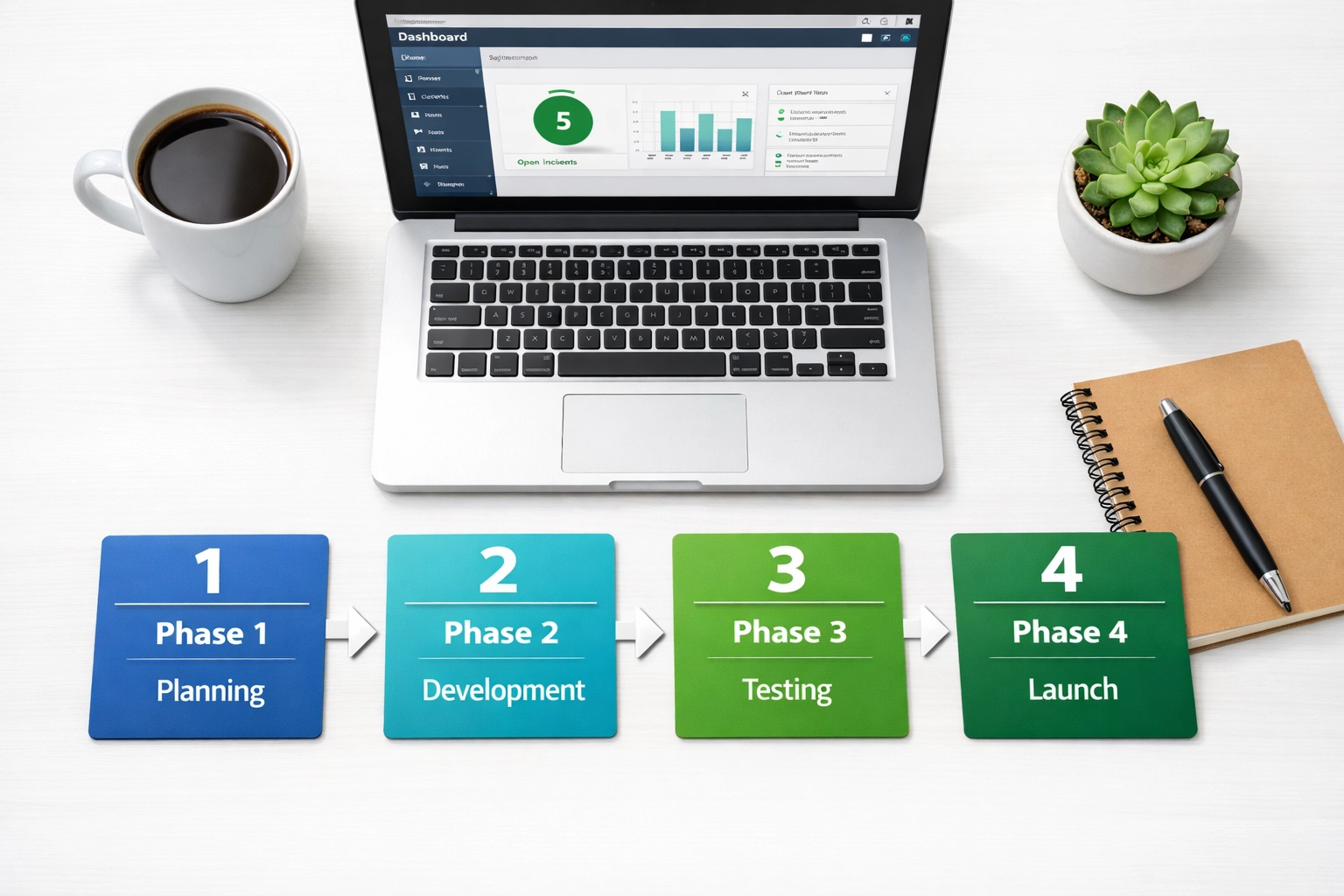
How to fix it: Adopt a phased deployment strategy focused on immediate pain relief. Start with core Incident Management and a streamlined Service Catalog that replaces your three most painful email-based request processes. Once users experience a 35-40% reduction in First Contact Resolution time and see tangible improvements in their daily workflows, they'll actively request expanded capabilities. I've seen this approach transform skeptics into champions within 60 days. Use the AgentWorkspace introduced in recent ServiceNow releases to give your service desk a unified interface from day one, then expand peripheral modules quarterly based on adoption metrics.
Mistake #4: Neglecting Data Quality and CMDB Accuracy
Your ServiceNow ITSM implementation is only as intelligent as the data feeding it. I've diagnosed incidents where wrong priority assignments and missed SLAs traced directly back to inaccurate CMDB relationships. If your Configuration Management Database shows 42% inaccuracy, your incident resolution recommendations will be wrong 42% of the time: it's mathematical.
Organizations often migrate their existing asset data without cleansing it first, importing years of outdated relationships, duplicate records, and orphaned configuration items. Then they wonder why their impact analysis features provide unreliable recommendations.
How to fix it: Implement a "validate before migrate" approach where ticket categories, user records, and asset relationships undergo data quality audits before ServiceNow ingestion. Prioritize accuracy over volume: a CMDB with 5,000 high-confidence CIs delivers more value than 50,000 questionable records. Establish ongoing governance using ServiceNow's CMDB Health dashboards in the Xanadu release to monitor data quality metrics and identify drift. The platform's AI-powered discovery tools can help automatically validate relationships, but they need clean baseline data to work effectively.
Mistake #5: Underestimating Organizational Change Management
I cannot emphasize this enough: technology adoption is a human challenge, not a technical one. Organizations assume users will automatically embrace new ITSM processes without explaining why the change matters to them personally. The result? Platform bypass rates exceeding 40% within three months of go-live, with shadow IT systems proliferating and your ServiceNow investment delivering zero return for nearly half your user base.
ServiceNow provides world-class ITSM capabilities, but if your employees still email their favorite technician or use rogue ticketing systems, you've simply added another underutilized tool to the enterprise portfolio.
How to fix it: Scope Organizational Change Management explicitly as a project workstream from day one, with dedicated budget and ownership. This isn't a task for your implementation lead: it demands focused expertise. Create role-based training programs that show users exactly how ServiceNow improves their specific workflows. Use interactive engagement tactics like platform naming contests, pilot groups, or lunch-and-learn sessions featuring real examples from your environment. I've seen organizations achieve 92% adoption rates by making change management a co-equal priority with technical delivery.

Mistake #6: Over-Customization That Blocks Future Innovation
ServiceNow's flexibility becomes a liability when organizations treat every unique business requirement as grounds for custom development. I've assessed implementations running two platform versions behind current release because custom code breaks during upgrades. The technical debt compounds quarterly, and upgrade costs increase by 40-60% compared to vanilla deployments.
Every custom workflow, UI modification, or API integration you build today becomes maintenance overhead tomorrow. The Washington DC and Xanadu releases deliver incredible out-of-box functionality: but you'll miss those innovations if your instance is buried under customization.
How to fix it: Establish a "configure first, customize only when critical" governance framework before development begins. Challenge every customization request with three questions: Does this deliver measurable business value? Can we achieve it through configuration? Will this block platform upgrades? Create a formal approval process requiring executive sign-off for customizations, forcing business justification beyond "that's how we've always done it." ServiceNow's Flow Designer and IntegrationHub provide powerful configuration-based options that eliminate most traditional customization needs.
Mistake #7: Automating Broken Processes
Automation is transformative when applied to optimized workflows: and disastrous when it simply accelerates dysfunction. I've debugged automated approval chains that route requests to employees who left the company two years ago, creating faster failure at digital speed.
Adding workflow automation to inefficient processes doesn't fix them; it magnifies existing issues with ruthless efficiency. Your poorly designed change approval process becomes a poorly designed automated change approval process: except now it fails faster and affects more stakeholders.
How to fix it: Redesign and optimize processes before implementing automation. Audit approval matrices, escalation paths, and assignment rules to ensure they reflect current organizational structures and business needs. Test workflows manually first to validate logic, then introduce automation incrementally. ServiceNow's Predictive Intelligence capabilities in the Xanadu release can identify process bottlenecks and optimization opportunities, but they require baseline process stability to deliver meaningful insights.
The Path to ITSM Excellence in 2026
These seven mistakes share a common thread: they're entirely avoidable with proper planning, stakeholder engagement, and expert guidance. Organizations that address these issues successfully achieve average MTTR reductions of 42%, SLA compliance improvements of 28%, and user satisfaction scores above 90%. The difference between those outcomes and costly disappointment often comes down to having experienced implementation specialists who've navigated these challenges before.
The 2026 ServiceNow platform delivers unprecedented AI capabilities, enhanced automation, and intuitive user experiences: but only for organizations that build on solid ITSM foundations. Don't let these common mistakes prevent you from maximizing your ServiceNow investment.
Your Next Step Toward ITSM Success
If you're planning a ServiceNow ITSM implementation or struggling with an existing deployment that hasn't delivered expected results, I invite you to visit the SnowGeek Solutions contact page to share your specific challenges. Our team specializes exclusively in ServiceNow implementations across ITSM, ITOM, ITAM, HRSD, and GRC, bringing deep technical expertise and proven methodologies that avoid these costly mistakes.
Additionally, register with SnowGeek Solutions for platform updates, expert insights, and best practices that will help you stay ahead of ServiceNow innovations throughout 2026 and beyond. Let's transform your ITSM vision into measurable operational excellence.
Comments