
7 Mistakes You're Making with ServiceNow ITOM (and How to Fix Them Before Your 2026 License Renewal)
- SnowGeek Solutions
- Feb 18
- 6 min read

I have witnessed firsthand how organizations hemorrhage budget during ServiceNow license renewals because they're carrying technical debt in their ITOM implementations. With the Washington DC release enabling Agentic AI workflows and DORA compliance deadlines accelerating across the EU, the mistakes you're making today compound into six-figure remediation costs by 2026. This guide will walk you through the seven critical errors that separate high-performing ITOM environments from those stuck in firefighting mode: and the precise fixes that maximize your platform ROI.
Mistake #1: Operating with Catastrophic CMDB Data Quality
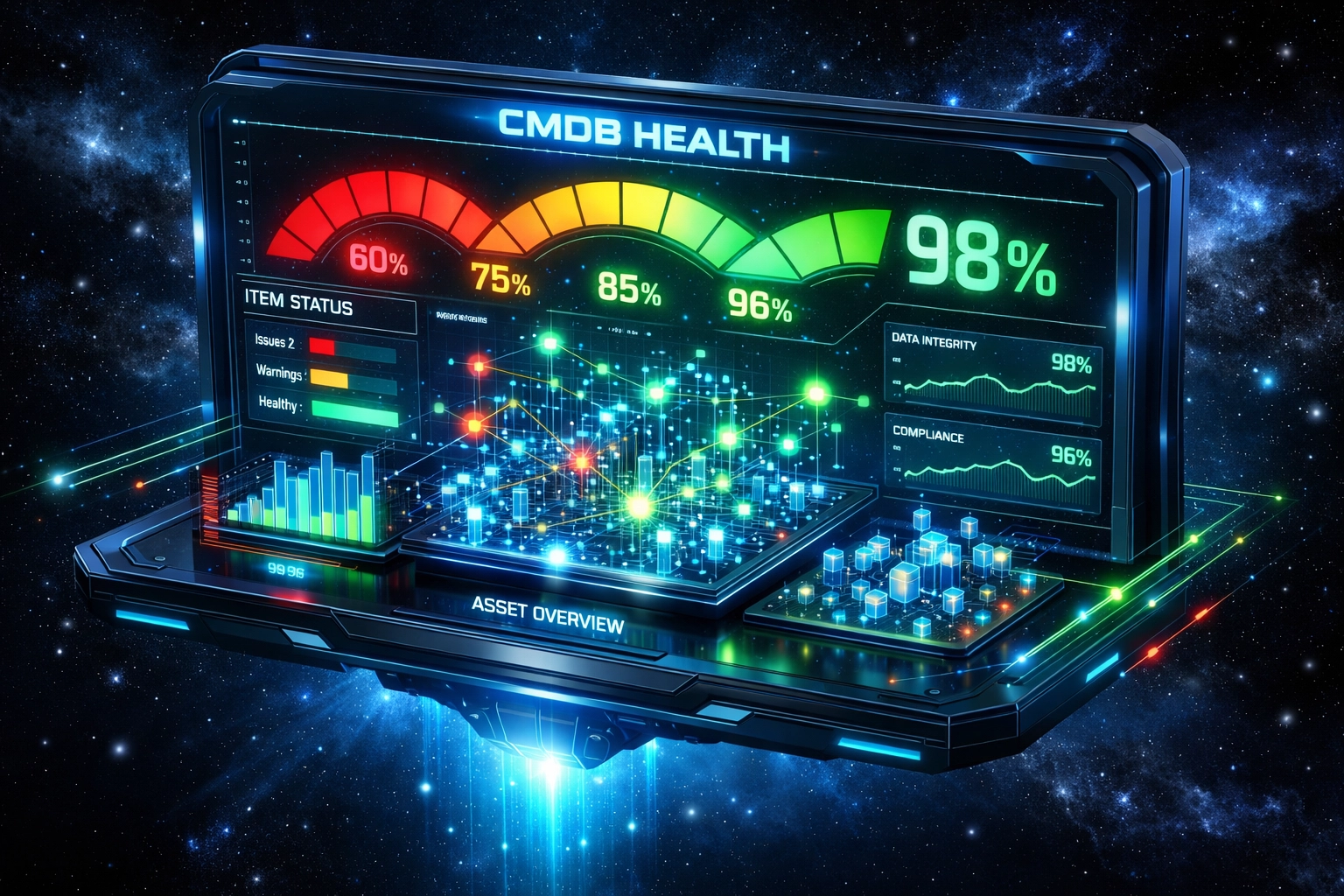
Your CMDB accuracy sits somewhere between 60-75%, and you've convinced yourself that's acceptable. It's not. I've seen organizations in this "catastrophic zone" attempt to deploy Agentic AI workflows in the Washington release, only to watch automated decisions fail spectacularly because the underlying configuration data was fundamentally unreliable.
AI-driven automation demands precision. Your ServiceNow ITOM environment needs 98% or higher CMDB accuracy for AI-enabled operations to function effectively. One manufacturing client I worked with discovered their incident automation was routing critical alerts to decommissioned servers because their CMDB showed assets that hadn't existed for 18 months.
The Fix: Implement continuous data validation workflows using ServiceNow's built-in Health Log and Discovery reconciliation engines. Establish weekly CMDB health scoring dashboards that track configuration item accuracy across your critical classes: servers, applications, databases, and network devices. Set automated alerts when accuracy drops below 95% in any category. This isn't optional housekeeping; it's the foundation that determines whether your ITOM investment delivers operational excellence or expensive failures.
Mistake #2: Running Discovery Audits That Miss Shadow IT
You're conducting basic discovery scans without comprehensive network traffic analysis, cloud spend reconciliation, or legacy system integration assessments. Shadow IT exposure represents one of the most dangerous blind spots in modern ITOM implementations.
I recently worked with a financial services client who discovered $2.3M in untracked cloud spend simply by extending their discovery scope to include proper network traffic analysis. This oversight had persisted through three years of operations, silently draining budget that executive leadership assumed was under management.
The Fix: Deploy ServiceNow Discovery with full credential coverage across your infrastructure. Enable Service Mapping to create complete application dependency maps that reveal the actual relationships between your business services and underlying IT components. For cloud environments, integrate Cloud Insights with your discovery patterns to capture multi-cloud assets automatically. Schedule quarterly discovery audits that specifically target shadow IT exposure through anomaly detection: looking for resource consumption patterns that don't match your authorized asset inventory.
Mistake #3: Failing to Integrate ITOM with ITAM
Your ITOM and ITAM implementations are running as parallel universes instead of integrated ecosystems. This architectural mistake creates duplicate effort, inconsistent data, and missed opportunities for cost optimization during license renewals.
Organizations with properly integrated ITOM-ITAM environments achieve 30-40% better license utilization metrics because they can correlate actual usage patterns with license entitlements. I've guided clients through integration projects that identified $800K in unused licenses within 60 days: software that IT teams thought was actively deployed but had been abandoned by business units.
The Fix: Architect seamless data flows between your ITOM Discovery processes and ITAM Software Asset Management modules. Configure automated reconciliation that validates discovered software instances against your license inventory. Create unified dashboards that show ITOM health metrics alongside ITAM compliance status, giving leadership a complete view of IT asset performance and cost efficiency. This integration becomes critical when ServiceNow consulting services evaluate your environment before license renewal negotiations.

Mistake #4: Retrofitting Compliance Instead of Architecting It
You're treating DORA compliance, GDPR requirements, and ESG reporting as afterthoughts: bolting frameworks onto existing implementations rather than designing them into your ITOM architecture from inception. This approach costs exponentially more than building compliance correctly from day one.
A manufacturing client spent $400K remediating compliance gaps that proper initial architecture would have prevented. They had implemented sophisticated monitoring capabilities but failed to build in the automated incident classification required for DORA operational resilience thresholds. When regulators requested audit trails, they discovered their ITOM environment wasn't capturing the business context needed to demonstrate compliance.
The Fix: Design compliance into your ITOM architecture immediately. Map ServiceNow's Governance, Risk, and Compliance (GRC) module to your ITOM workflows. For DORA compliance, implement automated incident classification that tags events based on operational resilience thresholds and creates audit trails documenting all configuration changes with business justification. For ESG reporting, architect comprehensive tracking of IT asset energy consumption and lifecycle management into your CMDB structure from the start. Working with specialized ServiceNow consulting services ensures you're building regulatory requirements into foundational architecture rather than attempting expensive remediation later.
Mistake #5: Ignoring Agentic AI Readiness in the Washington Release
You're still treating AI capabilities as future considerations rather than immediate implementation requirements. The Washington DC release introduced Agentic AI workflows that fundamentally transform how ITOM operations function: but only if your environment meets the architectural prerequisites.
Organizations attempting to deploy AI agents on top of poorly architected ITOM environments experience failure rates exceeding 70%. I've witnessed teams invest months configuring AI-driven incident response, only to discover their underlying data quality, integration architecture, and automation frameworks weren't ready to support autonomous decision-making.
The Fix: Conduct an AI readiness assessment that evaluates your CMDB accuracy (returning to Mistake #1), integration maturity, automation coverage, and data governance frameworks. Implement the foundational elements required for Agentic AI before attempting agent deployment. This includes establishing clear data ownership, implementing automated data quality scoring, and creating the service dependency maps that AI agents need to understand operational context. Partner with a ServiceNow implementation partner who has actual AI deployment experience rather than theoretical knowledge.

Mistake #6: Underestimating Change Management Complexity
Your organization implements sophisticated ITOM capabilities but operates without automated change risk scoring, resulting in deployment failure rates 30-50% higher than properly managed environments. I've calculated that mid-market enterprises operating without Change Intelligence workflows experience $600K to $1.5M in annual losses from failed changes, emergency rollbacks, and the cascading incidents these failures trigger.
One telecommunications client was pushing 200+ changes monthly through manual approval processes. Their mean time to resolution (MTTR) for change-related incidents averaged 4.2 hours because they had no automated conflict detection. After implementing Change Intelligence with machine learning risk scoring, their MTTR dropped to 47 minutes while deployment success rates improved from 78% to 96%.
The Fix: Implement ServiceNow's Change Intelligence module with automated change risk scoring that evaluates configuration item relationships, historical success patterns, and business service dependencies. Configure collision detection that identifies conflicting changes before deployment. Create predictive analytics dashboards that show change success probability based on historical data, team expertise, and environmental factors. This transforms change management from reactive firefighting into proactive risk mitigation.
Mistake #7: Attempting DIY Implementation Without Specialized Expertise
You're attempting self-directed ITOM implementations without partnering with specialized ServiceNow consulting services, and it's costing you 18 months in delayed ROI compared to organizations working with experienced implementation partners. The regulatory landscape demands specialized knowledge: DORA compliance requirements, GDPR data sovereignty rules, and ESG reporting standards require architectural decisions during initial implementation that determine whether you achieve compliance efficiently or face expensive remediation cycles.
I've worked with organizations that spent two years building ITOM capabilities internally, only to discover they needed to rearchitect 40% of their implementation to meet regulatory requirements they didn't understand during initial design. The cost differential between proper upfront architecture and subsequent remediation ranges from 3x to 7x the original investment.
The Fix: Partner with ServiceNow implementation partner firms that demonstrate actual regulatory expertise, not just platform knowledge. Evaluate their experience with DORA compliance implementations, GDPR-compliant data architectures, and ESG reporting frameworks. Request case studies showing measurable ROI metrics: not generic success stories, but specific MTTR improvements, license optimization percentages, and compliance certification timelines. The right partnership transforms your ITOM implementation from a technical project into a strategic asset that drives operational excellence.
Taking Action Before Your 2026 License Renewal
These seven mistakes compound over time, creating technical debt that becomes exponentially more expensive to remediate as you approach license renewal negotiations. Organizations that address these issues proactively achieve 35-50% better renewal terms because they can demonstrate actual platform utilization, operational maturity, and measurable business value.
I recommend conducting a comprehensive ITOM health assessment within the next 90 days that evaluates your CMDB accuracy, discovery scope, ITOM-ITAM integration maturity, compliance readiness, AI implementation status, change management effectiveness, and overall architectural soundness.
Ready to maximize your ServiceNow ITOM investment before 2026? Visit the SnowGeek Solutions contact page to share your specific implementation challenges and schedule your Free 2026 ServiceNow ROI & License Audit. Register with SnowGeek Solutions for platform updates and expert insights that help you stay ahead of evolving ITOM best practices, regulatory requirements, and optimization opportunities that transform your ServiceNow environment into a strategic competitive advantage.
Comments