
7 Mistakes You're Making with ServiceNow ITOM ROI (and How a Free 2026 Audit Fixes Them)
- SnowGeek Solutions
- Feb 20
- 6 min read

I have witnessed firsthand how organizations invest millions into ServiceNow IT Operations Management (ITOM) only to achieve a disappointing 12% ROI after 24 months. Meanwhile, companies with the right approach are hitting 347% median ROI. The difference? They avoid seven critical mistakes that silently drain value from your ITOM deployment.
After conducting hundreds of ITOM implementations across enterprise environments, I can tell you that these mistakes are entirely preventable. This guide will walk you through each pitfall and show you how a structured 2026 audit transforms your ServiceNow investment into measurable operational excellence.
Mistake #1: Selecting Your ServiceNow Implementation Partner Based on Price or Brand Recognition
This is the most damaging mistake I encounter. Current data reveals that 73% of companies select implementation partners based on price or brand recognition rather than specialized ITOM architecture expertise. The result? Abandoned deployments, license waste, and frustrated stakeholders.
When you choose a ServiceNow consulting services provider without deep ITOM expertise, you inherit generic configurations that fail to address your unique infrastructure complexity. I have seen organizations deploy Discovery without proper scoping rules, resulting in CMDB pollution that takes 18 months to remediate.
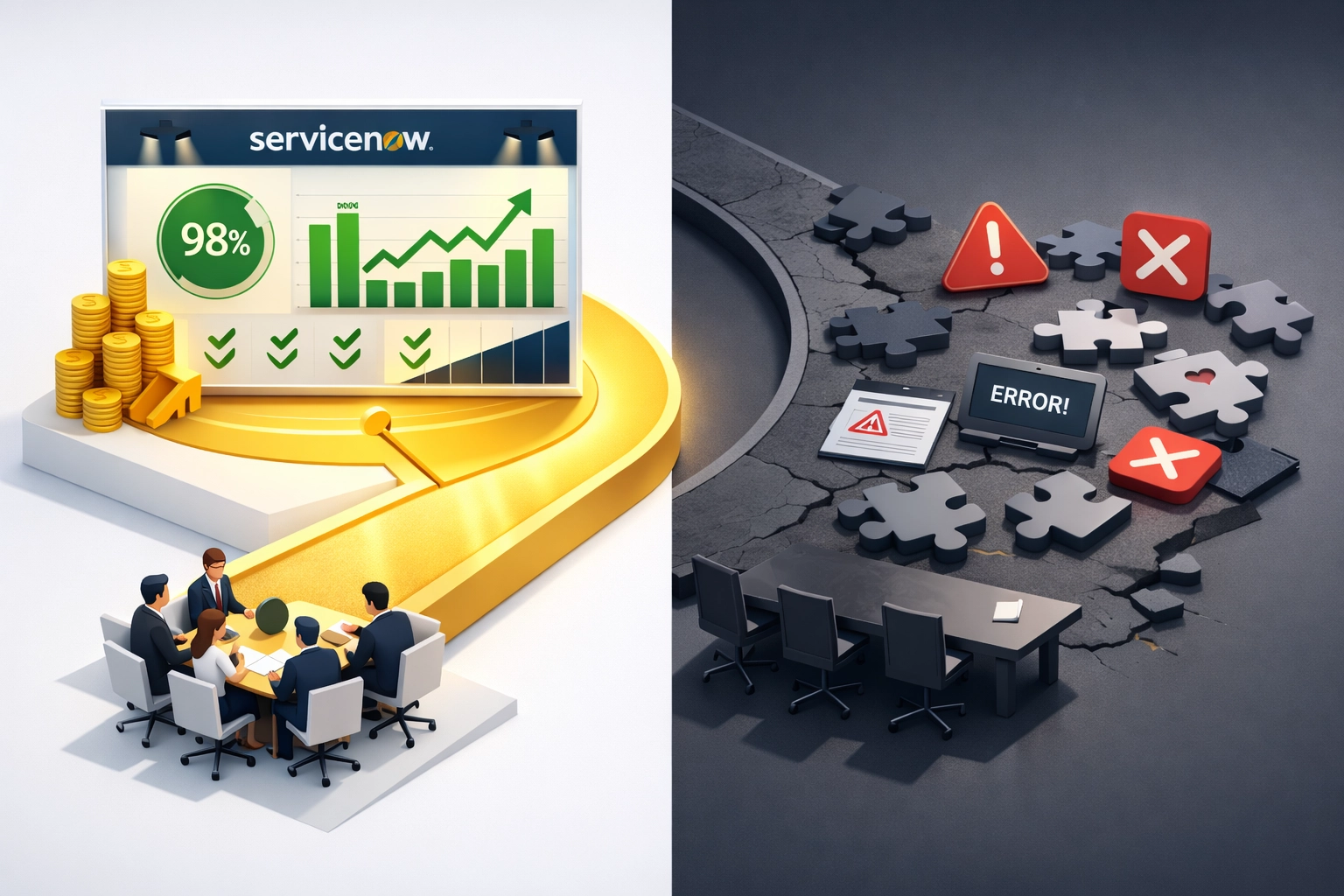
A specialized ServiceNow implementation partner brings proven ITOM methodologies, pre-built integration patterns for your tech stack, and the architectural foresight to scale your deployment across hybrid and multi-cloud environments. The Washington DC release introduced enhanced Service Graph Connectors and Agentic AI capabilities that demand specialized knowledge to implement correctly.
The Audit Fix: Our Free 2026 ServiceNow ROI & License Audit evaluates your current partner's ITOM delivery methodology against 47 technical benchmarks. We identify gaps in Discovery patterns, Event Management correlation rules, and automation workflows that prevent you from achieving transformative outcomes.
Mistake #2: Failing to Activate Discovery and Event Management as Your Foundation
Your CMDB should not be a manually-updated spreadsheet. Yet I consistently find organizations that purchased ITOM licenses but never properly activated Discovery and Event Management. This keeps your infrastructure visibility clouded and your Mean Time to Resolution (MTTR) stubbornly high.
Discovery automated infrastructure mapping dramatically reduces the effort required to maintain configuration accuracy. Event Management proactively identifies infrastructure issues before they impact services. Together, they transform ITOM from a reactive tool into a predictive operational platform.
The Xanadu release enhanced Discovery with improved cloud application dependency mapping and container orchestration visibility. Organizations leveraging these capabilities reduced their MTTR by an average of 43% within six months.
The Audit Fix: We assess your Discovery schedule optimization, MID Server placement strategy, and Event Management correlation rules. Our audit identifies which infrastructure zones remain unmapped and calculates the hidden costs of manual CMDB maintenance: typically $340,000 annually for mid-market enterprises.
Mistake #3: Under-Utilizing 41% of Existing Capabilities While Being Over-Licensed by 23%
This contradiction represents one of the largest ROI opportunities I identify during audits. Organizations purchase comprehensive ITOM modules but activate only basic functionality, while simultaneously paying for licenses their teams never use.

ServiceNow ITAM (IT Asset Management) integration with ITOM creates powerful cost optimization scenarios. Automated license harvesting, proactive renewal management, and usage-based optimization can reduce software costs by 18-31%. Yet most organizations never connect these capabilities.
I have guided clients through feature activation roadmaps that unlock $2.7 million in annualized value from existing licenses: without purchasing additional modules. This involves enabling Cloud Cost Management dashboards, activating AIOps for predictive incident prevention, and implementing automated remediation workflows.
The Audit Fix: Our comprehensive license utilization analysis maps every entitled feature against your current activation state. We provide a prioritized enablement roadmap showing which capabilities deliver immediate ROI and which require prerequisite configurations.
Mistake #4: Deploying Without a Structured Implementation Methodology
Only 33% of companies achieve positive ROI from AI and automation spending. The determining factor? Implementation methodology, not just technology features.
Generic ServiceNow implementations follow waterfall approaches that delay value realization. Specialized ITOM deployments demand iterative, value-stream-focused methodologies that deliver measurable outcomes every 4-6 weeks.
I structure implementations around five core value streams: incident management velocity, CMDB health scoring, autonomous resolution rates, prevented incidents through predictive analytics, and license optimization. Each value stream has defined KPIs, baseline measurements, and success criteria.
The Audit Fix: We evaluate your implementation methodology against proven ITOM delivery frameworks. This includes assessing your change management approach, stakeholder engagement model, and technical governance structure. We identify process gaps that cause deployment delays and provide corrective action plans with specific timelines.
Mistake #5: Missing Phased Automation Strategy with Clear ROI Milestones
Organizations often approach ITOM automation as an all-or-nothing proposition. This creates change management resistance, extended deployment timelines, and unclear value attribution.

A structured phased automation strategy starts with high-volume, low-complexity incidents that deliver quick wins. Phase one might automate password resets and access provisioning: achieving 40% incident deflection in 60 days. Phase two tackles more complex scenarios like automated diagnostics and remediation for common infrastructure alerts.
The Washington DC release introduced enhanced Agentic AI capabilities that autonomously resolve Level 1 incidents without human intervention. However, implementing these features requires proper workflow orchestration, integration bus configuration, and fallback procedures for complex scenarios.
I recommend establishing financial metrics dashboards within the first 30 days of deployment. Track cost per ticket, automation resolution rates, and incident prevention metrics. This creates executive visibility into ITOM value and secures ongoing investment.
The Audit Fix: Our audit maps your current automation maturity across the ServiceNow Automation Capability Model. We identify which processes offer the highest automation ROI and provide a phased roadmap with investment requirements and expected returns for each phase.
Mistake #6: Neglecting CMDB Health as Your North Star Metric
CMDB accuracy directly impacts every ITOM capability. Poor CMDB health degrades Service Mapping accuracy, breaks Event Management correlation, and undermines Change Risk Assessment. Yet organizations treat CMDB governance as an afterthought.
I establish CMDB Health Dashboard as a executive-level KPI, tracked monthly with clear accountability. Target metrics include: 95%+ CI completeness, 98%+ relationship accuracy, and less than 3% orphaned CIs. These benchmarks enable reliable service impact analysis and accurate cost allocation.
ServiceNow ITOM provides automated CMDB health scoring within the platform. The Identification and Reconciliation Engine continuously validates CI data against Discovery sources, flagging anomalies for remediation. Organizations maintaining 95%+ CMDB health scores reduce their change-related incidents by 52%.
The Audit Fix: We conduct a comprehensive CMDB health assessment analyzing CI completeness, relationship accuracy, duplicate CI rates, and staleness metrics. Our audit quantifies the operational impact of CMDB issues: typically correlated with 23-40% higher MTTR and reduced First Call Resolution rates.
Mistake #7: Ignoring Integration Architecture for Observability Tools
Modern IT operations demand unified observability across monitoring tools, APM platforms, and infrastructure management solutions. Organizations deploying ITOM in isolation create data silos that prevent comprehensive service visibility.
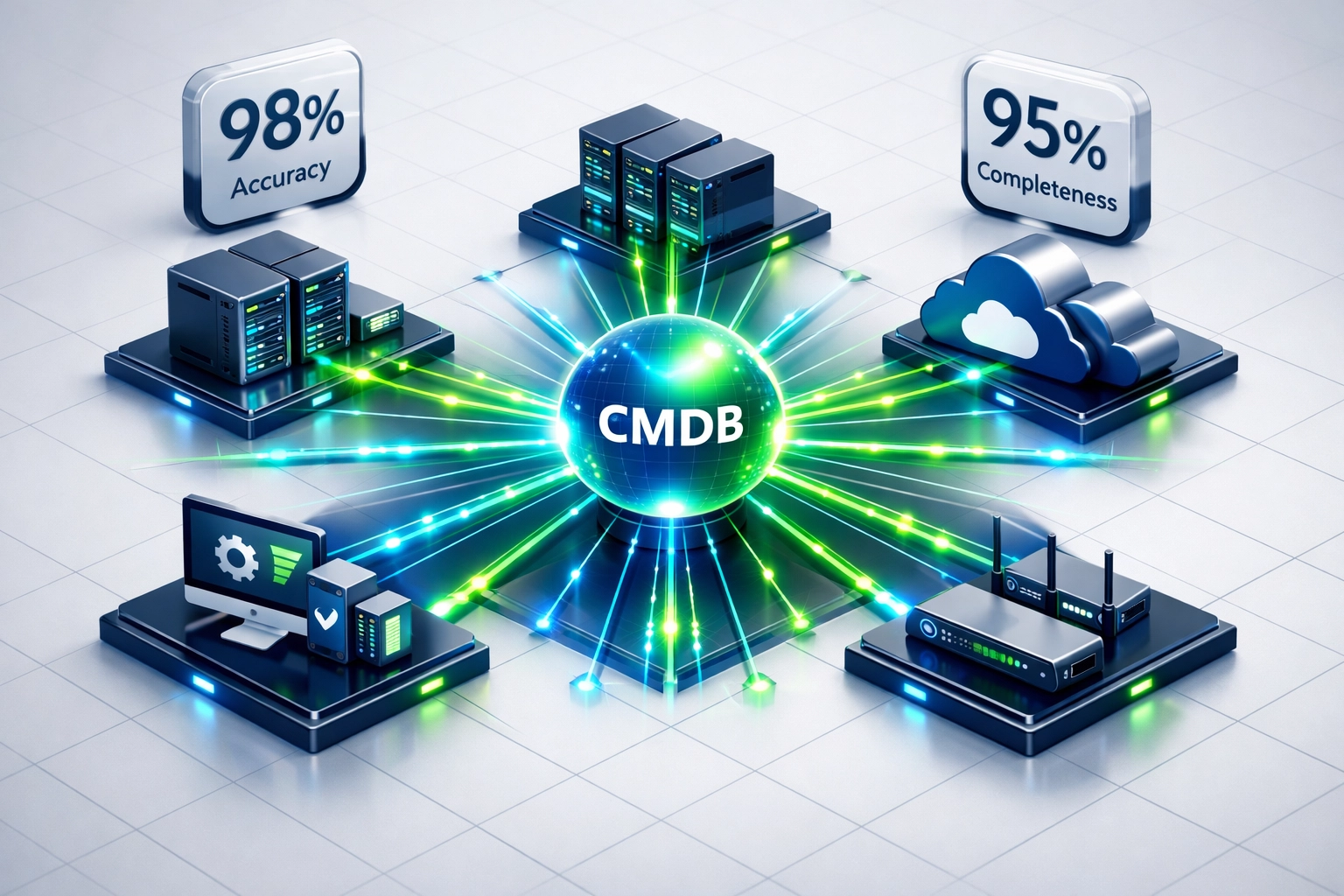
ServiceNow Event Management serves as your integration hub, consolidating alerts from Splunk, Dynatrace, AppDynamics, Datadog, and legacy monitoring tools. Proper integration architecture includes bidirectional communication, automated ticket enrichment, and unified service health dashboards.
I have implemented integration frameworks that reduced alert noise by 84% through intelligent event correlation and deduplication. This prevents alert fatigue while ensuring critical issues receive immediate attention. The Washington DC release enhanced REST API performance and introduced additional pre-built integrations for cloud-native observability platforms.
The Audit Fix: Our integration maturity assessment evaluates your current tool landscape and identifies integration gaps preventing unified service visibility. We provide reference architecture diagrams, API utilization analysis, and integration roadmap recommendations aligned with your observability strategy.
Transform Your ITOM Investment with a Free 2026 Audit
These seven mistakes collectively drain millions in unrealized ROI from ServiceNow ITOM deployments. The encouraging news? Every mistake is fixable with the right expertise and structured approach.
As a specialized ServiceNow implementation partner focused exclusively on IT Service Management, I have developed a comprehensive audit methodology that uncovers hidden savings across your ITOM deployment. Our Free 2026 ServiceNow ROI & License Audit provides:
Detailed license utilization analysis with optimization recommendations
CMDB health scoring with remediation prioritization
Automation maturity assessment with phased implementation roadmap
Integration architecture review with technical gap analysis
ROI projection modeling for proposed enhancements
This assessment typically reveals $1.8-$4.3 million in recoverable value for enterprise deployments: through license optimization, capability activation, and process automation.
Your Next Steps Toward Operational Excellence
Don't let these preventable mistakes continue draining value from your ServiceNow investment. Visit the SnowGeek Solutions contact page to share your project details and schedule your complimentary 2026 audit.
Register with SnowGeek Solutions for platform updates and expert insights delivered directly to your inbox. Our team monitors every ServiceNow release for features that impact ITOM ROI and translates technical capabilities into business outcomes.
The difference between 12% ROI and 347% ROI isn't the platform: it's the expertise guiding your implementation. Let's transform your ServiceNow ITOM deployment into the operational excellence engine your organization deserves.
Comments