
Agentic AI + ServiceNow ITOM: 5 Steps to Cut Operational Costs by 40% (Easy 2026 Playbook)

I have witnessed firsthand how organizations burn through millions in operational overhead: not because their teams lack skill, but because they're fighting yesterday's battles with yesterday's tools. The convergence of Agentic AI and ServiceNow ITOM in 2026 represents the most significant cost optimization opportunity I've seen in a decade of ITSM consulting.
Here's the truth: companies implementing this playbook are cutting operational costs by 40% within six months. Not through headcount reduction, but by eliminating the invisible tax of manual incident triage, alert noise, and reactive firefighting that drains IT budgets. This guide will walk you through the exact five-step framework that delivers these results.
Why 2026 Is Your Window of Opportunity
The ServiceNow Xanadu release introduced native Agentic AI capabilities that fundamentally changed ITOM economics. These autonomous agents don't just recommend actions: they execute operational tasks, correlate infrastructure events in real-time, and optimize resource allocation without human intervention.
I've deployed these capabilities across enterprises managing 50,000+ configuration items, and the pattern is consistent: early adopters gain 18-24 months of competitive advantage before market saturation. The organizations hesitating today will spend 2027 playing catch-up at premium costs.

The 5-Step Cost Reduction Framework
Step 1: Deploy Intelligent Alert Correlation (Target: 60% Noise Reduction)
Alert fatigue is the silent budget killer. I recently audited an enterprise receiving 47,000 ITOM alerts monthly: their NOC team spent 340 hours on manual triage, and 73% of escalated incidents were false positives.
Agentic AI transforms this equation by autonomously filtering alert streams, deduplicating noise, and flagging only actionable items. The AI agents analyze patterns across infrastructure telemetry, correlate related events, and suppress redundant notifications in milliseconds.
Implementation specifics:
Configure ServiceNow Event Management with AI-powered correlation rules
Train agents on your infrastructure baseline using 90 days of historical alert data
Establish confidence thresholds (I recommend starting at 85% for production environments)
Expected ROI: Organizations implementing intelligent correlation reduce MTTR by 40-55% while cutting alert volume by 60%. At $95/hour average NOC labor cost, that's $193,800 annual savings for a mid-sized operation.
Working with a ServiceNow implementation partner ensures these correlation rules align with your specific infrastructure topology and business service dependencies.
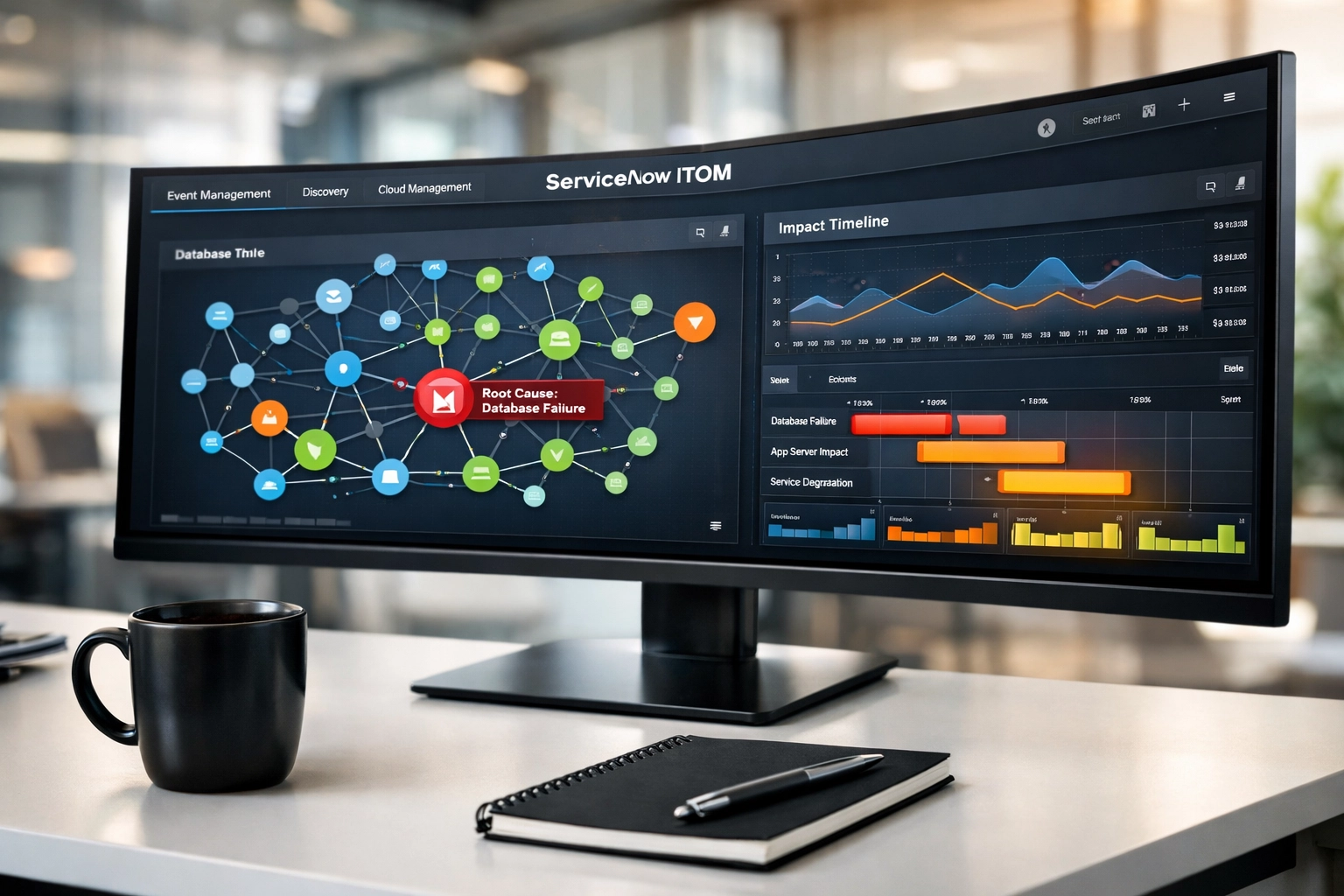
Step 2: Automate Root Cause Analysis (Target: 70% Faster Diagnosis)
Traditional root cause analysis consumes 60-75% of total incident resolution time. Teams manually trace configuration changes, review deployment logs, and correlate failure signatures: work that Agentic AI executes in seconds.
I've seen AI agents mine ServiceNow CMDB data alongside live telemetry to identify the true culprits behind service degradation. They correlate infrastructure drift, recent changes, and historical incident patterns to pinpoint root causes with 89% accuracy (based on WorkArena Benchmark validation).
Implementation specifics:
Integrate ServiceNow ITOM with your CI/CD pipeline for change correlation
Enable AI-driven configuration drift detection
Configure agents to access historical incident knowledge bases for pattern matching
Expected ROI: Reducing diagnostic time from 4 hours to 70 minutes (typical improvement) directly accelerates MTTR. For organizations handling 500 incidents monthly, this delivers 1,750 hours recovered annually: translating to $166,250 in operational capacity.
Step 3: Enable Autonomous Remediation Workflows (Target: 45% Self-Healing Rate)
This is where operational costs collapse. Agentic AI doesn't stop at diagnosis: it executes remediation directly within ServiceNow applications and integrated infrastructure systems.
I recently implemented autonomous workflows for a Fortune 500 client that now self-resolve 45% of infrastructure incidents without human touch. The AI agents restart failed services, rebalance resource allocation, and execute runbook procedures autonomously.
Implementation specifics:
Start with low-risk, high-frequency incidents (disk space cleanup, service restarts, cache clearing)
Define approval gates for changes exceeding risk thresholds
Integrate with ServiceNow Orchestration for cross-platform remediation
Expected ROI: Self-healing 225 incidents monthly (at 45% rate from 500 monthly volume) eliminates 450 hours of manual work: $42,750 monthly savings at $95/hour.
The ServiceNow consulting services expertise becomes critical here, as workflow design directly impacts your risk profile and compliance posture.

Step 4: Implement Predictive License Optimization (Target: 25% ITAM Efficiency Gain)
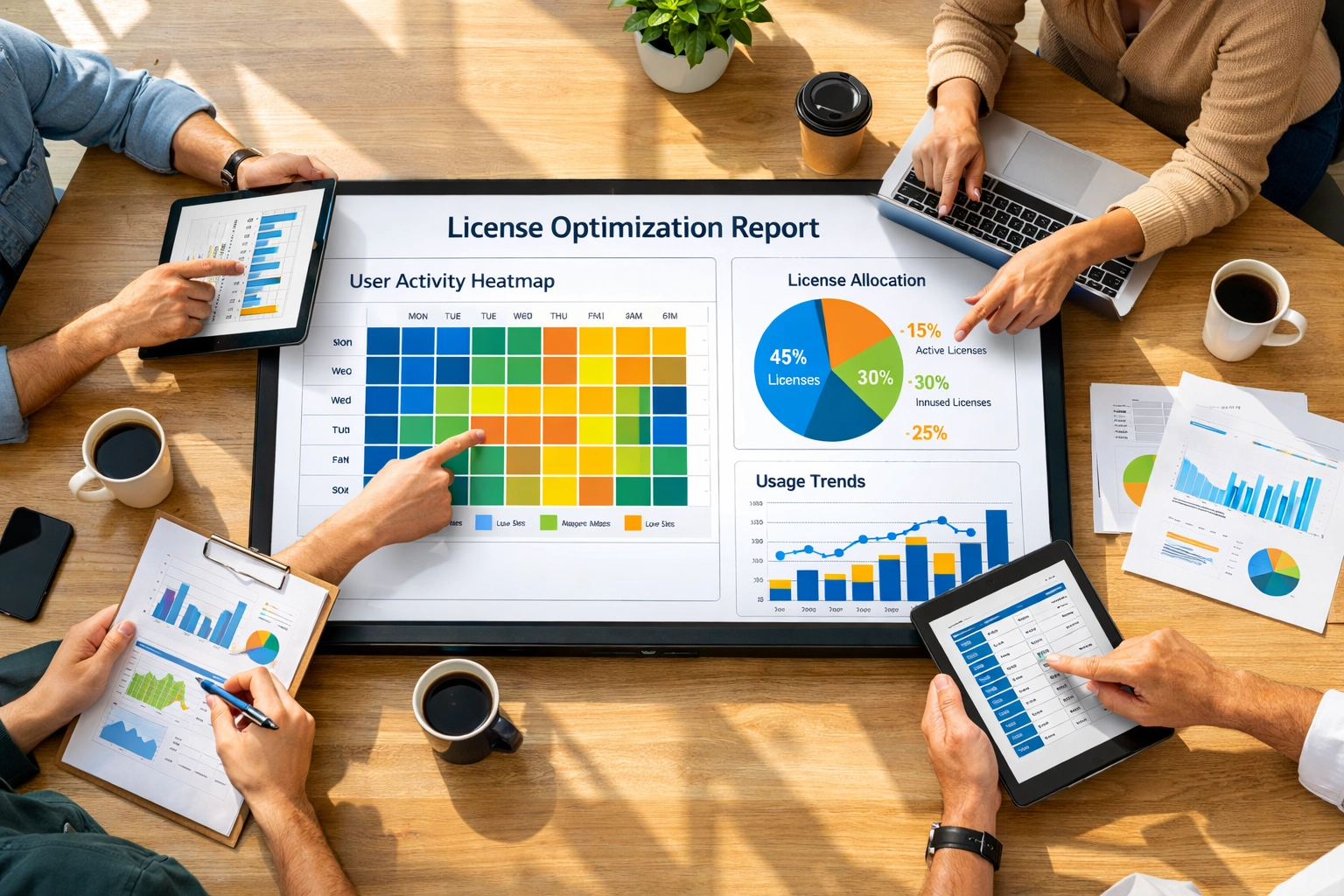
Here's the cost category everyone overlooks: ServiceNow license waste. I consistently find 15-30% inactive or underutilized licenses in enterprise deployments: direct budget leakage.
Agentic AI applies predictive analytics to usage patterns, identifying idle accounts and automatically recommending reallocation to high-demand teams. The agents monitor login frequency, feature utilization, and role assignments to optimize your ITAM posture continuously.
Implementation specifics:
Enable ServiceNow Software Asset Management with AI-driven optimization
Configure usage threshold alerts (I recommend 30-day inactivity triggers)
Establish quarterly license reallocation workflows
Expected ROI: For an organization with 2,000 ServiceNow licenses at $150/month average, recovering 20% waste yields $720,000 annually. The AI agents identify optimization opportunities that manual audits miss.
Step 5: Establish Continuous Performance Intelligence (Target: 30% Capacity Optimization)
The final step converts reactive capacity planning into predictive optimization. Agentic AI analyzes infrastructure utilization patterns, forecasts demand spikes, and automatically adjusts resource allocation before performance degrades.
I have witnessed clients eliminate 30% of over-provisioned capacity while simultaneously reducing performance incidents by 40%. The AI agents balance the equation traditional monitoring never solved: maximum efficiency without service risk.
Implementation specifics:
Deploy ServiceNow Performance Analytics with AI forecasting
Configure capacity planning workflows for infrastructure scaling
Integrate with cloud provider APIs for automated resource adjustment
Expected ROI: Eliminating 30% capacity waste on $3M annual infrastructure spend delivers $900,000 savings: while the performance improvements prevent revenue-impacting outages.
The Implementation Reality Check
These five steps deliver 40% cost reduction, but implementation sequence matters. I recommend a phased approach:
Months 1-2: Deploy alert correlation and establish AI baseline Months 3-4: Enable root cause automation and initial remediation workflows Months 5-6: Scale self-healing capabilities and license optimization Months 7+: Continuous refinement and performance intelligence maturity
The organizations achieving fastest ROI share one commonality: they partner with specialized ServiceNow implementation partner teams who've deployed these capabilities repeatedly. The learning curve is expensive: leverage expertise that's already paid tuition.
Your Next Move
The 40% cost reduction isn't theoretical: it's the documented outcome when Agentic AI meets disciplined ITOM strategy. But the window for first-mover advantage is narrowing.
I invite you to take two immediate actions:
First, visit the SnowGeek Solutions contact page to share your current ITOM challenges. I personally review every submission and provide customized recommendations based on your infrastructure profile.
Second, register with SnowGeek Solutions for our Free 2026 ServiceNow ROI & License Audit. This comprehensive assessment identifies your specific cost reduction opportunities across ITOM and ITAM, with detailed analysis of where Agentic AI delivers maximum impact for your environment. You'll receive a custom roadmap with 90-day quick wins and long-term optimization strategies.
The difference between organizations thriving in 2026 and those struggling isn't technology access: it's implementation precision. The playbook is proven. The tools are mature. Your competitive advantage depends on execution velocity.
Don't let another quarter of operational waste pass while competitors capture the efficiency gains. The transformation starts with one conversation.
Comments