
7 Mistakes You're Making with ServiceNow ITOM Implementation (and How a Free 2026 ROI Audit Fixes Them)
- SnowGeek Solutions
- Feb 20
- 6 min read

I have witnessed firsthand how organizations invest hundreds of thousands: sometimes millions: into ServiceNow ITOM implementations only to watch them crumble within months. The platform isn't the problem. The mistakes are entirely preventable, yet 73% of companies continue making the same critical errors that turn transformative ITOM deployments into abandoned projects and wasted licenses.
As we move into 2026, these mistakes carry even heavier consequences. With Agentic AI capabilities embedded in the latest ServiceNow releases and stricter compliance requirements from DORA and GDPR regulations across EU markets, your ITOM foundation must be flawless. A weak implementation doesn't just slow operations: it blocks your path to AI-powered automation and regulatory readiness.
This guide will walk you through the seven deadliest ServiceNow ITOM mistakes I see repeatedly, the measurable damage they cause, and how a comprehensive ROI audit identifies and fixes them before they cost you another quarter of stalled digital transformation.
Mistake #1: Deploying Discovery Without Complete Network Visibility
Launching discovery processes without a complete inventory of network subnets and IP ranges creates immediate, irreversible gaps in your Configuration Management Database (CMDB). When your CMDB misses 30-40% of actual infrastructure from day one, every downstream ITOM process: Service Mapping, Event Management, Cloud Observability: operates on incomplete data.
I have witnessed organizations with incomplete network inventories experience 73% higher mean time to resolution (MTTR) because incident response teams work with partial infrastructure data. Your Service Mapping can't establish accurate business service dependencies when discovery never found half your application servers. Your Event Management correlates incidents against ghost infrastructure.

The fix demands strategic foresight. Before activating a single MID server, your ServiceNow implementation partner must conduct comprehensive network discovery planning that maps every subnet, cloud environment, and network segment. This includes documenting firewall rules, credential vaults, and access policies that discovery will encounter. The Washington DC release enhanced credential management workflows: proper implementation requires leveraging these capabilities upfront, not retrofitting them after discovery failures accumulate.
Mistake #2: Accepting Out-of-the-Box Identification Rules Without Testing
Using ServiceNow's default identification rules without testing them against your actual infrastructure creates duplicate Configuration Items (CIs) and undermines CMDB accuracy for years. Different discovery methods: WMI, SSH, SNMP: may identify the same device using different attributes. Without proper reconciliation rules customized to your environment, your CMDB becomes polluted with duplicate records that no amount of data cleanup can fully resolve.
I have analyzed CMDBs with 40-60% duplicate CI rates because implementation teams deployed default identification rules without environment-specific testing. This destroys Service Mapping accuracy, inflates license counts for ITAM purposes, and makes compliance reporting against DORA requirements virtually impossible.
Specialized ServiceNow consulting services test identification rules against representative samples of your infrastructure before production deployment. This includes validating serial number formats, hostname patterns, MAC address handling, and cloud instance identifier logic. The Xanadu release introduced enhanced reconciliation capabilities: but they only work when properly configured for your environment.
Mistake #3: Configuring Overly Granular Discovery That Crushes Performance
Capturing every possible data point about every device: processor specifications, memory configurations, complete software inventories, detailed hardware attributes: causes your CMDB to become unmaintainable and MID servers to struggle under processing loads. I have seen organizations where discovery jobs take 72+ hours to complete because they're capturing unnecessary attributes that serve no business purpose.
This granularity doesn't improve operational excellence: it destroys it. Your Service Mapping doesn't need detailed CPU cache specifications. Your Event Management doesn't require complete browser plugin inventories. This data bloat slows platform performance, complicates reporting, and makes CMDB maintenance impossible.
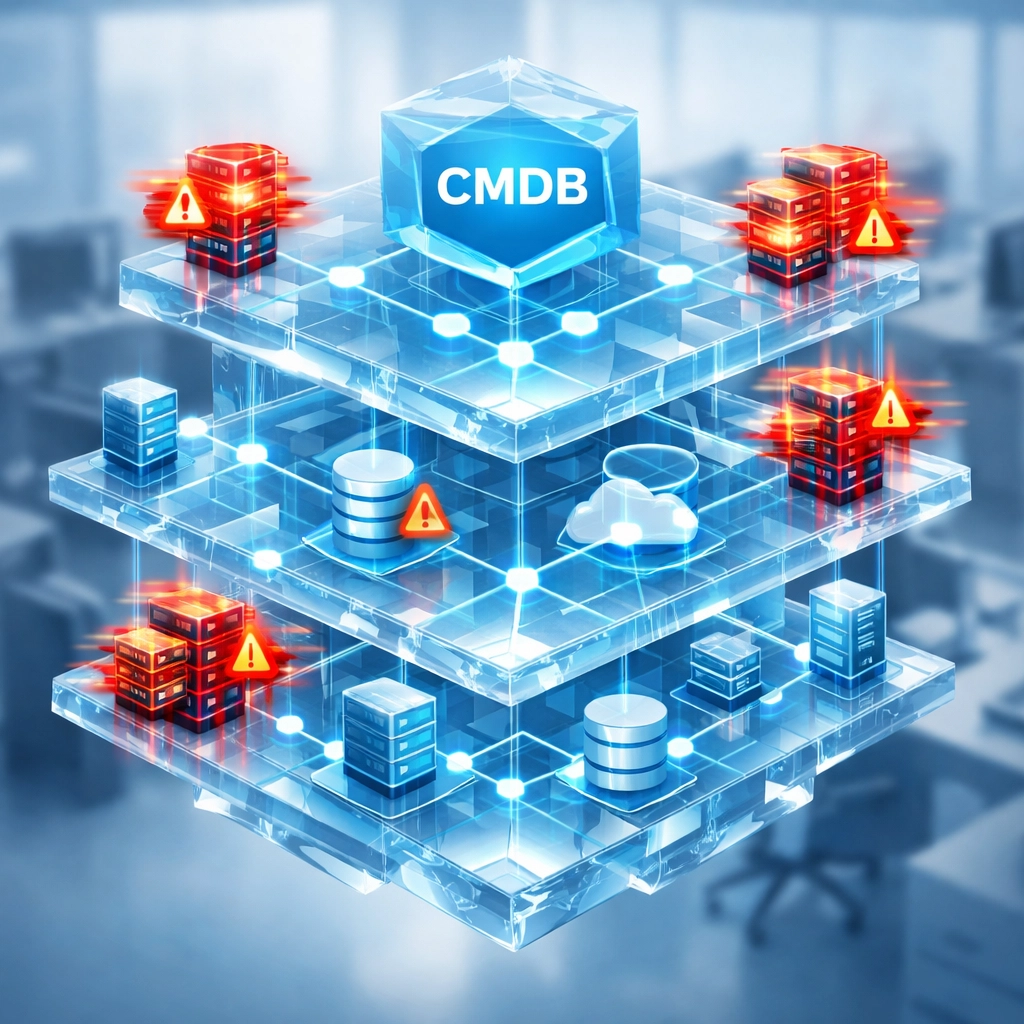
The strategic approach balances completeness with performance. Your ITOM architecture should capture attributes that support specific use cases: dependency mapping, license compliance, security vulnerability assessment, capacity planning. Everything else is waste. Organizations that optimize discovery granularity typically reduce discovery runtime by 60-70% while improving CMDB usefulness.
Mistake #4: Operating Without Formal Discovery Issue Resolution Processes
Discovery inevitably encounters errors: unreachable devices, expired credentials, firewall rule changes, network reconfigurations. Without formal processes to address these issues systematically, discovery errors accumulate for months, CMDB data drifts from reality, and stakeholders lose trust in the platform.
I have witnessed organizations where 40% of discovery attempts fail, but nobody owns the error resolution process. IT Operations assumes Asset Management handles it. Asset Management thinks Network Operations should fix it. Meanwhile, your CMDB becomes increasingly unreliable until business stakeholders stop using it entirely.
Effective ITOM implementations establish clear ownership, escalation paths, and SLAs for discovery issue resolution. This includes automated alerting when credential failures exceed thresholds, dashboard visibility into discovery health metrics, and defined response procedures. Your platform health score should track discovery success rates, and teams should have targets for resolution timeframes.
Mistake #5: Modifying Out-of-the-Box Discovery Patterns Directly
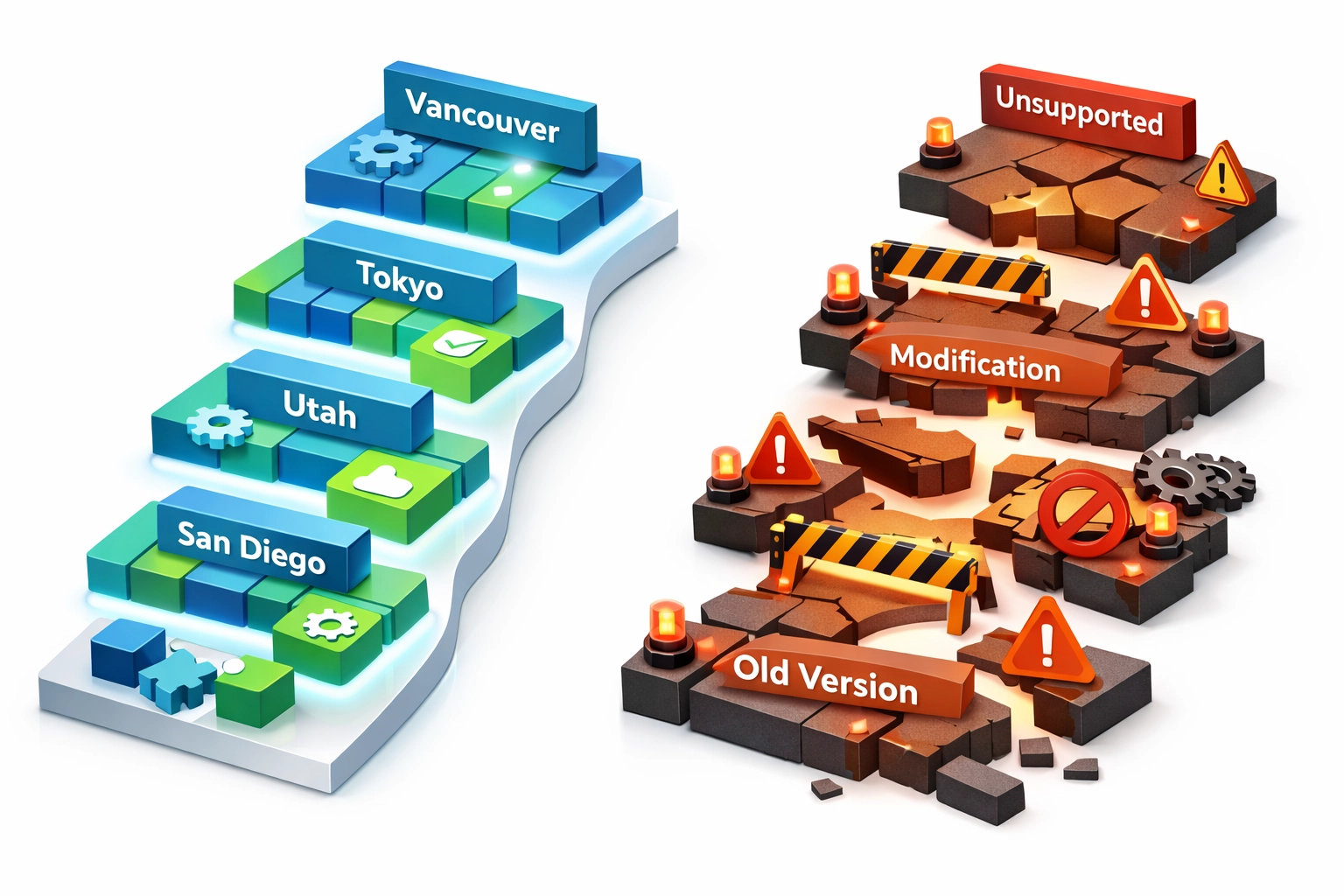
Directly modifying ServiceNow's out-of-the-box discovery patterns instead of properly extending them creates technical debt lasting years. When the next ServiceNow release arrives with security patches or enhanced discovery capabilities, your modified patterns block the upgrade. I have seen organizations stuck on releases three years old because pattern modifications prevent safe upgrades.
This approach transforms your ITOM investment into a liability. You can't adopt new Agentic AI capabilities. You can't leverage enhanced Cloud Observability features. You remain locked on outdated releases with growing security vulnerabilities while competitors accelerate past you.

Professional ServiceNow implementation partners extend patterns properly using ServiceNow's recommended customization frameworks. This maintains upgrade compatibility while addressing your unique discovery requirements. The pattern extension capabilities introduced in recent releases make this easier than ever: but only when implemented correctly from the beginning.
Mistake #6: Launching ITOM Without Comprehensive Internal Training
Implementations without comprehensive training create permanent dependency on external consulting for even basic configuration changes. This slows adaptation to evolving business needs and increases long-term costs by 200-300%. Your IT Operations staff, Asset Management professionals, and Service Mapping administrators need deep platform expertise, not surface-level training.
I have analyzed organizations spending $500K+ annually on external consulting for tasks their internal teams should handle: modifying discovery schedules, updating identification rules, troubleshooting Service Mapping errors. This operational model is unsustainable and prevents the agility ITOM should deliver.
Strategic training programs transfer expertise systematically. This includes hands-on discovery pattern development, CMDB health monitoring, Service Mapping troubleshooting, and Event Management rule creation. Organizations that invest in comprehensive internal capability development typically reduce external consulting dependency by 70% within 18 months.
Mistake #7: Choosing Implementation Partners Based on General ITSM Credentials
A partner with stellar Service Management capabilities may completely stumble on ITOM Discovery workflows, Service Mapping dependencies, or Cloud Observability integration. ITOM demands specialized architecture expertise that most general ServiceNow partners simply don't possess.
73% of companies select implementation partners based on price or brand recognition rather than specialized ITOM architecture expertise, resulting in abandoned deployments and license waste. I have witnessed organizations paying premium prices to brand-name partners who subcontract ITOM work to inexperienced teams, creating architectural debt that takes years to remediate.
Your ServiceNow implementation partner must demonstrate proven ITOM expertise: not just general platform knowledge. This includes architectural certifications, documented ITOM success stories, and teams with deep discovery, Service Mapping, and ITAM specialization.
How a Free 2026 ROI Audit Identifies and Fixes These Issues
A comprehensive ServiceNow ROI and License Audit examines your current implementation across every dimension that drives success or failure:
Network inventory completeness analysis identifies discovery blind spots before they cause incident response failures. Identification rule testing against your actual infrastructure reveals duplicate CI risks. Discovery attribute optimization balances granularity with performance to maximize platform efficiency.
The audit includes process maturity assessment measuring your issue resolution and change management capabilities, technical debt evaluation examining pattern customizations and upgrade readiness, and training gap analysis quantifying internal capability versus platform complexity.
Most critically, the audit identifies license optimization opportunities: unused ITOM entitlements costing thousands monthly, ITAM capabilities delivering no business value, and cloud observability licenses applied to infrastructure that doesn't require them. Organizations conducting these audits consistently uncover $400K-$2M in immediate savings opportunities through license optimization, automation activation, and architectural corrections.
The 2026 audit also includes Agentic AI readiness assessment determining your platform's preparedness for AI-powered automation. With ServiceNow embedding AI capabilities across ITOM workflows, organizations with flawed foundations cannot leverage these transformative features. The audit identifies exactly what you must fix to activate AI-driven discovery, intelligent event correlation, and predictive Service Mapping.
Your Next Step Toward Operational Excellence
Every quarter you operate with these mistakes costs you operational efficiency, increases your MTTR, and widens the gap between your organization and competitors executing ITOM correctly. The transformative potential of ServiceNow ITOM: reduced incident volumes, automated dependency mapping, proactive capacity management, seamless cloud integration: remains locked behind architectural flaws that a comprehensive audit would identify in days.
I invite you to visit the SnowGeek Solutions contact page to share your specific ITOM challenges and schedule your free 2026 ServiceNow ROI & License Audit. Our specialized ServiceNow consulting services will analyze your implementation across all seven mistake categories, quantify the operational and financial impact, and deliver a prioritized remediation roadmap.
Additionally, register with SnowGeek Solutions for ongoing platform updates and expert insights that keep your ITOM implementation aligned with evolving ServiceNow capabilities, compliance requirements, and industry best practices. Your journey toward unprecedented operational heights begins with understanding exactly where your implementation stands today: and that understanding starts with a comprehensive, no-obligation audit that reveals the hidden opportunities your organization is leaving on the table.
Comments