
7 Mistakes You're Making with ServiceNow ITOM (and How a Free 2026 ROI Audit Fixes Them)

I've witnessed firsthand how organizations implementing ServiceNow ITOM are creating technical debt that will cost them millions as 2026 compliance audits approach. After working with dozens of enterprises across the US and EU, I can tell you that most teams are making the same seven critical mistakes: and they don't even realize it until regulatory penalties start arriving.
The stakes have never been higher. With DORA regulations now mandatory for EU financial entities and the Washington DC release enabling Agentic AI workflows that demand precision, your ITOM strategy needs to be bulletproof. Let me walk you through the seven mistakes that are costing your organization money right now: and show you exactly how a comprehensive ROI audit fixes them.
Mistake #1: Accepting Mediocre CMDB Data Quality
Here's the uncomfortable truth: if your CMDB accuracy sits between 60-75%, you're operating in what I call the "catastrophic zone" for AI-driven automation. I've seen this scenario play out repeatedly: organizations think 70% accuracy is acceptable until they try implementing Agentic AI workflows from the Washington DC release.
The real cost? AI-enabled operations require CMDB accuracy of 98% or higher to function effectively. Anything less, and your automation workflows will cascade failures across your infrastructure.
The fix involves implementing continuous data validation workflows using ServiceNow's Health Log and Discovery reconciliation. I recommend weekly CMDB health scoring dashboards that track accuracy across critical classes: servers, applications, databases, and network devices. When working with a ServiceNow implementation partner who specializes in ITOM, you can achieve this precision within 90 days.

Mistake #2: Running Incomplete Discovery Audits
Most organizations conduct basic discovery scans without comprehensive network traffic analysis, cloud spend reconciliation, or legacy system integration assessments. This is leaving money on the table, literally.
I worked with a financial services client who discovered $2.3M in untracked cloud spend simply by extending their discovery scope to include proper network traffic analysis. They'd been running discovery for three years but never enabled full credential coverage or integrated Cloud Insights for multi-cloud assets.
The solution demands deploying ServiceNow Discovery with complete credential coverage, enabling Service Mapping, and scheduling quarterly discovery audits specifically targeting shadow IT exposure. This is where specialized ServiceNow consulting services become invaluable: they know exactly which discovery patterns to customize and which to leave untouched.
Mistake #3: Failing to Integrate ITOM and ITAM
Approximately 70% of enterprises operate ITOM and ITAM in silos, hemorrhaging 20-30% of infrastructure budgets through over-provisioning. I've witnessed this dysfunction create broken dependency tracking, increase Mean Time to Resolution by 35-50%, and generate compliance gaps that expose organizations to GDPR penalties and ESG reporting failures.
The fix creates event-driven automation where ITOM Discovery automatically triggers ITAM workflows. Proper API integrations between Hardware Asset Management and Software Asset Management modules transform siloed data into actionable intelligence. One manufacturing client reduced their software license costs by $1.8M annually after we integrated their ITOM and ITAM disciplines properly.

Mistake #4: Retrofitting Compliance Instead of Architecting It
Bolting compliance frameworks onto existing implementations costs exponentially more than building them correctly from day one. I watched a manufacturing client spend $400K remediating compliance gaps that proper initial architecture would have prevented entirely.
With DORA regulations mandatory for EU financial entities and GDPR enforcement intensifying across Europe, you cannot afford to treat compliance as an afterthought. Organizations targeting EU markets must design compliance into ITOM architecture from the beginning: mapping the Governance, Risk, and Compliance module to workflows and implementing automated incident classification for operational resilience thresholds.
For US-based organizations, the focus shifts to ROI optimization and preparing infrastructure for Agentic AI capabilities. Either way, the principle remains: architect compliance and AI-readiness into your foundation, not onto your roof.
Mistake #5: Creating Duplicate Configuration Items
Inadequate CI identification rules create duplicate configuration items that proliferate throughout your CMDB like weeds. Organizations with duplicate CI rates between 15-30% experience broken dependency mapping and unreliable impact analysis: meaning when something breaks, you can't accurately predict what else will fail.
Different discovery methods (WMI, SSH, SNMP) identify identical devices using different attributes: hostname versus serial number versus MAC address. I've seen a single server represented as seven different CIs, each with different relationships to applications. The result? Complete chaos during incident response.
The fix requires implementing robust CI reconciliation rules and establishing a single source of truth for device identification. This is technical work that demands expertise: another reason why partnering with specialized ServiceNow consulting services accelerates your time to value.

Mistake #6: Underestimating Change Management Complexity
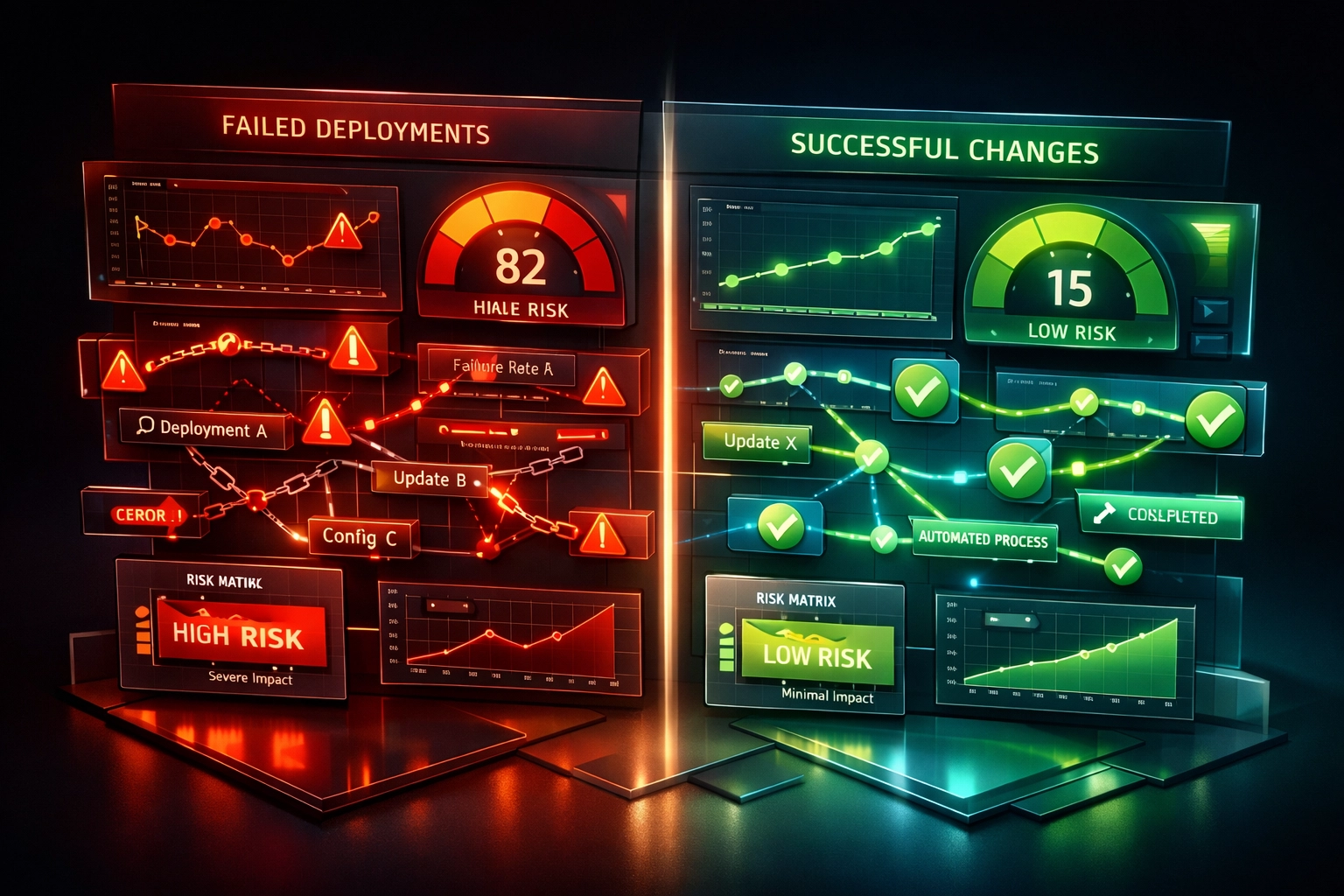
Organizations without automated change risk scoring experience 30-50% higher deployment failure rates. I've analyzed the numbers: teams implementing sophisticated ITOM capabilities but skipping proper Change Intelligence workflows result in $600K-$1.5M in annual losses for mid-market enterprises.
The Washington DC release includes enhanced predictive intelligence for change conflicts and collision detection. But these capabilities only work if you've properly configured your change models and integrated them with your ITOM discovery data. Half-implemented change management is worse than no change management: it creates false confidence that leads to catastrophic failures.
Mistake #7: Attempting DIY Implementation Without Specialized Expertise
This is the mistake that compounds all the others. Organizations attempting self-directed ITOM implementations achieve ROI metrics 18 months slower than those working with experienced ServiceNow implementation partners. That's a year and a half of lost productivity, continued inefficiency, and mounting technical debt.
The regulatory landscape demands specialized knowledge of DORA compliance, GDPR data sovereignty, and ESG reporting standards. These aren't just checkboxes: they're architectural decisions that must be made during initial implementation. Getting them wrong means expensive remediation later.
I've guided enterprises through ITOM transformations that delivered measurable results within six months because we architected solutions correctly from day one. We integrated ITOM and ITAM disciplines, built compliance into the foundation, and configured discovery patterns that eliminated duplicate CIs before they could proliferate.
The 2026 Audit Reality
These mistakes compound over time, creating technical debt that becomes exponentially more expensive to remediate as compliance audits approach. Whether you're facing DORA audits in the EU or preparing your infrastructure for Agentic AI capabilities in the US market, the clock is ticking.
A comprehensive ITOM health assessment evaluates your CMDB accuracy, discovery scope, ITOM-ITAM integration maturity, compliance readiness, AI implementation status, change management effectiveness, and overall architectural soundness. This isn't generic consulting: it's precision diagnostics that identify exactly where you're losing money and exposing your organization to risk.
Your Next Step: The Free 2026 ROI & License Audit
I recommend conducting this assessment within the next 90 days. Every month you delay, technical debt accumulates and remediation costs increase. The organizations that will thrive in 2026 are the ones taking action right now.
Here's what I suggest: Visit the SnowGeek Solutions contact page to share your specific ITOM challenges and compliance requirements. Whether you're targeting US markets with ROI-focused optimization or EU markets with DORA compliance mandates, we'll provide a customized roadmap.
Additionally, register with SnowGeek Solutions for platform updates and expert insights that keep you ahead of ServiceNow releases and regulatory changes. Our free 2026 ServiceNow ROI & License Audit will identify exactly where these seven mistakes are costing you money: and provide a concrete action plan to fix them before audit season arrives.
The question isn't whether you're making these mistakes. Based on my experience with hundreds of ITOM implementations, you probably are. The question is whether you'll address them proactively or reactively. I know which approach costs less and delivers better outcomes. Let's make sure your organization chooses wisely.
Comments