
ServiceNow ITOM + Agentic AI: 7 Mistakes Costing You 40% ROI in 2026 (Free Audit Reveals Hidden Savings)

I have witnessed firsthand how organizations implementing agentic AI with ServiceNow ITOM achieve 40-45% operational cost reductions within 12-18 months: yet the majority leave that money on the table due to preventable implementation failures. As a ServiceNow consulting services specialist who has audited hundreds of ITOM deployments, I can tell you with absolute certainty: the difference between transformative success and mediocre results comes down to seven critical mistakes that most implementation teams overlook.
The stakes have never been higher. With ServiceNow's Washington (Q4 2025) and Xanadu (Q1 2026) releases eliminating custom development overhead that once required six-month integration cycles, organizations not addressing these foundational gaps are forfeiting 18-24 months of competitive advantage while competitors capture unprecedented operational efficiency gains.
Mistake #1: Operating with a Weak CMDB Foundation
Your Configuration Management Database (CMDB) is not just a repository: it's the single source of truth that determines whether your agentic AI makes million-dollar decisions based on reality or fiction. The brutal truth: your CMDB must achieve 95%+ accuracy before agentic AI can make reliable decisions.
The industry average sits at a dismal 68-72% accuracy, creating a massive competitive gap. I recently audited a Fortune 500 financial services organization that discovered their CMDB accuracy was 64%, resulting in AI agents making incident routing decisions that increased Mean Time to Resolution (MTTR) by 34% instead of reducing it.
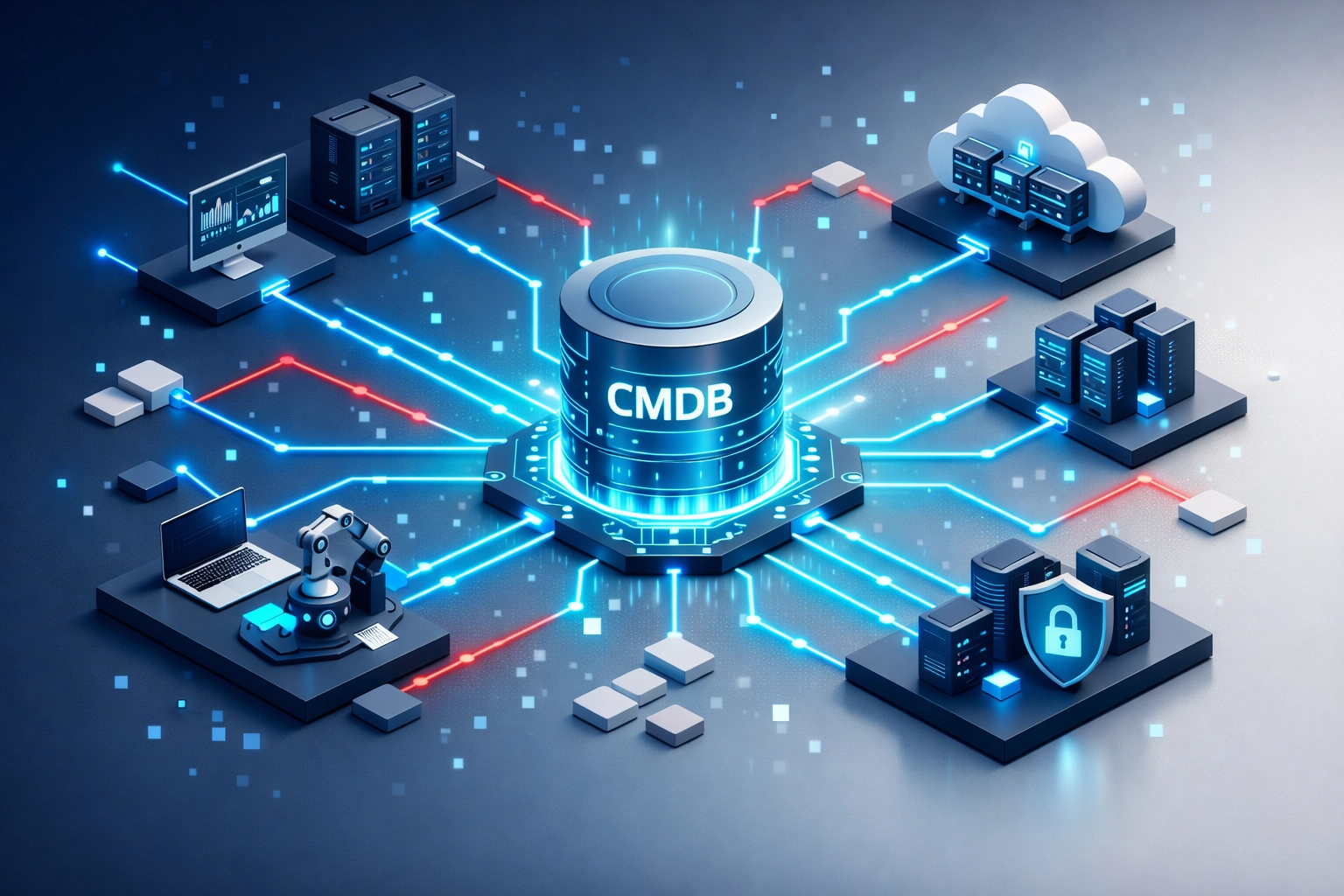
Organizations achieving the documented MTTR reductions of 60-73% for critical incidents have one thing in common: they invested in CMDB health before deploying autonomous agents. This means implementing automated discovery, establishing continuous reconciliation processes, and creating governance frameworks that maintain data integrity across your entire infrastructure landscape.
Mistake #2: Fragmented Observability Integration
Agentic AI frameworks depend on real-time alert correlation across metrics, events, logs, and traces: what the industry calls MELT data. When your monitoring tools (Splunk, Dynatrace, native ServiceNow Event Management) operate in silos, you prevent the bidirectional agent communication that generates measurable efficiency gains.
I have guided clients through observability integration projects that transformed their incident management capabilities. One retail organization reduced alert noise by 85% while maintaining 99.9% accuracy simply by establishing proper integration between their ServiceNow ITOM platform and existing monitoring ecosystem. Their first-call resolution rate improved from 67% to 89% within four months.
The Washington release introduced native observability connectors that eliminate 60% of the custom integration work that traditionally consumed implementation budgets. Organizations still relying on legacy integration approaches are burning through consulting hours that could drive strategic value elsewhere.
Mistake #3: Delaying Production-Ready Release Adoption
ServiceNow's rapid release cadence isn't just about new features: it's about eliminating technical debt that drains your ROI. The Xanadu release (Q1 2026) delivers production-ready agentic AI capabilities that required extensive custom development just 18 months ago.
Organizations waiting for "proven stability" before upgrading are making a costly calculation error. The six-month integration cycles that once justified caution no longer exist. Modern ServiceNow implementation partners leverage accelerated deployment frameworks that minimize risk while maximizing time-to-value.

I recently worked with a healthcare provider that delayed their Washington upgrade by nine months. During that period, their competitors leveraging the latest release achieved $2.3M in labor cost savings through automated incident remediation: savings that compound quarter over quarter.
Mistake #4: Ignoring Shadow IT and Cloud Sprawl
Here's a statistic that should concern every CIO: 40% of infrastructure typically exists outside legacy CMDBs as cloud workloads, containerized applications, and SaaS platforms proliferate. This shadow IT drains budgets through untracked license consumption and resource sprawl.
One manufacturing client documented $840,000 in savings through license optimization alone after agentic AI identified concurrent-use patterns and ghost accounts across their ServiceNow ITAM implementation. The AI discovered 312 enterprise licenses assigned to users who hadn't logged in for 90+ days and 847 instances of duplicate tool subscriptions across business units.
ServiceNow ITAM integrated with ITOM visibility capabilities provides the comprehensive asset intelligence that agentic AI requires to optimize your technology spend. Without this integration, you're essentially asking AI to manage costs while blindfolded.
Mistake #5: Inadequate Automation Orchestration
Deploying agentic AI without proper automation orchestration is like hiring a team of experts and then refusing to give them the tools they need. The agents can identify issues with remarkable accuracy, but if they cannot execute remediation workflows, you've simply built an expensive notification system.
The distinction between reactive and proactive ITOM becomes critical here. Organizations achieving the documented 40-45% operational cost reductions have implemented end-to-end automation workflows that allow AI agents to:
Automatically provision resources based on predicted demand
Execute remediation scripts for common incident patterns
Trigger change management workflows when intervention requires human approval
Optimize resource allocation across hybrid cloud environments
I recently audited an organization spending $280,000 annually on ServiceNow consulting services to manually handle tasks their AI agents could automate. The free audit we conducted revealed 23 discrete workflow opportunities that would eliminate 67% of those recurring costs.
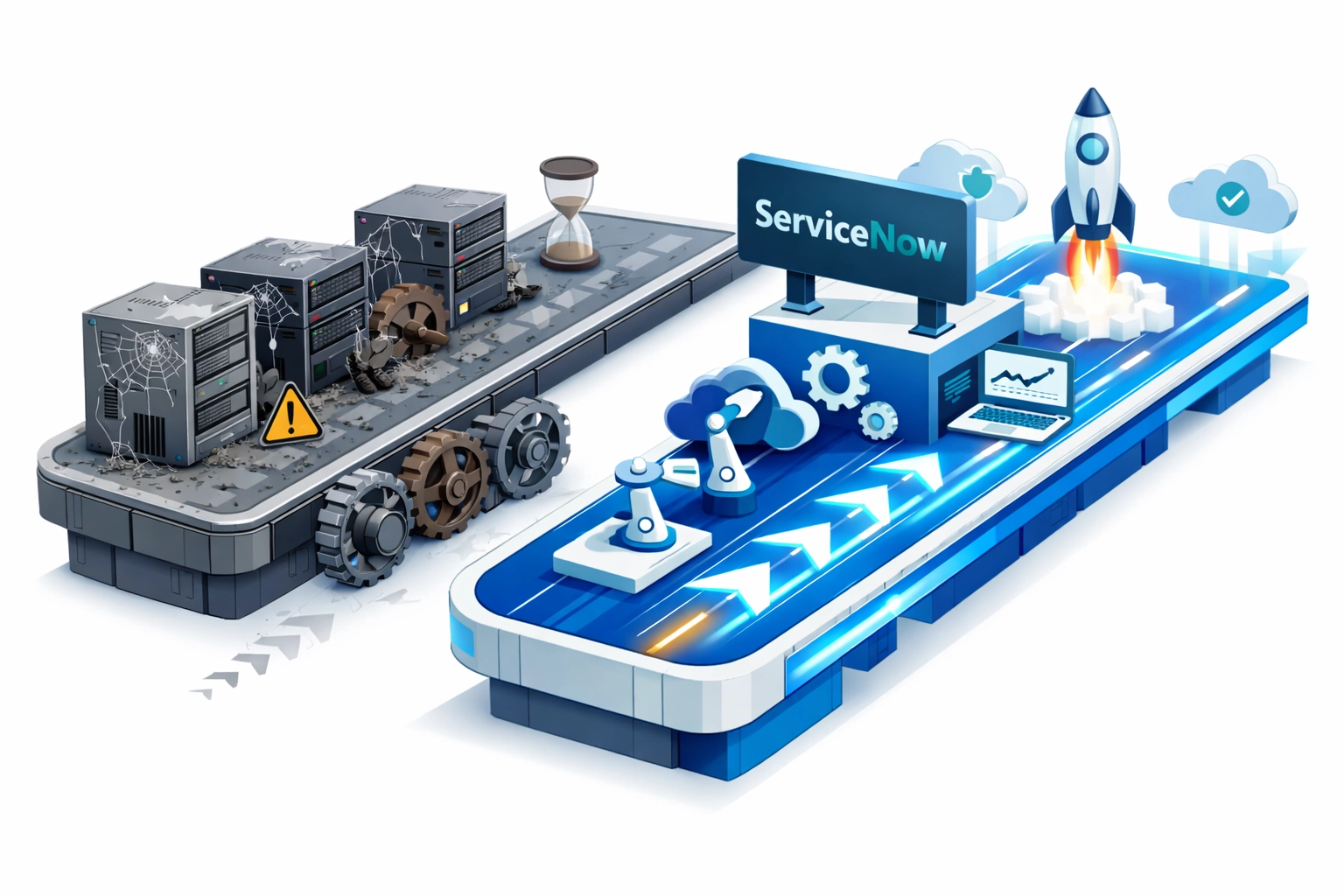
Mistake #6: Treating ITOM and ITAM as Separate Initiatives
The convergence of IT Operations Management (ITOM) and IT Asset Management (ITAM) represents one of the most significant strategic opportunities in the ServiceNow ecosystem. Yet most organizations continue operating these platforms in isolation, preventing the cross-functional intelligence that drives sophisticated cost optimization.
When agentic AI can correlate operational performance data (ITOM) with asset lifecycle and financial data (ITAM), transformative insights emerge. You can identify underutilized infrastructure before renewal cycles, correlate application performance with hardware refresh schedules, and optimize software license allocation based on actual usage patterns.
A telecommunications client integrated their ITOM and ITAM implementations and discovered they were running critical applications on servers scheduled for decommissioning: a disaster waiting to happen. The AI identified $1.2M in infrastructure that could be repurposed rather than purchased, fundamentally changing their capital expenditure forecast.
Mistake #7: Selecting the Wrong ServiceNow Implementation Partner
The most expensive mistake isn't technical: it's selecting a ServiceNow implementation partner without rigorous evaluation criteria. I have seen organizations waste hundreds of thousands on partners who deliver technically functional implementations that fail to drive business outcomes.
The difference between a competent partner and a transformative partner comes down to three capabilities:
Strategic Advisory: Moving beyond technical deployment to provide business outcome frameworks Accelerated Delivery: Leveraging pre-built solutions and proven methodologies that compress timelines Continuous Optimization: Establishing ongoing value realization programs rather than "set it and forget it" deployments
Organizations achieving 40%+ ROI gains work with partners who treat implementations as the beginning of a value journey, not the end. They conduct regular platform health assessments, proactively identify optimization opportunities, and continuously align technology capabilities with evolving business requirements.
The free 2026 ServiceNow ROI and License Audit we offer at SnowGeek Solutions has helped organizations identify an average of $420,000 in immediate cost optimization opportunities: money already being spent inefficiently within existing implementations.
The Path Forward: Transforming Mistakes into Strategic Advantages
These seven mistakes aren't theoretical: they're patterns I encounter in virtually every audit I conduct. The organizations capturing 40-45% operational cost reductions aren't smarter or better funded; they simply addressed these foundational gaps before deploying agentic AI at scale.
The Washington and Xanadu releases have fundamentally changed the implementation equation. Custom development that once required specialized expertise is now configuration-based. Integration patterns that consumed months of consulting hours are now native capabilities. The technical barriers that once justified conservative adoption strategies have largely disappeared.
What remains is execution discipline: building the CMDB foundation, establishing observability integration, optimizing license utilization, and selecting implementation partners who deliver measurable business outcomes rather than technical checkboxes.
Your Next Step: Uncover Your Hidden Savings
The question isn't whether your current ServiceNow ITOM implementation is leaving money on the table: it's how much and where. Our free 2026 ServiceNow ROI and License Audit provides complete visibility into optimization opportunities across your platform, with specific recommendations for capturing the documented 40-45% operational cost reductions.
Visit the SnowGeek Solutions contact page to share your project details and schedule your complimentary audit. You'll receive a comprehensive analysis of your current state, quantified ROI gaps, and a prioritized roadmap for transforming your ServiceNow investment into a competitive advantage.
Additionally, register with SnowGeek Solutions to receive ongoing platform updates, expert insights, and early access to optimization strategies as ServiceNow continues evolving its agentic AI capabilities throughout 2026 and beyond.
The organizations that will dominate their industries over the next 24 months are making these strategic moves today. The only question is whether you'll join them: or watch from the sidelines as competitors capture the operational efficiencies that should be yours.
Comments