
ServiceNow Implementation Partner Selection: 7 Mistakes Costing You ROI in 2026 (And How a Free Audit Fixes Them)

I have witnessed firsthand how organizations hemorrhage up to 40% of their ServiceNow ROI within the first year: not because the platform fails to deliver, but because they selected the wrong ServiceNow implementation partner. When deployment investments range from $500K to $2M, choosing poorly transforms what should be operational excellence into a cautionary tale of technical debt and budget overruns.
After guiding dozens of enterprises through partner selection and remediation projects, I can tell you the patterns are disturbingly consistent. The same seven mistakes appear repeatedly, costing organizations hundreds of thousands in rework, extended timelines, and lost productivity. This guide will walk you through each mistake and show you how a comprehensive audit provides the diagnostic precision to avoid these costly errors.
Mistake #1: Prioritizing Cost Over Expertise
The cheapest bid is rarely the best investment. I have seen organizations select partners based solely on price, only to face 200-300% additional expenses in rework and technical debt. Your ServiceNow consulting services partner should be evaluated on proven domain expertise, not procurement-driven cost reduction.
Partners lacking deep platform expertise force you to pay twice: once for the failed implementation and again for remediation. When evaluating proposals, demand specific examples of how they've configured Discovery patterns for complex hybrid environments or implemented Software Asset Management reconciliation for enterprise license agreements. Generic responses signal generic capabilities.

Mistake #2: Overlooking Specialized ITOM and ITAM Expertise
Here's where most selection processes collapse: organizations choose partners with strong ITSM credentials who lack specialized knowledge in ITOM discovery configuration, hardware asset management workflows, or ITAM software reconciliation engines.
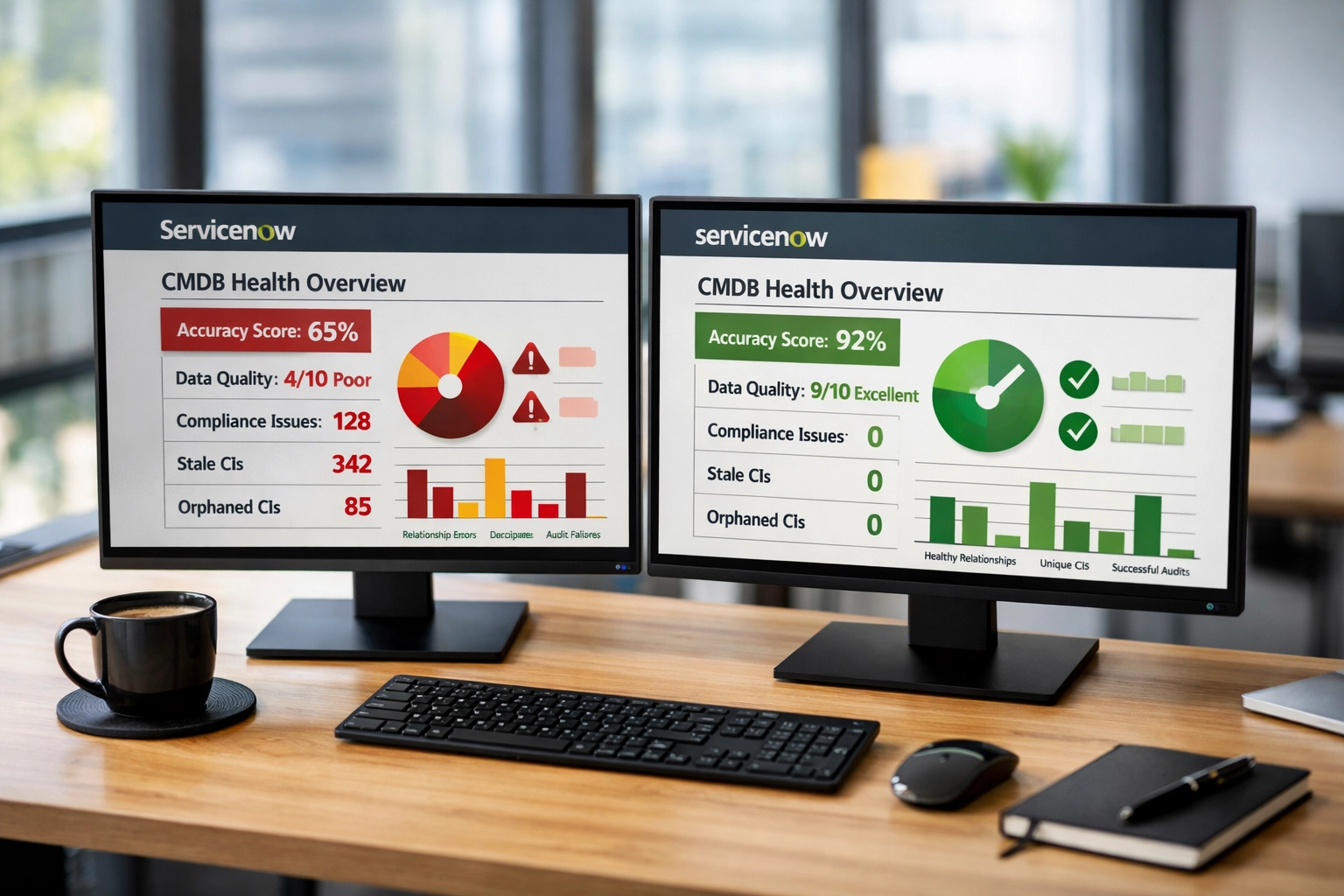
The data tells a stark story. Specialized partners achieve CMDB accuracy rates above 90%, while generic ITSM implementers rarely exceed 65% accuracy. That 25-point gap translates directly to failed change assessments, compliance exposure, and inaccurate cost allocation models. In the Washington DC release, ServiceNow enhanced Discovery patterns with Kubernetes cluster identification and cloud-native asset tracking: capabilities that require specialized expertise to configure properly.
Your partner must demonstrate mastery of Service Mapping, Infrastructure Reconciliation Rules, and the latest AI-driven Discovery capabilities introduced in the Xanadu release. Anything less leaves substantial ROI on the table.
Mistake #3: Neglecting Post-Implementation Support and Continuous Optimization
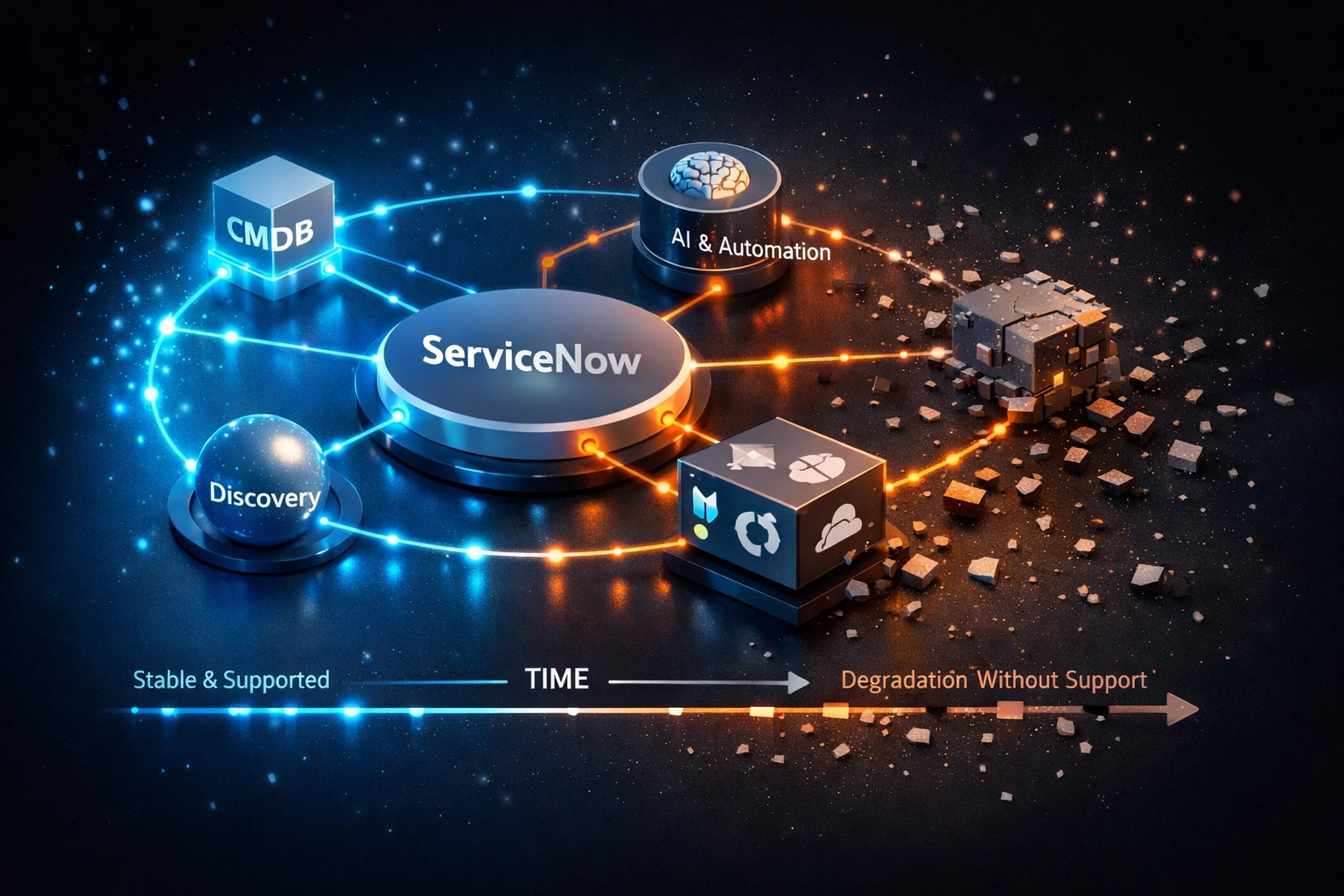
58% of organizations view their partner relationship as purely transactional rather than transformational. This mindset creates operational disaster. Without structured post-implementation support, CMDB accuracy degrades from 85% at launch to below 60% within six months. Discovery schedules remain unoptimized, integration patterns break with upstream application updates, and Now Assist configurations never evolve beyond basic implementations.
I always counsel clients to evaluate partners on their managed services capabilities and continuous optimization frameworks. Your platform is not a "set and forget" deployment: it demands ongoing refinement as your infrastructure evolves and ServiceNow releases new capabilities quarterly.
Mistake #4: Failing to Involve Internal Stakeholders Early
Procurement departments frequently select ServiceNow implementation partners based solely on IT leadership input, completely bypassing Asset Management, Security, Finance, and Compliance teams who use the platform daily. This exclusion creates adoption catastrophe.
Cross-functional evaluation committees increase user adoption rates by 40% and dramatically decrease post-launch change requests. When your Asset Management team participates in partner selection, they ensure hardware refresh workflows align with procurement cycles. When Finance joins evaluation sessions, they verify cost allocation models support chargeback requirements. When Compliance reviews proposals, they confirm DORA reporting timelines are built into incident workflows from day one.
The partner selection process should mirror the cross-functional nature of your ServiceNow deployment. Anything less guarantees misalignment between platform capabilities and business requirements.
Mistake #5: Ignoring Agentic AI and Intelligent Automation Capabilities
Partner proposals frequently mention AI capabilities using marketing terminology without demonstrating concrete implementations. In 2026, this vagueness is unacceptable. Your partner should specifically articulate how they'll leverage Now Assist across ITOM and ITAM modules.
Demand technical specificity: How will they configure Predictive Intelligence for hardware refresh forecasting? What Virtual Agent workflows will they implement for autonomous license conflict resolution? How will they structure AI Search for asset documentation retrieval?
The Xanadu release introduced Agentic AI capabilities that autonomously resolve incidents, generate remediation scripts, and optimize resource allocation. Partners who cannot demonstrate mastery of these capabilities leave transformative efficiency gains unrealized. I have seen organizations reduce MTTR by 45% and achieve FCR rates above 78% when AI implementations are properly architected from the start.
Mistake #6: Underestimating Compliance and Regulatory Expertise
For European organizations, compliance capabilities are fundamental requirements, not optional enhancements. Partners must demonstrate expertise in configuring incident workflows to meet DORA's strict reporting timelines, implementing GDPR data sovereignty measures for multi-instance deployments, and structuring ESG reporting integrations with carbon footprint tracking modules.
In the US market, SOC 2 compliance, CMMC requirements for defense contractors, and industry-specific regulatory frameworks demand specialized configuration knowledge. Your partner evaluation should include detailed assessments of their regulatory expertise relevant to your industry and geography.
I consistently ask partners to provide specific examples: "Walk me through how you configured Major Incident Management workflows to meet DORA's 4-hour critical incident reporting requirement." Generic responses reveal inadequate expertise; detailed architectural explanations demonstrate competence.
Mistake #7: Selecting Partners Without Industry-Specific Experience
Generic configurations fail to address industry-specific operational challenges. Healthcare organizations need HIPAA-compliant asset tracking with PHI data protection built into Discovery patterns. Financial services require change management workflows tied to regulatory freeze periods and audit trail retention policies. Manufacturing demands OT environment integration with industrial IoT sensors and operational technology asset tracking.
Your ServiceNow consulting services partner should present case studies demonstrating deep industry knowledge. Verify they understand your sector's unique challenges: Do they know financial services organizations face quarterly earnings blackout periods? Can they configure Discovery to respect healthcare's segmented network architecture for HIPAA compliance? Have they implemented asset tracking for pharmaceutical manufacturing's FDA-regulated environments?
Industry-specific expertise accelerates deployment timelines, reduces configuration rework, and ensures platform adoption aligns with operational workflows your teams already understand.
The Cumulative Business Impact: When Mistakes Compound
These seven mistakes rarely occur in isolation. When organizations commit two or three simultaneously, the financial impact becomes devastating. Budget overruns average 35%, ongoing operational costs run 3X higher than properly implemented instances, and adoption rates plummet below 60%: meaning nearly half your investment generates zero value.
I have guided remediation projects where organizations spent $1.2M on initial implementation, then required an additional $800K in rework because their original partner lacked ITOM expertise and failed to configure Discovery properly. The total cost of $2M could have delivered a world-class deployment with the right partner selection from the beginning.
How a Free 2026 ServiceNow ROI & License Audit Fixes These Mistakes
A comprehensive audit provides the diagnostic precision to avoid these costly errors. The audit process I recommend examines your current platform configuration, identifies optimization opportunities, and provides a detailed partner evaluation framework.
The audit includes technical architecture documentation review for Discovery and CMDB strategy, validation of data integration patterns, assessment of AI maturity levels across Now Assist implementations, and confirmation of regulatory compliance capabilities. For organizations currently evaluating partners, the audit delivers a scoring matrix that objectively compares proposals across the seven critical dimensions I have outlined.
For organizations with existing deployments, the audit reveals hidden savings opportunities: unused licenses consuming budget, unoptimized Discovery schedules creating performance bottlenecks, and AI capabilities available in your instance but never configured. I consistently find 15-25% cost reduction opportunities and ROI improvement pathways that deliver results within 90 days.

Your Next Steps Toward Implementation Excellence
Selecting the right ServiceNow implementation partner demands strategic foresight and rigorous evaluation. Verify industry-specific expertise, confirm ServiceNow certification status (Elite Partner designation signals deep technical capability), assess technical depth in advanced architectures including ITAM and ITOM specialization, evaluate project management methodologies, and ensure commitment to ongoing optimization.
The difference between transformative success and costly failure often comes down to asking the right questions before signing contracts. I have provided you with the framework to make informed decisions that protect your investment and maximize platform value.
Ready to ensure your ServiceNow investment delivers unprecedented returns? Visit the SnowGeek Solutions contact page to share your project details and schedule your complimentary 2026 ServiceNow ROI & License Audit. Register with SnowGeek Solutions to receive platform updates, expert insights, and strategic guidance that elevates your ServiceNow journey to operational excellence. Your path to seamless implementation success starts with a single conversation( let's make it count.)
Comments