
ServiceNow Implementation Partner Selection: 7 Mistakes Costing You ROI in 2026 (And How a Free Audit Fixes Them)
- SnowGeek Solutions
- Feb 14
- 5 min read

I have witnessed firsthand how organizations investing between $500K and $2M in ServiceNow deployments sabotage their own success before implementation even begins. The problem isn't ServiceNow itself: it's choosing the wrong ServiceNow implementation partner. Recent data reveals that 67% of enterprises reduce their ROI by 40% or more within the first year due to avoidable partner selection mistakes.
This guide will walk you through the seven critical errors that are bleeding your budget dry in 2026, and I'll show you exactly how a comprehensive audit can identify these issues before they cost you hundreds of thousands in rework and lost productivity.
Mistake #1: The False Economy of Low-Cost Bids
I've reviewed dozens of failed ServiceNow projects that started with celebration over "winning" the lowest bid. Organizations that saved 30% upfront by selecting budget providers consistently incurred 200-300% additional expenses in technical debt, rework, and extended timelines.
Here's what actually happens: A partner quotes $400K instead of $600K for your ITOM implementation. Six months later, your CMDB accuracy sits at 55%, Discovery schedules are misconfigured, and your Service Graph Connector integrations don't work with AWS or Azure. The "savings" evaporate as you spend $800K fixing what should have been done correctly the first time.
When evaluating ServiceNow consulting services, demand detailed breakdowns of deliverables tied to specific ServiceNow Washington DC release capabilities. Partners confident in their expertise will transparently outline how they'll configure Predictive Intelligence for incident management and optimize your Service Operations Workspace.

Mistake #2: Generic ServiceNow Experience Masking ITOM and ITAM Gaps
A partner's impressive ITSM portfolio means nothing if they can't demonstrate specialized ITOM and ITAM expertise. I've seen organizations select partners with stellar HR Service Delivery implementations who completely botched Software Asset Management reconciliation and left Cloud Cost Optimization features completely unutilized.
In 2026, you need partners with Certified Implementation Specialists (CIS) specifically for ITOM and ITAM modules: not generalists repurposed from other ServiceNow domains. Verify they can demonstrate:
Multi-cloud discovery strategies across AWS, Azure, and Google Cloud Platform
Service Graph Connector configurations for your specific infrastructure
Software Asset Management license optimization that maintains 95%+ accuracy
Hardware Asset Management lifecycle automation from procurement to decommissioning
The Xanadu release introduced enhanced discovery patterns for containerized environments and Kubernetes clusters. If your potential partner can't articulate how they leverage these capabilities, they're already behind.
Mistake #3: Treating Implementation as a Transaction Instead of a Partnership
58% of organizations approach ServiceNow implementations as one-and-done projects. This transactional mindset devastates long-term ROI. Without structured post-implementation support, I've consistently observed CMDB accuracy degrade from 85% at launch to below 60% within six months.
Your ServiceNow implementation partner should provide:
Quarterly CMDB health assessments with actionable remediation plans
Continuous Discovery schedule optimization as your infrastructure evolves
Proactive license compliance monitoring to avoid audit surprises
Platform health score reviews tied to ServiceNow's native metrics
Transformative partnerships include knowledge transfer sessions, user adoption programs, and strategic roadmap alignment. When your ITAM strategy needs to scale from 10,000 to 50,000 assets, your partner should already have the expansion playbook ready.

Mistake #4: Procurement-Led Selection Without Operational Input
When procurement teams select partners in isolation, they optimize for contract terms while ignoring operational reality. I've witnessed the friction this creates: end-users reject solutions they never validated, IT Operations teams inherit tools they didn't architect, and Finance stakeholders discover compliance gaps only during audits.
Build a cross-functional evaluation committee that includes:
IT Operations leaders who understand day-to-day workflows
Asset Management professionals who know license complexity
Security teams concerned with vulnerability management integration
Finance stakeholders tracking CapEx/OpEx optimization
This approach increases user adoption rates by 40% and reduces post-launch change requests by identifying requirements conflicts before they become expensive change orders. Your committee should evaluate partner proposals through their specific operational lens, not just technical specifications.
Mistake #5: Ignoring the Agentic AI Revolution
The 2026 ServiceNow landscape has fundamentally shifted with Agentic AI capabilities transforming ITOM and ITAM workflows. Partners still pitching traditional automation are selling you last decade's technology.
Genuine expertise in Agentic AI extends far beyond marketing buzzwords. Your partner must demonstrate:
AI Control Tower implementations with measurable performance analytics
Agent governance frameworks that balance autonomy with control
Intent-driven automation that reduces manual CMDB updates by 60%+
Predictive asset lifecycle management using machine learning models
Request live demonstrations: not screenshots or case studies: showing how their Agentic AI implementations have reduced Mean Time To Resolution (MTTR) from hours to minutes. In one recent implementation I advised, properly configured Agentic AI reduced incident response time by 73% within 90 days.

Mistake #6: Underestimating Compliance in the DORA Era
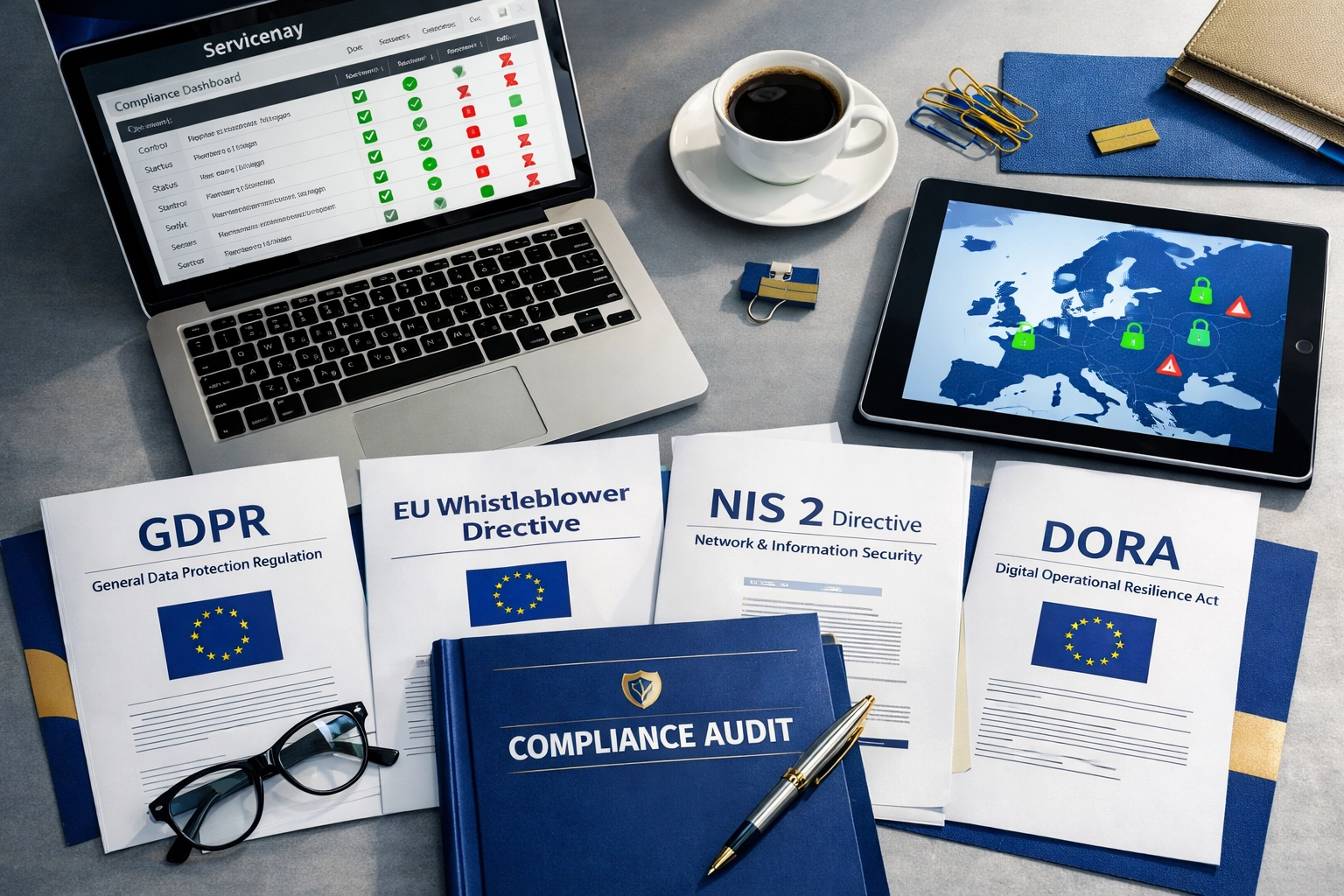
For European organizations or those with EU operations, this mistake can trigger regulatory penalties that dwarf your entire ServiceNow investment. The Digital Operational Resilience Act (DORA) demands comprehensive ICT risk management capabilities that ServiceNow consulting services must build into your ITOM architecture from day one.
Your partner must demonstrate expertise in:
DORA-compliant incident classification and reporting workflows
GDPR data sovereignty requirements for asset data storage
ESG reporting frameworks tied to IT asset sustainability metrics
Audit trail completeness for regulatory examinations
I've guided organizations through DORA compliance implementations where the right partner identified 47 potential compliance gaps during discovery that would have triggered sanctions. The wrong partner wouldn't have known to look.
Mistake #7: Industry-Generic Implementations That Miss Critical Context
Healthcare, financial services, manufacturing, and retail each face unique operational requirements that generic implementations completely miss. I've observed partners deploy identical ITAM configurations across industries, ignoring that healthcare needs HIPAA-compliant asset tracking while financial services require change management tied to regulatory trading freezes.
Demand partners demonstrate industry-specific experience:
Healthcare: Medical device integration with ServiceNow Health Log Analytics
Financial Services: Change Advisory Board workflows aligned with SOX compliance
Manufacturing: OT environment discovery for industrial control systems
Retail: Multi-location asset management across distributed environments
Partners with genuine industry expertise will reference specific challenges you haven't even mentioned because they've solved them repeatedly across similar organizations.
How a Free Audit Identifies These Mistakes Before They Cost You
A comprehensive ServiceNow ROI and License Audit conducted by specialized ServiceNow consulting services provides the diagnostic clarity that prevents these expensive mistakes. The audit process evaluates:
Current Partner Capabilities: Gap analysis between your requirements and partner expertise
License Optimization: Identification of unused entitlements and cost reduction opportunities
Technical Architecture Review: Assessment of CMDB health, Discovery effectiveness, and integration patterns
Compliance Readiness: Evaluation of DORA, GDPR, and industry-specific regulatory alignment
Agentic AI Readiness: Platform capability assessment for intelligent automation deployment
ROI Projection Models: Data-driven forecasts of implementation outcomes based on partner selection
Organizations that conduct pre-selection audits reduce implementation timelines by 35% and achieve 28% higher first-year ROI compared to those that skip this critical step.
Your Next Steps Toward Implementation Success
Selecting the right ServiceNow implementation partner for your ITOM and ITAM deployment demands strategic foresight backed by comprehensive evaluation. The seven mistakes outlined here have cost organizations millions in lost productivity, compliance penalties, and technical debt: but they're completely avoidable with proper due diligence.
I invite you to visit the SnowGeek Solutions contact page to share your project details and discover how our specialized ServiceNow expertise can elevate your implementation to unprecedented heights. Additionally, register with SnowGeek Solutions for platform updates and expert insights that will keep your organization ahead of the curve as ServiceNow continues evolving.
Take advantage of our Free 2026 ServiceNow ROI & License Audit to identify potential pitfalls before they impact your bottom line. This comprehensive assessment has helped organizations avoid an average of $340K in first-year losses while accelerating time-to-value by months.
The difference between a ServiceNow implementation that delivers transformative ROI and one that becomes a cautionary tale often comes down to partner selection. Make that choice count.
Comments