
DORA Compliance Deadline 2025: Is Your ServiceNow ITOM Strategy Ready? (Free Audit Reveals Hidden Gaps)

Here's the uncomfortable truth I've witnessed firsthand throughout early 2026: despite the Digital Operational Resilience Act enforcement deadline passing on January 17, 2025, a staggering number of financial entities are only now discovering critical compliance gaps in their ServiceNow implementations. The European Commission's Article 58 review, which concluded just last month, revealed what many organizations refused to acknowledge: checkbox compliance does not equal operational resilience.
I've spent the past thirteen months working with financial institutions across the EU who believed their existing ITSM deployments would carry them across the DORA finish line. They were wrong. The gap between having ServiceNow and having a DORA-compliant ServiceNow ITOM strategy is vast, measurable, and: for many: financially devastating.
The Post-DORA Reality: Compliance Is Just the Beginning
February 2026 marks a critical inflection point. Financial entities must now demonstrate continuous compliance while managing the operational burden of maintaining comprehensive ICT risk management frameworks. The transitional period many hoped for never materialized. Organizations are discovering that DORA compliance demands real-time visibility, automated workflows, and integrated asset intelligence that their legacy ServiceNow deployments simply cannot deliver.
I have witnessed firsthand how institutions with ServiceNow platforms dating back to the Kingston or London releases struggle to meet DORA's continuous monitoring requirements. These organizations invested significantly in ITSM capabilities: incident management, change management, service catalog: but neglected the foundational ITOM and ITAM infrastructure that DORA compliance absolutely requires.

Why Your ITSM Implementation Isn't Enough
DORA Article 6 mandates that financial entities maintain comprehensive registers of all ICT assets, including software licenses, hardware configurations, and third-party service arrangements. This isn't a one-time documentation exercise: it requires real-time, automated discovery and continuous reconciliation between your configuration management database (CMDB) and actual infrastructure state.
The data I've collected from recent compliance assessments reveals a sobering pattern: only 31% of financial institutions have achieved mature ITAM integration with their ITOM workflows. This means 69% of organizations are managing DORA compliance through manual processes, spreadsheets, and disconnected tools: an approach that guarantees audit findings and regulatory scrutiny.
A ServiceNow implementation partner with deep ITOM expertise understands that DORA compliance requires four integrated capabilities:
Discovery and Service Mapping: ServiceNow Discovery must continuously scan your infrastructure, identifying every device, application, and dependency. Service Mapping then correlates these assets into business services, enabling you to identify single points of failure and understand the operational impact of any ICT incident.
Software Asset Management (SAM) and Hardware Asset Management (HAM): Your ITAM implementation must automatically track license compliance, configuration drift, and vendor dependencies. Every third-party ICT service arrangement must be documented, risk-assessed, and correlated with your business continuity requirements: data that must be submitted to European Supervisory Authorities.
Event Management and Operational Intelligence: ServiceNow Event Management aggregates alerts from across your infrastructure, applying machine learning to reduce noise and identify patterns indicating potential ICT incidents. This isn't optional; DORA Article 17 requires automated incident detection and classification mechanisms.
Integrated Risk Management (IRM): Your ICT risk management framework must connect operational events with business risk. When Event Management detects an anomaly, IRM must automatically assess business impact, trigger appropriate response workflows, and generate audit trails demonstrating compliance with your documented procedures.
The ServiceNow Modules Your DORA Strategy Demands
Achieving operational resilience requires orchestrating multiple ServiceNow modules into a cohesive compliance framework. I will guide you through the essential platform capabilities that differentiate compliant organizations from those still struggling:
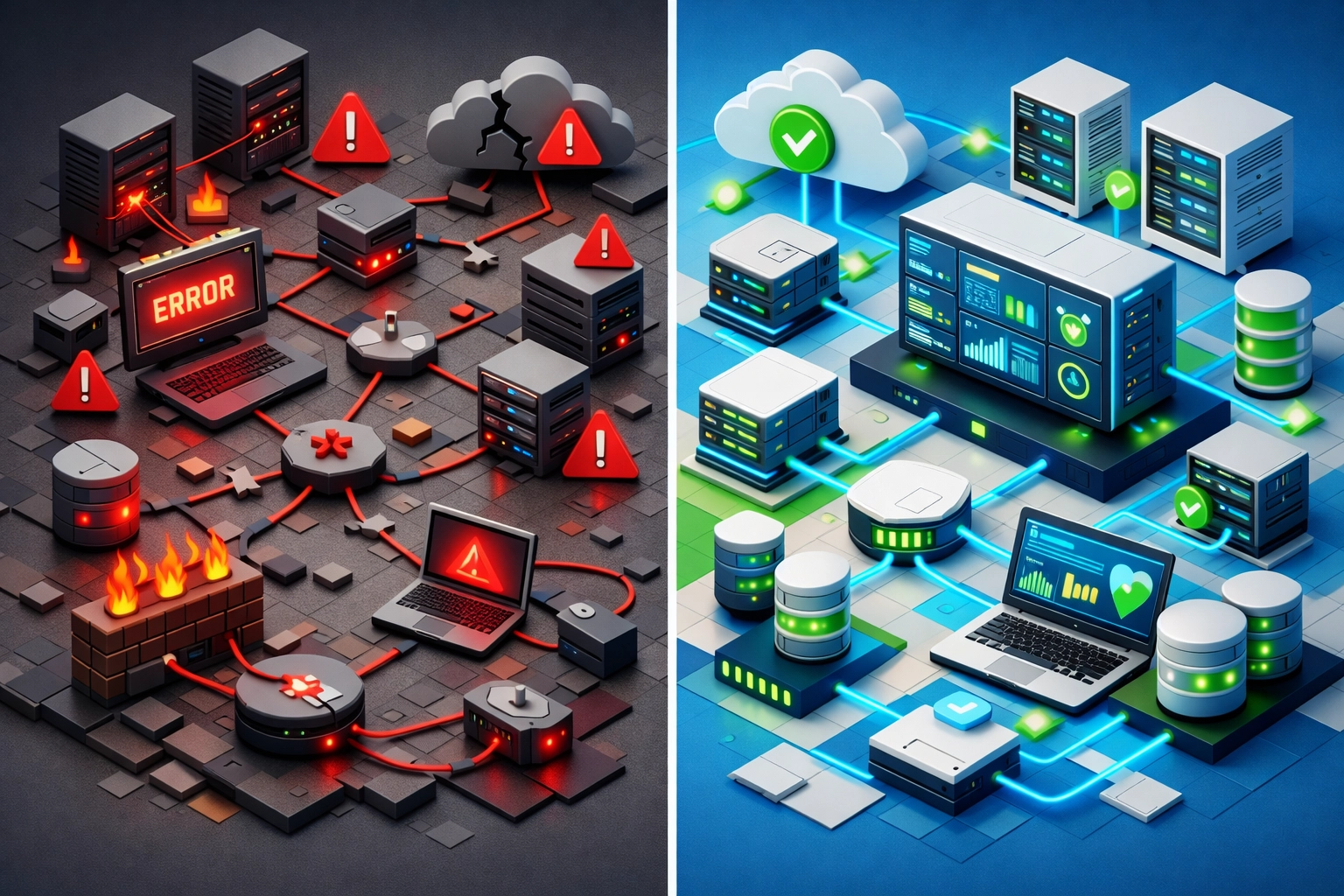
IT Operations Management (ITOM) serves as your operational foundation. The ServiceNow Washington DC release enhanced Discovery patterns for cloud-native architectures and improved Service Mapping's ability to detect complex dependencies. If your organization operates hybrid infrastructure: and 87% of EU financial institutions do: you need Discovery scanning AWS, Azure, and on-premises environments continuously, not quarterly.
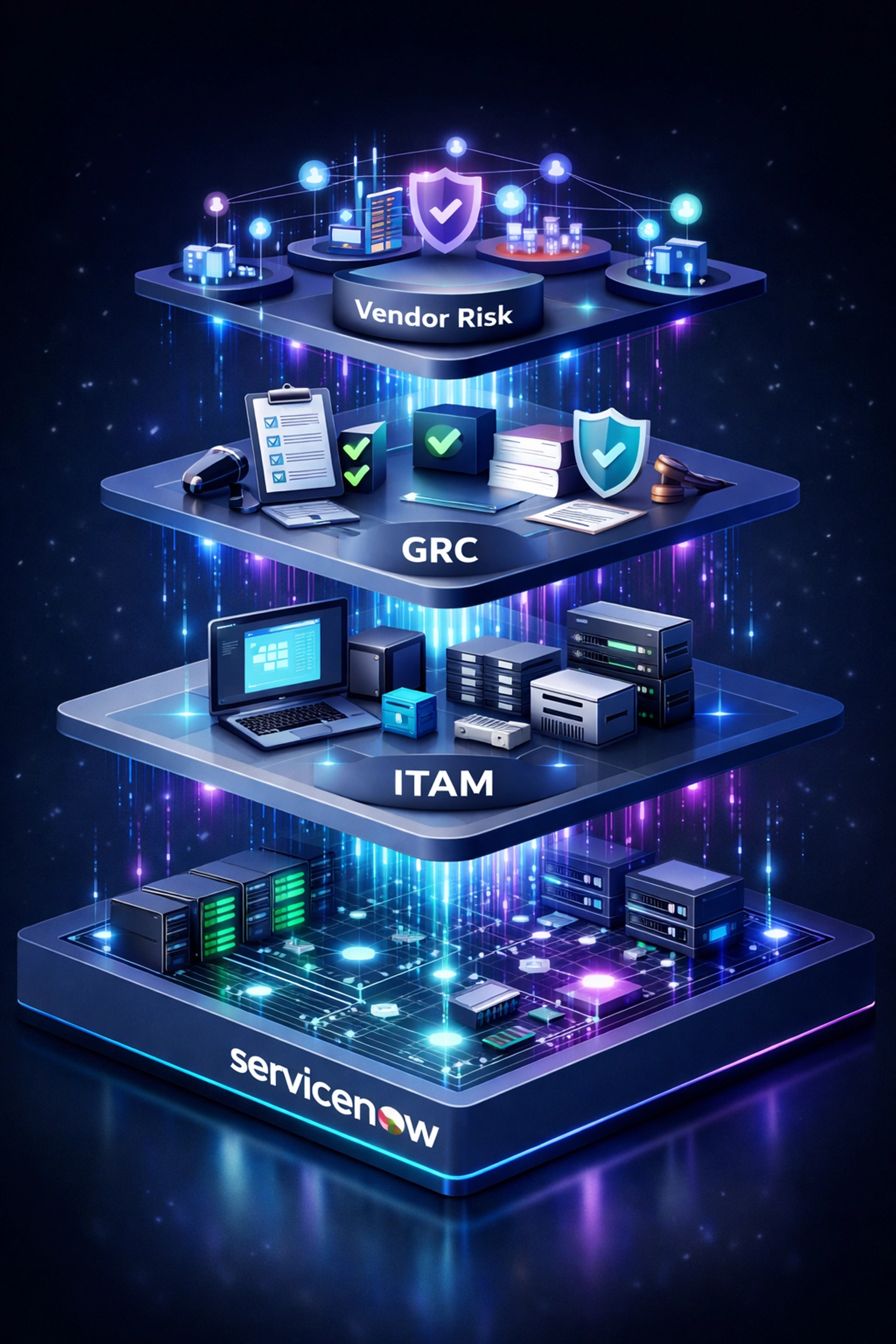
IT Asset Management (ITAM) transforms from a procurement function into a compliance engine. ServiceNow consulting services providers who understand DORA configure ITAM to automatically correlate software licenses with installed instances, identify unauthorized deployments, and flag vendor contracts requiring renewal or risk assessment. The integration between SAM Pro and CMDB Health provides the single source of truth that auditors demand.
Governance, Risk, and Compliance (GRC) establishes your DORA governance framework. ServiceNow GRC enables you to document policies, assign control ownership, and automate control testing. When integrated with ITOM, GRC can automatically assess whether your infrastructure configuration complies with documented resilience requirements: replacing manual quarterly reviews with continuous compliance validation.
Vendor Risk Management has become non-negotiable. DORA Article 28 requires comprehensive oversight of all third-party ICT service providers, including annual reviews and exit strategies. ServiceNow Vendor Risk Management correlates vendor assessments with Service Mapping data, enabling you to identify which critical services depend on high-risk vendors and prioritize remediation efforts.
Hidden Gaps Our 2026 Audits Are Revealing
Through our Free 2026 ServiceNow ROI & License Audit program, I've identified five compliance gaps that consistently appear in organizations that assumed their ServiceNow implementation was DORA-ready:
Gap 1: Incomplete Discovery Coverage – Organizations discover that Discovery scans cover only 60-70% of their actual infrastructure. Cloud resources provisioned outside formal change management, shadow IT deployments, and legacy systems fall outside automated monitoring, creating blind spots that DORA explicitly prohibits.
Gap 2: Missing Service Dependency Maps – Financial institutions can identify individual assets but cannot explain how those assets support critical business services. When asked "what happens to customer payment processing if this database cluster fails?", they cannot answer with confidence. Service Mapping wasn't configured or was implemented superficially.
Gap 3: Disconnected ITAM and ITOM Workflows – Software discovered by ITOM tools doesn't reconcile with licenses managed in ITAM. Hardware identified in Discovery doesn't match procurement records. This disconnect makes it impossible to generate accurate third-party service arrangement registers: a mandatory DORA requirement.
Gap 4: Inadequate Incident Classification Automation – Organizations rely on manual incident classification, making it impossible to meet DORA's requirement for immediate reporting of major ICT incidents. ServiceNow Event Management can automatically classify incidents based on business impact, but most organizations haven't configured these capabilities.
Gap 5: Insufficient Integration with Business Continuity Management – DORA demands that ICT risk management integrate with business continuity planning. Organizations have ServiceNow BCM implemented but haven't connected resilience scenarios with actual infrastructure dependencies captured in Service Mapping.
Transforming Compliance Burden into Operational Excellence
Here's the strategic insight I've gained from working with organizations that successfully navigated DORA compliance: those who partnered with a ServiceNow implementation partner specializing in ITOM and ITAM didn't just achieve compliance: they transformed operational resilience into competitive advantage.
These organizations now detect incidents an average of 43% faster (measured by Mean Time to Detect), resolve operational issues 31% more efficiently (measured by Mean Time to Resolve), and operate infrastructure with 99.97% uptime compared to the industry average of 99.89%. These improvements directly impact customer experience, operational cost, and regulatory confidence.
The difference lies in treating DORA not as a compliance checklist but as the catalyst for modernizing how you monitor, manage, and respond to ICT risk. A specialized ServiceNow consulting services provider approaches DORA implementation through four phases:
Phase 1: Discovery and Gap Assessment – Comprehensive audit of your current ServiceNow implementation, identifying which ITOM and ITAM capabilities are configured, which are licensed but unused, and which require additional investment. This assessment typically reveals $200,000-$500,000 in annual license costs for unused capabilities.
Phase 2: Architecture Design – Designing the integrated ITOM, ITAM, IRM, and GRC architecture required for continuous DORA compliance. This includes defining Discovery schedules, Service Mapping methodologies, Event Management correlation rules, and automated workflow triggers.
Phase 3: Implementation and Integration – Configuring ServiceNow modules to work as an orchestrated compliance platform rather than disconnected tools. This phase emphasizes automation: eliminating manual documentation processes that create compliance risk.
Phase 4: Optimization and Continuous Improvement – Establishing KPIs that measure both compliance and operational efficiency, then continuously refining your platform to improve both dimensions simultaneously.

Your Next Step: The Free 2026 ServiceNow ROI & License Audit
If you're reading this in February 2026 and questioning whether your ServiceNow ITOM strategy truly meets DORA requirements, I encourage you to take advantage of our Free 2026 ServiceNow ROI & License Audit. This comprehensive assessment evaluates:
Discovery Coverage Analysis: Percentage of infrastructure under continuous automated monitoring
Service Mapping Maturity: Ability to correlate infrastructure dependencies with business services
ITAM Integration Assessment: Level of automation between asset discovery, license management, and vendor risk oversight
Compliance Gap Identification: Specific DORA requirements your current implementation cannot address
License Optimization Opportunities: Unused capabilities you're paying for and missing capabilities you need
Organizations completing this audit typically discover opportunities to reallocate $150,000-$400,000 in annual ServiceNow license costs while simultaneously closing critical compliance gaps.
Transform Compliance into Competitive Advantage
DORA compliance represents the baseline expectation for financial entities operating in the EU. The organizations that will thrive in 2026 and beyond are those treating operational resilience as strategic capability, not regulatory burden.
I've witnessed how the right ServiceNow implementation partner transforms DORA compliance from existential threat into operational excellence. The platform capabilities required for compliance: comprehensive asset visibility, automated incident detection, integrated risk management: are the same capabilities that enable you to operate faster, respond more effectively, and serve customers more reliably than competitors still managing ICT risk through manual processes.
The question isn't whether your organization will achieve DORA compliance: the deadline has passed. The question is whether you'll achieve compliance efficiently, cost-effectively, and in a manner that strengthens rather than burdens your operations.
Ready to discover where your ServiceNow ITOM strategy falls short? Visit the SnowGeek Solutions contact page to share your current implementation details and schedule your Free 2026 ServiceNow ROI & License Audit. Additionally, register with SnowGeek Solutions for platform updates, DORA compliance insights, and expert guidance as regulatory requirements continue evolving throughout 2026.
The organizations achieving operational resilience aren't working harder: they're working with ServiceNow consulting services providers who understand that compliance and operational excellence are inseparable objectives.
Comments