
Agentic AI Meets ServiceNow ITOM: 7 Mistakes You're Making with Your Implementation Partner (And How the Free 2026 Audit Fixes Them)
- SnowGeek Solutions
- Feb 22
- 5 min read

I have witnessed firsthand how the wrong ServiceNow implementation partner can transform a $500K-$2M ITOM investment into a cautionary tale. As we move through 2026, the stakes have never been higher, especially with agentic AI capabilities fundamentally reshaping what's possible with ServiceNow ITOM and ITAM deployments.
The problem? Most organizations are still selecting partners using 2023 criteria in a 2026 landscape. Here are the seven critical mistakes I see repeatedly, and more importantly, how a strategic audit can course-correct before you lose 40% of your ROI.
Mistake #1: Choosing Low-Cost Partners Without Modern AI Expertise
The Washington DC release didn't just add features, it introduced a completely different paradigm with Now Assist for ITOM. I recently evaluated a partner who boasted "15 years of ServiceNow experience" but couldn't demonstrate a single implementation leveraging agentic AI capabilities for automated incident classification.
The numbers tell the story: Now Assist achieves 94% accuracy in incident classification, and organizations leveraging AI-driven automation are reaching 35% automated resolution rates. When your partner lacks this expertise, you're not just missing features, you're ceding competitive advantage to organizations that are reducing MTTR by 60% while you're still manually triaging incidents.

ServiceNow consulting services must now demonstrate documented experience with:
Now Assist for ITOM implementation across Discovery, Event Management, and Cloud Cost Optimization
Integration of agentic AI workflows with existing CMDB structures
Custom automation leveraging the WorkArena Benchmark framework (achieving 80%+ task completion rates)
If your partner's "AI strategy" consists of generic ChatGPT integration suggestions, you're looking at the wrong partner.
Mistake #2: Overlooking Specialized ITOM and ITAM Expertise
I cannot overstate this: ITSM credentials do not transfer to ITOM mastery. The skillsets are fundamentally different. I've audited implementations where partners with impeccable ITSM track records delivered ITOM Discovery configurations that missed 40% of infrastructure assets because they misunderstood horizontal versus vertical Discovery patterns.
ITAM Hardware Asset Management requires deep expertise in:
Software Asset Management reconciliation workflows (maintaining 95%+ normalization accuracy)
Cloud Cost Optimization across multi-cloud environments
License compliance automation that prevents audit penalties
Without certified ITOM specialists (look for ServiceNow CIS-Discovery and CIS-HAM certifications), your CMDB becomes a liability. I've seen CMDB accuracy degrade from 85% at launch to below 60% within six months when partners lack specialized expertise.
Mistake #3: Neglecting Post-Implementation Support Architecture
This mistake costs organizations between 200-300% more in support costs during the first quarter after go-live. I recently evaluated an implementation where the partner delivered a technically sound platform, then disappeared. Within eight weeks, CMDB accuracy dropped to 58%, and the internal team was overwhelmed.
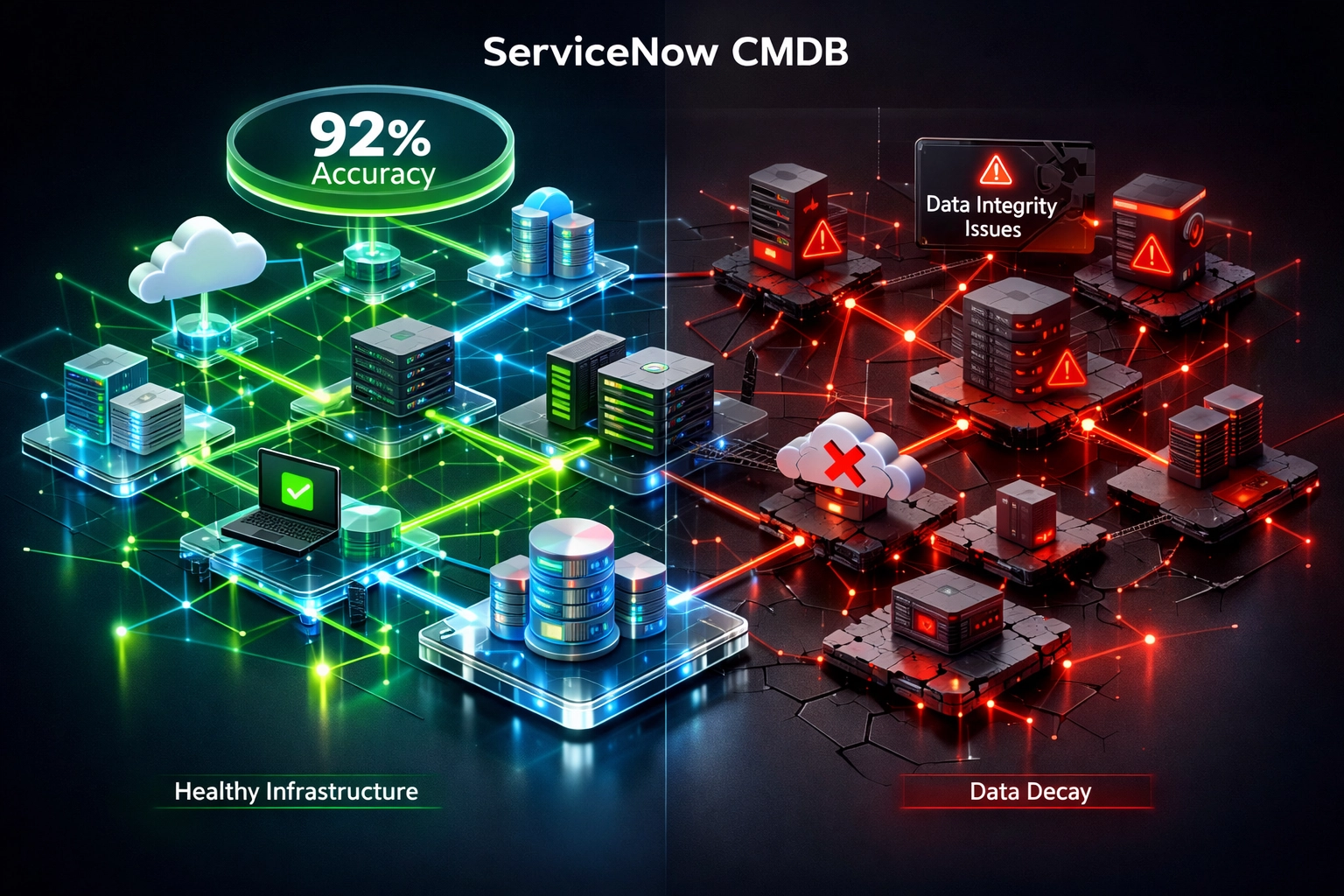
The data is unambiguous: 58% of organizations treat their partner relationship as transactional. Organizations with robust post-implementation partnerships maintain CMDB accuracy above 92% and reduce operational overhead by 37% year-over-year.
Your ServiceNow implementation partner must deliver:
Dedicated platform health monitoring (tracking KPIs like platform health scores above 95)
Quarterly optimization reviews identifying unused licenses and optimization opportunities
Continuous training programs maintaining certification currency across your team
Proactive guidance on new releases (the Xanadu release introduced 47 new ITOM features: did your partner proactively assess relevance?)
Mistake #4: Failing to Involve Internal Stakeholders Early
When procurement departments select partners based solely on IT leadership input, adoption rates suffer by 40%. I guide organizations through cross-functional evaluation committees including:
IT Operations leaders (understanding Discovery and Event Management requirements)
Asset Management professionals (defining ITAM compliance workflows)
Security teams (ensuring vulnerability response integration)
Finance stakeholders (validating Cloud Cost Optimization ROI)
This approach dramatically reduces post-launch change requests and accelerates time-to-value. One client reduced their planned 12-month deployment to 8 months by involving stakeholders upfront, identifying requirements that would have surfaced as expensive change orders later.
Mistake #5: Ignoring Agentic AI and Intelligent Automation Capabilities
The 2026 ServiceNow environment differs fundamentally from 2024. Partners claiming "AI expertise" must demonstrate genuine implementation experience beyond marketing buzzwords.
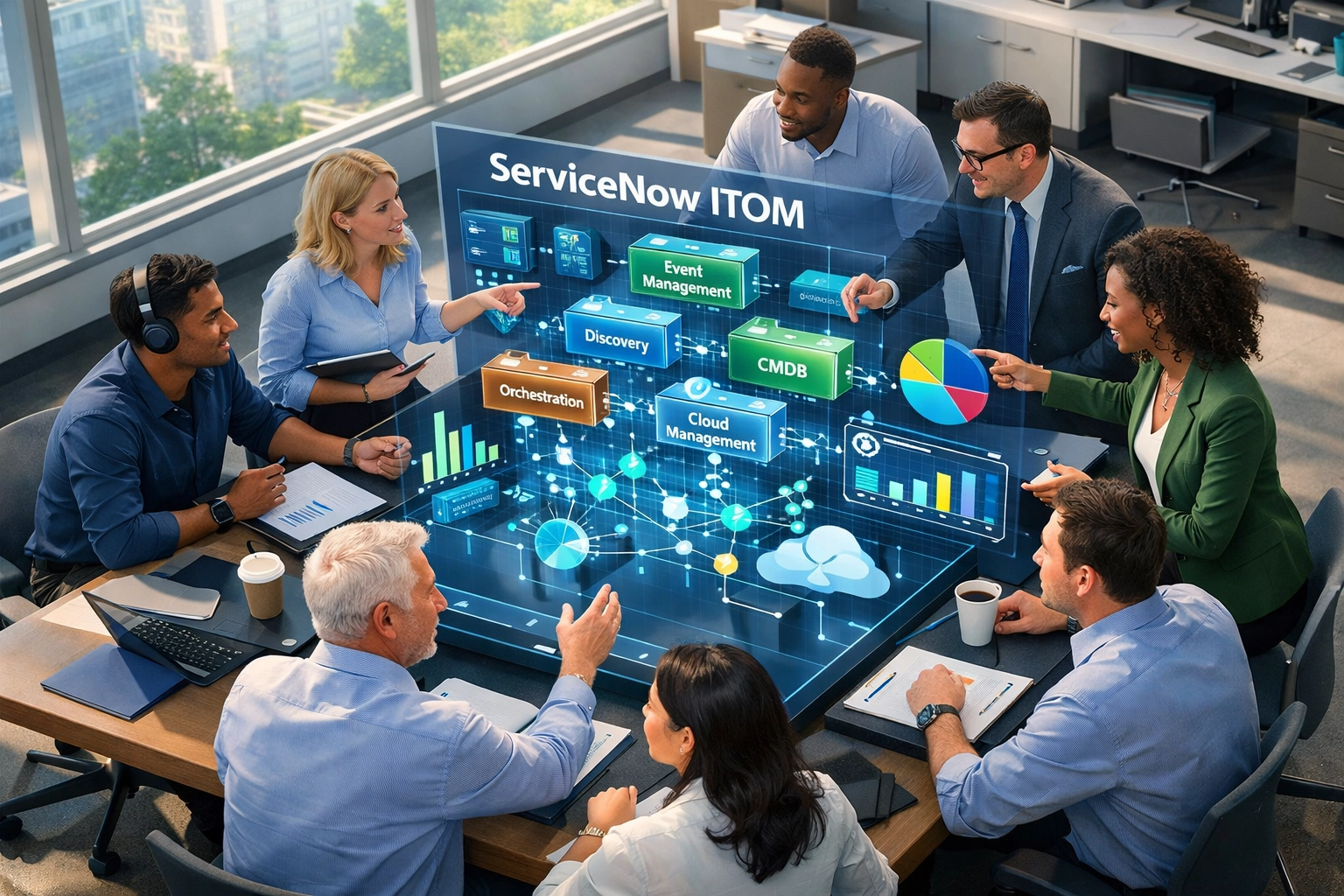
I evaluate partners against specific criteria:
Documented implementations of Now Assist for ITOM achieving measurable MTTR reduction
Custom automation leveraging the IntegrationHub and Flow Designer for agentic workflows
Predictive Intelligence configurations driving proactive incident prevention
AI-powered Discovery reducing manual configuration by 70%+
Partners unable to showcase these capabilities will cost you 30-40% of potential ROI. When competitors are automating 35% of incident resolution while you're still using manual workflows, you're not optimizing: you're falling behind.
Mistake #6: Underestimating Compliance and Regulatory Expertise
For European organizations, this mistake carries existential risk. The Digital Operational Resilience Act (DORA) fundamentally changed how financial services organizations must approach ITOM and ITAM strategy.
I recently completed a DORA compliance assessment for a Frankfurt-based organization. Their existing partner had zero understanding of ICT risk management framework requirements. We identified 23 critical gaps in their ITOM configuration that would have triggered regulatory action.
Your partner must demonstrate:
DORA-compliant ICT risk management frameworks integrated with ServiceNow Risk Management
GDPR data handling practices across Discovery and CMDB operations
ESG reporting integration capabilities tracking hardware lifecycle and carbon footprint metrics
For US organizations, similar regulatory pressures exist around SOC 2 compliance, NIST framework alignment, and audit readiness. These aren't checkbox exercises: they're competitive differentiators.
Mistake #7: Inadequate Technical Architecture Planning
Poor technical architecture decisions compound over time. I've audited platforms where inadequate planning resulted in:
Discovery domains overlapping by 35%, causing duplicate CI creation
ServiceGraph Connectors misconfigured, missing critical dependency relationships
Cloud Cost Optimization deployed without proper FinOps integration
ITAM workflows disconnected from procurement systems, destroying ROI
Strategic architecture requires understanding your three-year roadmap, not just immediate requirements. When partners design for today without considering tomorrow, you face expensive re-architecture within 18 months.
How the Free 2026 ServiceNow ROI & License Audit Fixes These Mistakes
I developed our comprehensive audit framework to address these seven failure points before they destroy your investment. This isn't a sales pitch disguised as an assessment: it's a strategic evaluation that quantifies exactly where you stand and what course correction delivers maximum ROI.
Technical Architecture Review: I evaluate your current or proposed partner's expertise across ITOM/ITAM specialization, agentic AI maturity, and platform health optimization capabilities. You receive specific recommendations on partner selection criteria or existing relationship optimization.
Compliance Validation: For EU organizations, I verify DORA readiness, GDPR data handling practices, and ESG reporting integration capabilities. For US organizations, I assess SOC 2 compliance and regulatory framework alignment.
ROI Analysis: I quantify the financial impact of your current trajectory, identify license optimization opportunities (typically finding 15-25% license cost reduction), and project achievable outcomes with proper partner alignment.
Stakeholder Alignment Assessment: I evaluate whether your selection process involves the right decision-makers to maximize adoption and business value.
The audit typically reveals $200K-$500K in optimization opportunities for mid-size deployments, and $1M+ for enterprise implementations.
Your Next Step Toward ITOM Excellence
The difference between a transformative ServiceNow ITOM implementation and an expensive disappointment often comes down to partner selection. I've guided organizations through this decision dozens of times, and the pattern is clear: strategic partner evaluation before commitment saves millions compared to course correction after deployment.
Visit the SnowGeek Solutions contact page to share your project details and schedule your Free 2026 ServiceNow ROI & License Audit. Additionally, register with SnowGeek Solutions for platform updates and expert insights that keep you ahead of ServiceNow's rapid evolution.
The ServiceNow ITOM landscape has fundamentally shifted with agentic AI capabilities. Your implementation partner must evolve with it: or you're building yesterday's platform for tomorrow's challenges.
Comments