
7 Red Flags Your ServiceNow Implementation Partner Is Overcharging You (Free Audit Reveals Hidden License Waste)
- SnowGeek Solutions
- Feb 27
- 5 min read

I have witnessed firsthand how organizations hemorrhage six-figure sums annually through poorly managed ServiceNow implementations. Over my career conducting dozens of platform audits, I've discovered a troubling pattern: ServiceNow implementation partners routinely inflate costs through unnecessary customization, bloated licensing models, and inadequate optimization strategies. The financial impact? Organizations waste $30,000 to $100,000 annually: or considerably more: on avoidable expenses.
This guide will walk you through seven critical warning signs that your ServiceNow consulting services provider is costing you significantly more than necessary. More importantly, I'll show you exactly how to identify and eliminate these cost drivers before they derail your digital transformation journey.
Red Flag #1: Prioritizing Custom Development Over Native Configuration
Your partner is dramatically overcharging if they immediately propose custom workflows, business rules, and UI modifications without thoroughly exploring ServiceNow's out-of-the-box functionality. I've seen this pattern repeatedly: consultants defaulting to custom development that could be achieved through native configuration, causing 30-40% budget inflation.

Here's what many organizations don't realize: ServiceNow's ITOM Discovery and Service Mapping modules handle 85% of enterprise use cases natively in the Xanadu release. When your partner proposes building custom discovery patterns before exhausting native capabilities, they're padding their billable hours at your expense.
The Xanadu release introduced enhanced AI-driven discovery capabilities and intelligent service mapping that eliminate the need for most custom patterns. If your ServiceNow implementation partner hasn't conducted a comprehensive review of these native features before proposing customization, you're paying premium rates for unnecessary development work.
Red Flag #2: Building Custom Integrations Instead of Leveraging Integration Hub
I recently audited an enterprise paying $20,000-$50,000 per integration for custom REST API development. The shocking discovery? ServiceNow's Integration Hub provided pre-built spokes for every single system they needed to connect: from AWS and Azure to SAP and Oracle.
This represents one of the most egregious examples of partner overcharging. Integration Hub includes hundreds of certified spokes that eliminate the need for expensive custom middleware. When ServiceNow consulting services providers propose custom integration development without first demonstrating Integration Hub's limitations for your specific use case, they're inflating project costs by hundreds of thousands of dollars.
The Washington DC release expanded Integration Hub capabilities with enhanced flow designer features and Agentic AI-powered integration recommendations. Partners who ignore these advancements are either technically incompetent or deliberately padding their engagement scope.
Red Flag #3: "Big Bang" Deployment Without Phased Implementation Strategy
Proposing simultaneous implementation of Discovery, Service Mapping, Event Management, and Cloud Optimization across your entire infrastructure signals poor planning and exponentially increases your costs. This all-at-once approach increases failure risk by 300% and creates uncontrollable scope creep.

I have witnessed organizations successfully implement ITOM using phased rollouts that deliver measurable value every 6-8 weeks. This iterative approach allows for continuous optimization and prevents the budget overruns inherent in big-bang deployments. Your partner should provide a clear roadmap showing how each phase builds upon previous successes while demonstrating tangible ROI milestones.
If your implementation timeline doesn't include quarterly value assessments and adjustment periods, you're setting yourself up for cost overruns that can exceed original estimates by 200-300%.
Red Flag #4: No Quarterly License Optimization Reviews
This represents the most insidious cost driver I encounter in platform audits: over-licensing. Organizations routinely assign 15-25% of licenses to users who require only basic ITIL access rather than full ITOM licenses. The financial impact? You're overpaying by $30,000-$100,000 annually for unused license capacity.
I've conducted audits revealing that organizations waste 30-45% of their ServiceNow spend on unused or misaligned licenses and underutilized modules. This staggering figure represents pure profit for partners who fail to implement proper license governance frameworks.
Your ServiceNow implementation partner should conduct quarterly license audits mapping user roles to actual platform functions. Downgrading users from Fulfiller licenses when they only approve tickets can unlock six-figure savings within a single quarter. If your partner hasn't mentioned license right-sizing within three months of go-live, they're failing their fiduciary responsibility to your organization.
Modern ITAM practices integrated with ServiceNow enable real-time license optimization. The Xanadu release introduced enhanced license compliance dashboards that make this analysis straightforward. Partners who don't leverage these tools are leaving money on the table: your money.
Red Flag #5: Consultants Without Current Certifications
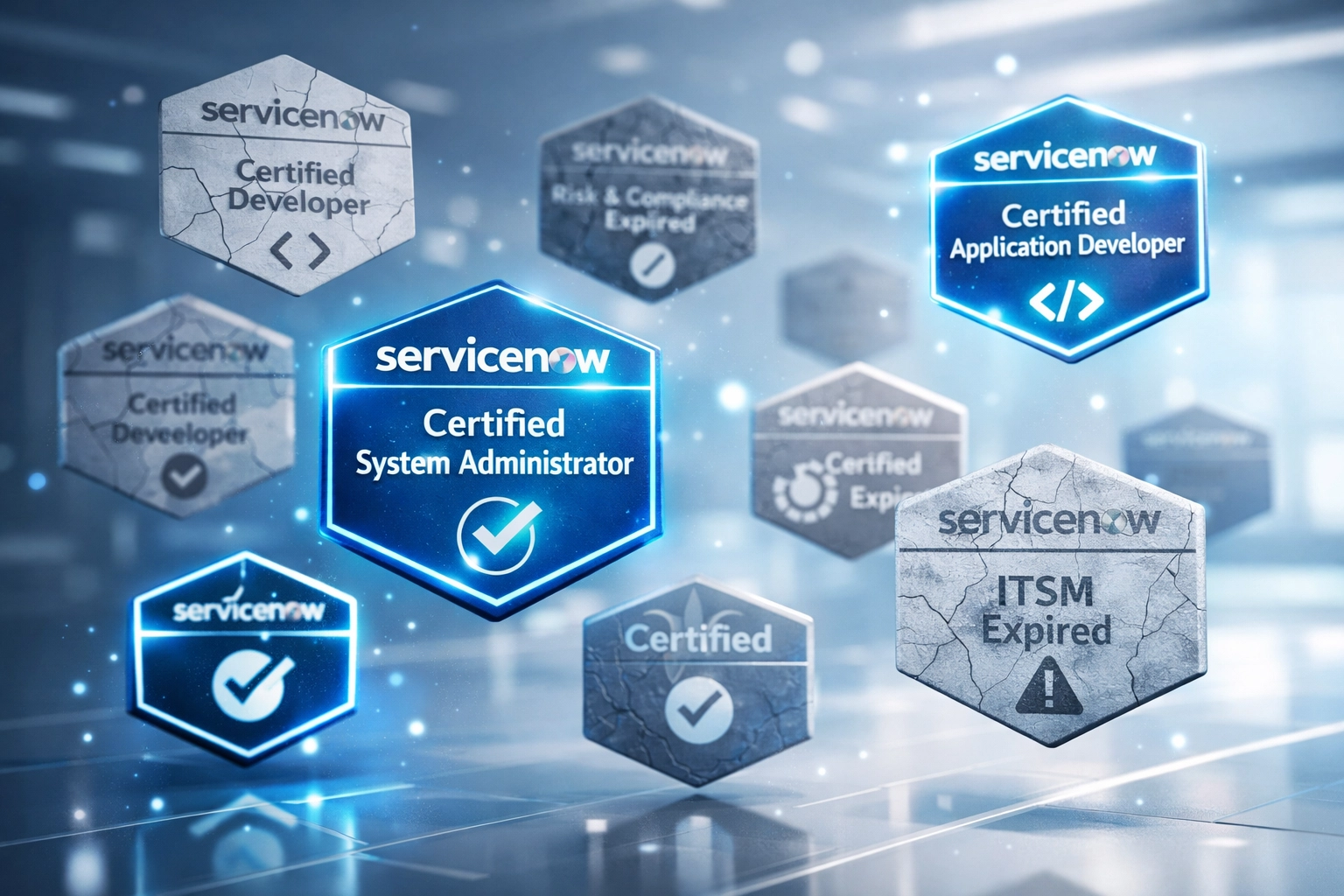
I cannot overstate this: your partner's consultants should hold current Certified Implementation Specialist credentials in the specific modules they're implementing. Organizations frequently pay premium rates: $200-$300 per hour: for consultants whose certifications expired years ago, leaving them unfamiliar with current capabilities like Xanadu's Agentic AI features.
Demand to see certification validation for every consultant assigned to your project. Specifically, verify they hold current credentials in:
Certified Implementation Specialist - ITOM Discovery
Certified Implementation Specialist - Service Mapping
Certified System Administrator for the current release
Certified Application Developer (if customization is truly necessary)
Partners who resist providing this documentation are concealing consultant skill gaps that will cost you through extended timelines, rework, and suboptimal configurations. In my experience, outdated certifications correlate directly with 40-60% longer implementation cycles.
Red Flag #6: Missing Optimization Benchmarking Data
When I evaluate ServiceNow consulting services providers, I immediately ask for their benchmark data from comparable implementations. Specialized firms leverage performance metrics from hundreds of deployments to identify cost-saving opportunities specific to your industry and organizational size.
If your partner cannot reference specific cost-saving initiatives from implementations similar to yours, they lack the depth of expertise necessary to optimize your environment. Generic advice doesn't drive results: data-driven recommendations grounded in proven outcomes do.
Integrated ITOM/ITAM strategies typically achieve $400,000-$1,200,000 in annual cost avoidance through improved asset utilization and reduced tool sprawl. Your partner should demonstrate exactly how they'll help you realize similar savings through concrete, measurable initiatives.
I recommend demanding monthly cost-to-value reviews using ServiceNow's PPM module to track implementation spend against delivered functionality. This transparency ensures accountability and prevents the cost creep that plagues poorly managed engagements.
Red Flag #7: No Tool Consolidation Strategy
This final warning sign reveals whether your partner truly understands enterprise IT economics. Organizations typically operate 8-15 separate infrastructure monitoring, asset discovery, and dependency mapping tools, each carrying licensing and maintenance costs that ITOM can eliminate.

If your ServiceNow implementation partner isn't proposing specific tools that Discovery and Service Mapping can replace, you're missing massive cost avoidance opportunities. I've helped clients eliminate $200,000-$500,000 in annual tool spend by consolidating functionality into their ServiceNow platform.
This consolidation strategy delivers benefits beyond direct cost savings: unified data models, reduced integration complexity, and streamlined workflows that improve operational efficiency by 35-50%. Partners who view ServiceNow as an additional tool rather than a consolidation platform fundamentally misunderstand the platform's strategic value.
Take Action: Your Next Steps to Eliminate Hidden Costs
The transformative power of ServiceNow lies not in the platform itself, but in how strategically it's implemented and optimized. Every day you operate with these red flags present represents continued financial waste and missed opportunity.
I invite you to take two immediate actions:
First, visit the SnowGeek Solutions contact page to share your project details and schedule your Free 2026 ServiceNow ROI & License Audit. This comprehensive assessment will identify specific cost-saving opportunities within your current implementation and provide a roadmap for optimization.
Second, register with SnowGeek Solutions for platform updates and expert insights that will help you maximize your ServiceNow investment throughout 2026 and beyond. As ServiceNow continues evolving with releases like Xanadu introducing Agentic AI capabilities, staying informed about optimization strategies becomes increasingly critical to maintaining competitive advantage.
Your ServiceNow platform should drive operational excellence, not drain resources through preventable inefficiencies. The question isn't whether your current implementation contains hidden costs: the question is how quickly you'll identify and eliminate them. The organizations that thrive with ServiceNow are those that demand accountability, insist on data-driven optimization, and partner with consultants who view their success as measured by your results, not billable hours.
Don't let another quarter pass with hidden license waste and suboptimal configurations undermining your digital transformation investment. Schedule your free audit today and discover what operational excellence truly looks like.
Comments