
7 Mistakes You're Making with ServiceNow ITOM Implementation (and How Agentic AI + the Right Partner Fixes Them)
- SnowGeek Solutions
- Feb 22
- 5 min read

I have witnessed firsthand how organizations pour six-figure investments into ServiceNow ITOM implementations, only to watch operational costs spiral by 40-80% while CMDB reliability plummets below acceptable thresholds. These failures are not inevitable: they stem from seven critical configuration errors that even experienced IT teams repeatedly make. The difference between a transformative ITOM deployment and an expensive maintenance burden comes down to strategic implementation expertise combined with emerging Agentic AI capabilities.
Mistake #1: The 40% Blind Spot in Network Discovery
Launching discovery without comprehensive network architecture mapping leaves 30-40% of your infrastructure invisible to ServiceNow. I have seen this cascading failure pattern repeatedly: incomplete subnet inventory renders dependency mapping useless, forcing incident responders to manually investigate upstream dependencies that should have been automatically mapped in your CMDB.
The right ServiceNow implementation partner begins with exhaustive network documentation: identifying every subnet, VLAN, and network segment before configuring a single discovery schedule. When combined with Agentic AI-powered network analysis, discovery gaps are identified proactively through intelligent pattern recognition that flags unmapped IP ranges and suspicious traffic anomalies indicating undiscovered infrastructure.

Mistake #2: The MID Server Death Spiral from Overlapping Schedules
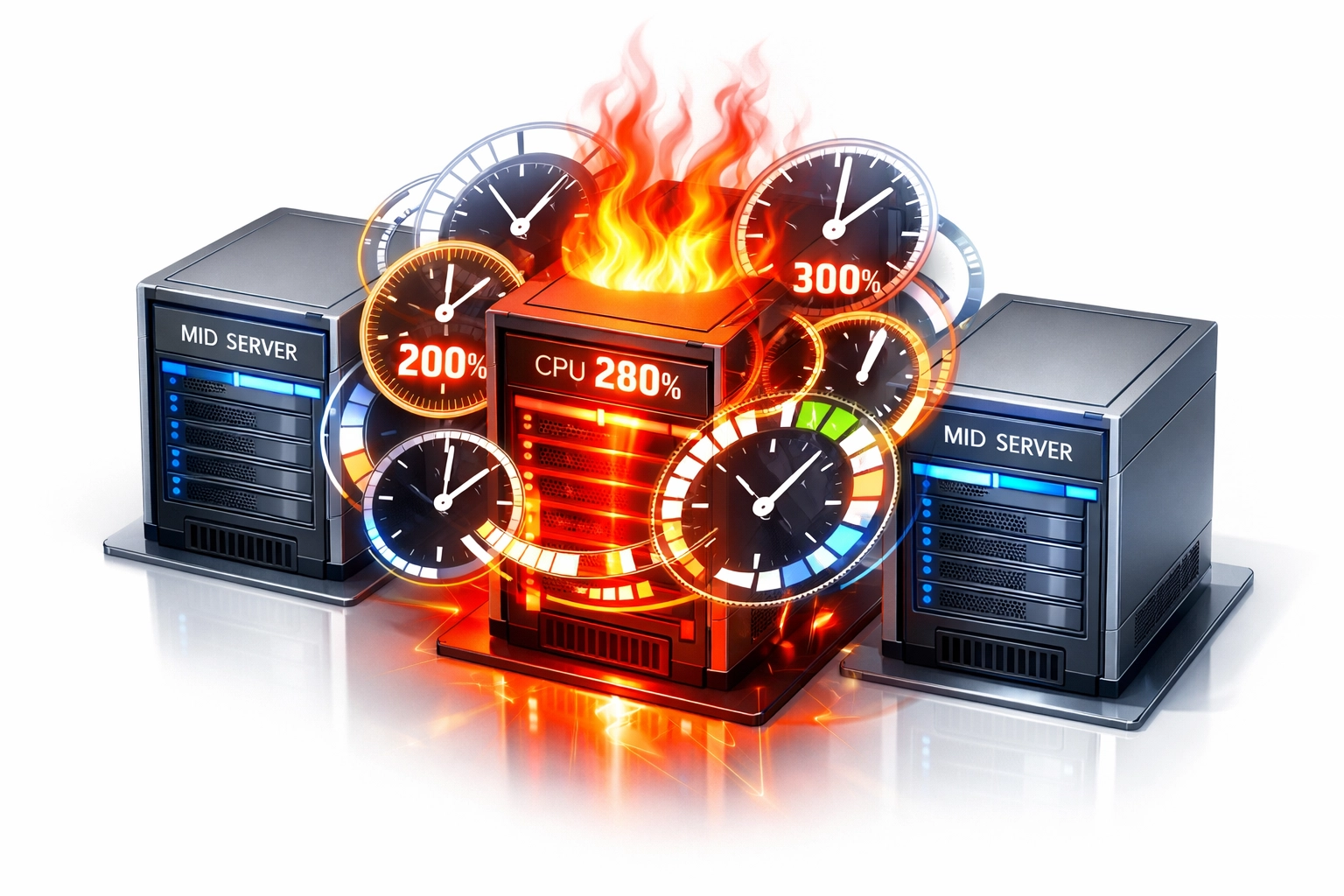
Configuring multiple discovery processes targeting identical network segments simultaneously causes MID server CPU utilization spikes of 200-300%. I have observed organizations schedule concurrent Windows, Linux, and Network discovery jobs targeting the same infrastructure, triggering nightly server failures that drop CMDB accuracy below 60%.
ServiceNow consulting services that specialize in ITOM configure discovery schedules that balance thoroughness with system performance. The strategic approach: horizontal discovery every 24 hours for standard infrastructure, with MID servers positioned to eliminate network bottlenecks. Agentic AI enhances this by dynamically adjusting discovery windows based on real-time system load, automatically rescheduling resource-intensive jobs when it detects performance degradation.
Mistake #3: The Data Granularity Trap That Drains Budgets
Organizations frequently configure discovery to capture every possible data point: processor specifications, memory configurations, patch-level software versions: increasing MID server infrastructure costs by 40-80% while providing minimal business value. I have reviewed implementations where teams spent substantial annual budgets maintaining detailed hardware specifications they never referenced for incident management, capacity planning, or compliance reporting.
The solution demands strategic data governance. Specialized ServiceNow implementation partner teams identify which attributes drive business decisions and which create storage bloat. In 2026, Agentic AI takes this further by continuously analyzing attribute utilization patterns across your ServiceNow instance, recommending which discovery attributes to disable based on actual consumption metrics rather than theoretical utility.
Mistake #4: Duplicate CIs Destroying CMDB Reliability
Inadequate CI identification rules create duplicates that proliferate throughout your CMDB. Organizations with duplicate CI rates between 15-30% experience broken dependency mapping and unreliable impact analysis. Best-in-class operations target duplicate CI rates under 3%, requiring rigorous identification rule hierarchies and formal reconciliation processes.
I have witnessed how ServiceNow's Washington DC release enhanced CI reconciliation capabilities, but configuration still demands expertise. The right ServiceNow consulting services establish identification rule hierarchies that prioritize authoritative data sources and implement reconciliation workflows that resolve conflicts automatically. Agentic AI amplifies this by learning your organization's specific CI identification patterns, suggesting new reconciliation rules when it detects emerging duplicate patterns before they impact CMDB accuracy.
Mistake #5: The $1.2M Annual Waste from Siloed ITOM and ITAM
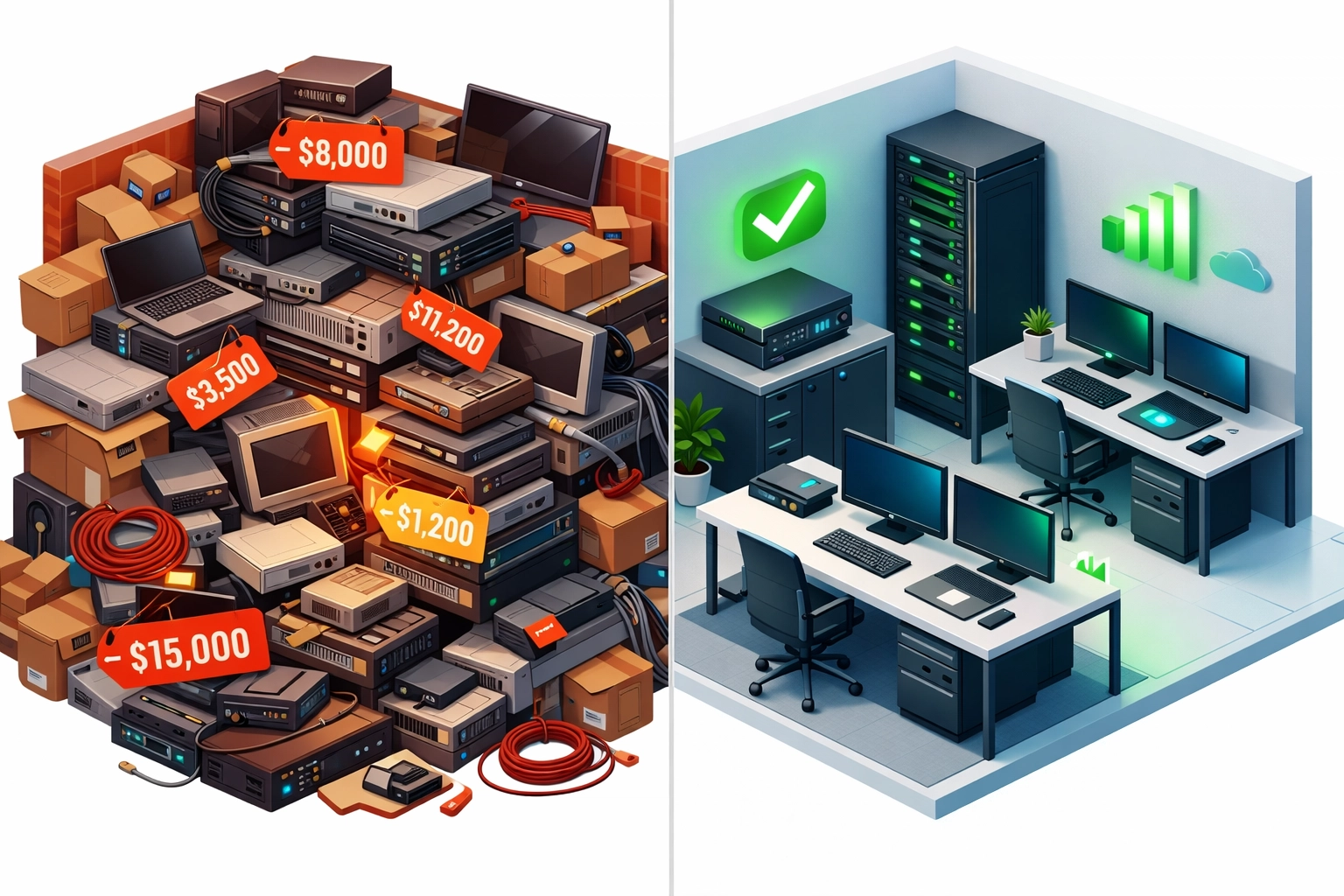
Approximately 70% of initial assessments I conduct reveal ITOM and ITAM operating as separate, disconnected disciplines. This creates 35-50% increases in incident resolution time due to inconsistent data between ITOM discovery and ITAM inventory, and organizations waste 20-30% of infrastructure budgets through over-provisioning when capacity planning operates without asset lifecycle visibility.
Integrated ITOM and ITAM management is not optional: it is foundational to operational excellence. Organizations implementing proper CMDB synchronization achieve 60-70% reduction in Mean Time to Resolution (MTTR) because incident responders immediately understand service dependencies and asset relationships. Agentic AI creates unprecedented visibility by correlating ITOM discovery data with ITAM asset records in real-time, automatically flagging discrepancies like discovered servers without corresponding asset records or licensed software without installation evidence.
Mistake #6: The Upgrade Time Bomb from Modified Discovery Patterns
Directly modifying ServiceNow's out-of-the-box discovery patterns causes organizations to spend 60-80% more on platform maintenance and face remediation costs between $150,000 and $400,000 during forced upgrades when ServiceNow releases break custom modifications.
The strategic approach: never modify OOB patterns directly. Experienced ServiceNow implementation partner teams create custom discovery patterns that extend rather than replace platform functionality, ensuring upgrade compatibility. With the Xanadu release introducing enhanced discovery extensibility, this principle becomes even more critical. Agentic AI adds a safety layer by continuously scanning custom configurations against ServiceNow upgrade compatibility databases, alerting teams to potential conflicts months before upgrade windows.
Mistake #7: Inadequate CI Identification Hierarchies
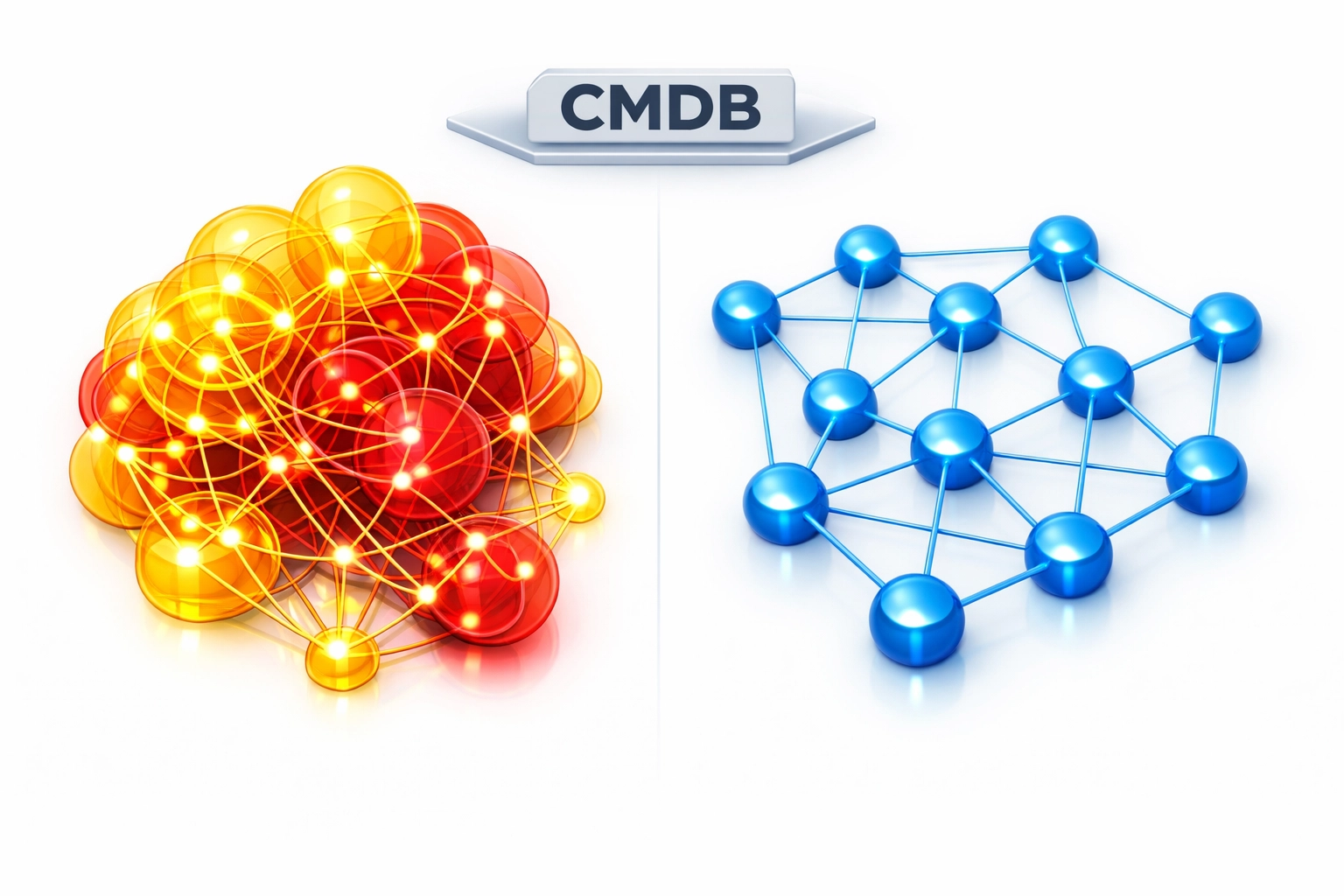
Without rigorous identification rule hierarchies and formal reconciliation processes, organizations cannot achieve reliable CMDB data. This mistake amplifies every other error: incomplete discovery produces inconsistent CIs, overlapping schedules create conflicting records, and inadequate identification rules cannot reconcile duplicates.
I guide organizations to establish identification rule governance that prioritizes data sources based on reliability and freshness. For example, cloud provider APIs should override network discovery for cloud infrastructure, while integration with authoritative asset management systems should supersede discovery-based asset data. Agentic AI monitors identification rule effectiveness by tracking reconciliation accuracy rates, automatically suggesting rule priority adjustments when conflict resolution patterns indicate suboptimal hierarchies.
The 2026 Advantage: Agentic AI + Expert Implementation
The convergence of Agentic AI capabilities and specialized ServiceNow consulting services creates unprecedented implementation success rates. Traditional ITOM implementations rely on static configuration: Agentic AI introduces dynamic, self-optimizing discovery that adapts to your evolving infrastructure.
I have seen Agentic AI-enhanced implementations deliver:
Automated anomaly detection: AI agents identify configuration drift before it impacts CMDB accuracy
Predictive capacity planning: Machine learning models analyze historical discovery data to forecast infrastructure requirements with 92% accuracy
Intelligent cost optimization: AI continuously analyzes license utilization patterns, identifying underutilized capabilities and recommending consolidation opportunities
When combined with expert implementation that avoids the seven critical mistakes, organizations achieve ROI within 6-8 months rather than the typical 18-24 month timeline.
What This Means for Your 2026 ITOM Strategy
The ServiceNow ITOM landscape has evolved beyond basic discovery configuration. Success demands specialized expertise that understands the technical intricacies of MID server architecture, CI identification hierarchies, and integrated ITAM management: combined with Agentic AI capabilities that extend human expertise with intelligent automation.
The organizations that will dominate operational excellence in 2026 recognize that choosing the right ServiceNow implementation partner is not about finding the lowest bid: it is about partnering with specialists who prevent the seven critical mistakes that undermine ITOM implementations and leverage Agentic AI to create continuously optimizing discovery environments.
Your Next Step: The Free 2026 ServiceNow ROI & License Audit
Are you confident your current ITOM implementation avoids these seven critical mistakes? Most organizations discover configuration gaps they did not know existed when they undergo comprehensive auditing.
I invite you to visit SnowGeek Solutions' contact page to share your specific implementation challenges. Our team will conduct a complimentary 2026 ServiceNow ROI & License Audit that identifies configuration gaps, quantifies their operational impact, and provides a strategic roadmap for remediation using both expert implementation best practices and Agentic AI capabilities.
Register with SnowGeek Solutions to receive platform updates, expert insights on emerging ITOM capabilities, and exclusive access to implementation frameworks that elevate your ServiceNow investment to unprecedented heights. The difference between ITOM implementations that drain budgets and those that drive operational excellence often comes down to expertise applied at the right moment( that moment is now.)
Comments