
7 Mistakes You're Making with ServiceNow ITOM Implementation (and How a Free 2026 ROI Audit Fixes Them)
- SnowGeek Solutions
- Feb 22
- 5 min read

I have witnessed firsthand how organizations pour millions into ServiceNow ITOM implementations only to discover 24 months later that they're operating glorified ticket systems delivering just 12% ROI. As we navigate 2026's regulatory landscape: DORA compliance mandates, GDPR enforcement intensification, and ESG reporting requirements: these implementation mistakes don't just cost money. They sabotage your entire operational resilience framework.
The truth? Seventy-three percent of companies select their ServiceNow implementation partner based on price or brand recognition rather than specialized ITOM architecture expertise. This single decision cascades into seven critical mistakes that compound daily, transforming what should be a transformative platform into an expensive liability.
Let me guide you through these mistakes and, more importantly, show you exactly how to fix them.
Mistake #1: Accepting Mediocre CMDB Data Quality
If your Configuration Management Database accuracy hovers between 60-75%, you're operating in what I call the "catastrophic zone" for AI-driven automation. At these accuracy levels, predictive AI capabilities systematically fail, creating cascading failures across incident management, change management, and asset tracking.
I have witnessed enterprises confidently deploying ServiceNow's Agentic AI capabilities on CMDB foundations with 68% accuracy. The result? Automated incident classification that misroutes tickets 32% of the time, predictive analytics recommending changes to non-existent infrastructure, and audit failures that expose DORA compliance gaps.
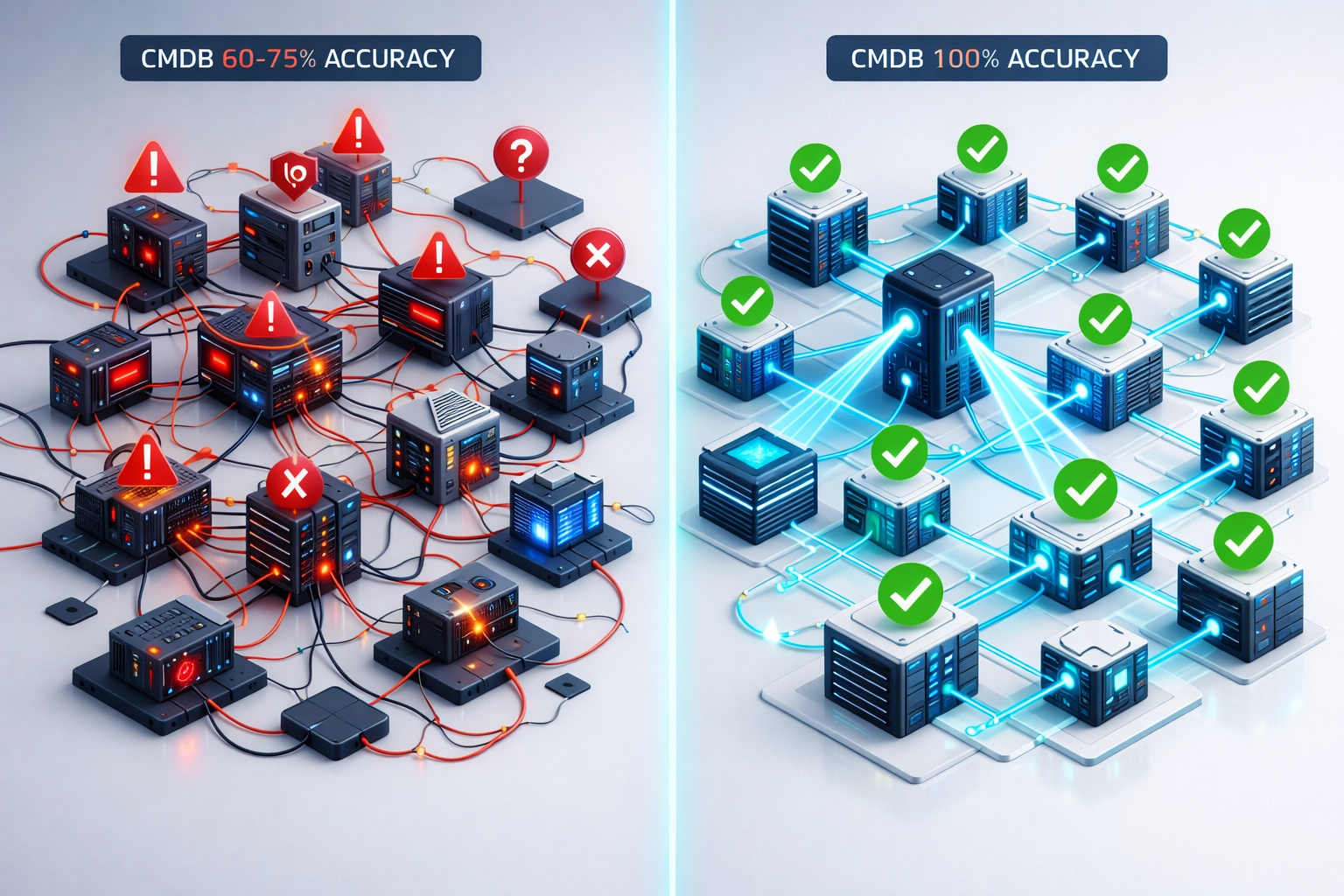
The Fix: Establish strict data governance standards from implementation day one. The Washington release introduced enhanced Service Mapping capabilities specifically designed to address this challenge. Implement automated validation workflows that flag inconsistencies in real-time, and schedule quarterly CMDB audits measuring accuracy against actual infrastructure state.
Proper implementation of Discovery patterns with automated validation rules pushes CMDB accuracy above 85%: the threshold where AI-driven automation becomes genuinely transformative. This isn't optional in 2026; it's the foundation for operational resilience mandates under DORA.
Mistake #2: Ignoring Discovery Scope Limitations
Many organizations deploy ITOM Discovery with incomplete credential coverage, leaving massive blind spots in their infrastructure visibility. I regularly audit enterprises running Discovery covering only 40-60% of their actual IT estate while building entire ITOM strategies assuming complete visibility.
This creates a dangerous illusion. Your dashboards show green status across visible infrastructure while critical business services run on undiscovered shadow IT, creating compliance nightmares for GDPR data mapping and ESG carbon footprint reporting.
The Fix: Conduct a comprehensive Discovery scope assessment before your ServiceNow consulting services engagement begins. Map credential coverage against your complete IT estate, including cloud infrastructure, containerized workloads, and SaaS integrations.
Deploy ServiceNow's Service Mapping alongside Discovery to understand true application dependencies, not just infrastructure components. This integration delivers the visibility required for DORA's third-party risk management requirements and ESG supply chain transparency mandates.
Mistake #3: Treating ITOM and ITAM as Separate Domains
This siloed approach is extraordinarily expensive. Organizations that properly integrate ITOM and ITAM achieve First Call Resolution rates of 91% compared to just 68% without integration: a 23-percentage-point difference translating to $400K-$800K in annual ROI improvements for mid-market enterprises.

When your ITOM Discovery feeds directly into ITAM license optimization workflows, magic happens. Automated reclamation of unused licenses, real-time compliance tracking for software audits, and accurate carbon footprint calculations for ESG reporting all become seamless.
The Fix: Map your Governance, Risk, and Compliance module to ITOM workflows during initial design. Your ServiceNow implementation partner should architect this integration from day one, not bolt it on as an afterthought.
Implement automated incident classification for DORA compliance with operational resilience tagging, and create audit trails documenting every configuration change with business justification. This transforms your ITOM deployment from an operational tool into a strategic compliance asset.
Mistake #4: Inadequate Service Mapping Architecture
Service Mapping represents ITOM's strategic differentiator, yet I consistently see implementations treating it as an optional add-on. Organizations deploy Entry Point mappings for 15-20% of critical business services, then wonder why their Mean Time To Resolution metrics remain stagnant.
Without comprehensive Service Mapping, your Change Intelligence can't accurately predict blast radius. Your Event Management generates noise rather than actionable insights. Your operational resilience framework lacks the dependency understanding DORA demands.
The Fix: Prioritize Service Mapping coverage for all Tier 1 and Tier 2 business services during initial implementation. The Washington release enhanced horizontal discovery patterns specifically for microservices architectures and containerized environments: leverage these capabilities from deployment.
Target 80% Service Mapping coverage within your first 90 days. This investment drives MTTR reductions of 35-40% and positions your platform for advanced capabilities like Agentic AI-driven root cause analysis.
Mistake #5: Poor Change Intelligence Implementation
Change Management without Change Intelligence is like navigating 2026's regulatory landscape with a 1990s roadmap. Organizations implement basic Change workflows, then manually assess risk for every modification: a process consuming 15-20 hours weekly per Change Manager.
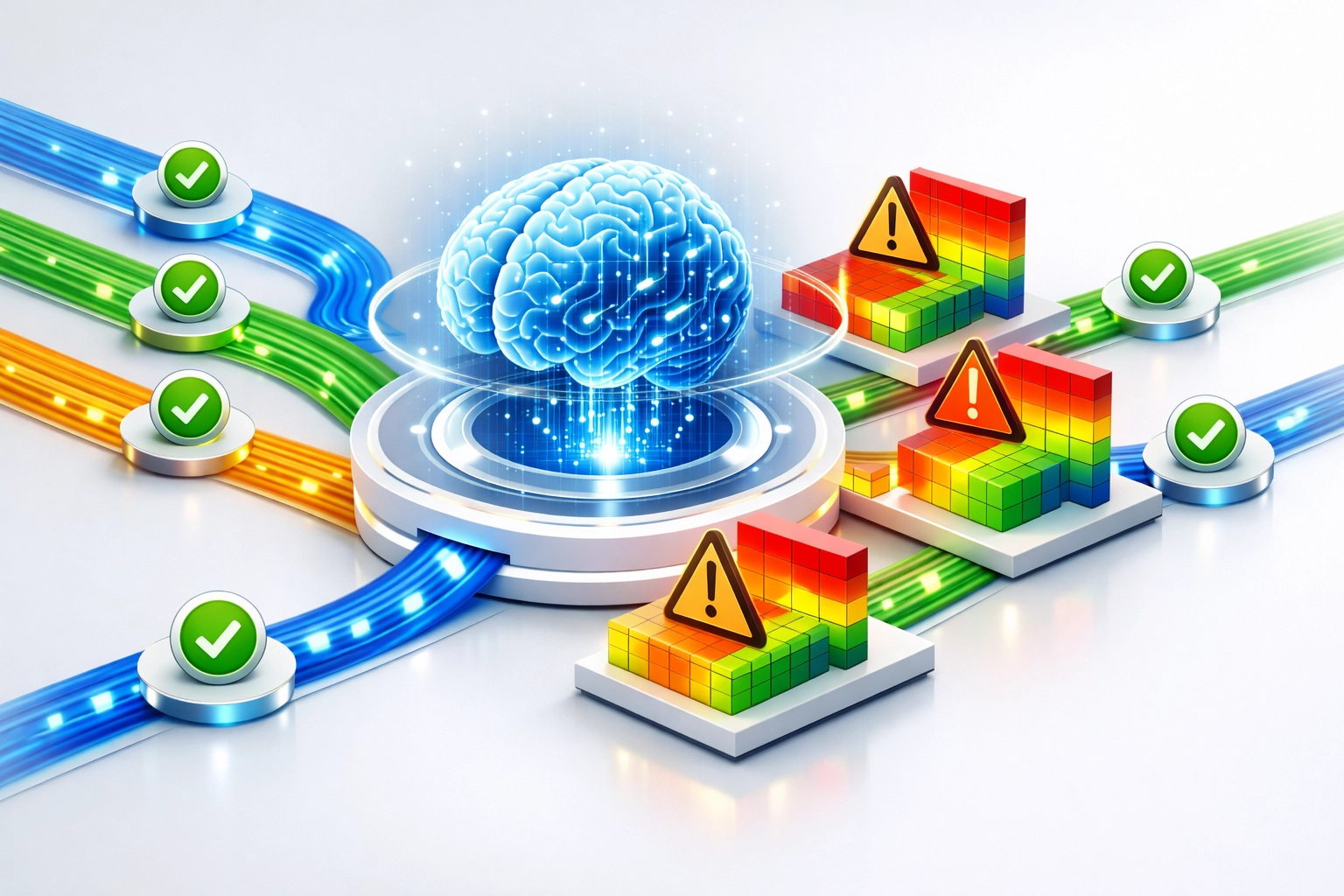
I have witnessed Change Intelligence, when properly configured, reduce collision prediction errors by 67% and automate risk assessment for 85% of standard changes. Yet most implementations never activate these capabilities because their ServiceNow consulting services provider lacked specialized ITOM expertise.
The Fix: Configure Change Intelligence collision detection using your Service Mapping relationships and historical change data. Import your incident patterns to train predictive risk models, and establish automated approval workflows for low-risk changes.
This transforms Change Management from a bottleneck into a competitive advantage, reducing change-related incidents by 45% while accelerating deployment velocity: critical for maintaining operational resilience under DORA.
Mistake #6: Insufficient Architectural Expertise
The most expensive mistake isn't technical: it's selecting implementation partners based on price rather than proven ITOM architecture expertise. Generalist consultancies often approach ServiceNow as a workflow automation platform rather than an integrated ITOM ecosystem.
The result? Deployments that technically function but strategically underdeliver. CMDB accuracy plateaus at 70%. Discovery scope remains incomplete. Event correlation generates alert storms rather than actionable intelligence. ROI after 24 months averages just 12% against projected returns.
The Fix: Evaluate your ServiceNow implementation partner based on specialized ITOM credentials, Washington release certification depth, and demonstrable experience integrating ITOM with ITAM, GRC, and operational resilience frameworks.
Request case studies demonstrating CMDB accuracy improvements, Discovery optimization, and measurable ROI delivery. The right partner transforms implementation from a technical deployment into a strategic business transformation.
Mistake #7: Skipping the 2026 ROI & License Audit
Organizations assume their current ITOM deployment maximizes platform value. This assumption costs enterprises $400K-$2M annually in unrealized savings and missed optimization opportunities.
A comprehensive ServiceNow ROI & License Audit examines five critical areas:
ITOM module activation rates and configuration maturity
CMDB accuracy and Discovery automation gaps
License utilization and reclamation opportunities
Event Management noise ratios and correlation effectiveness
Service Mapping coverage across critical business services
The Fix: Schedule your free 2026 ServiceNow ROI & License Audit to identify exactly where value is being left on the table. This analysis reveals whether your current deployment represents a transformative ITOM strategy or a costly architectural mistake compounding daily.
The audit quantifies immediate savings opportunities through license optimization, automation activation, and architectural corrections: typically uncovering $400K-$2M in recoverable value within the first 90 days.
Transform Your ITOM Investment into Strategic Value
These seven mistakes share a common thread: they're completely preventable with the right architectural expertise and strategic guidance. As DORA compliance deadlines approach, GDPR enforcement intensifies, and ESG reporting becomes mandatory, your ITOM foundation either enables compliance or creates risk.
The difference between a 12% ROI deployment and a transformative 240% ROI implementation isn't the platform: it's the expertise guiding your journey.
Ready to discover where your ITOM implementation is leaving value on the table? Visit the SnowGeek Solutions contact page to share your project details and schedule your complimentary 2026 ServiceNow ROI & License Audit. Register with SnowGeek Solutions for platform updates and expert insights that maximize your ServiceNow investment.
Your ITOM deployment should deliver operational excellence, not operational headaches. Let's fix that together.
Comments