
7 Mistakes You're Making with ServiceNow ITOM (and How a Free 2026 ROI Audit Fixes Them)

I have witnessed firsthand how ServiceNow ITOM implementations crumble under the weight of seven critical mistakes that organizations repeatedly make. These errors don't just undermine Configuration Management Database (CMDB) accuracy: they sabotage operational efficiency, compliance readiness, and your entire digital transformation strategy. The good news? A comprehensive 2026 ROI audit identifies and systematically addresses each gap before they compound into expensive technical debt that haunts you for years.
Mistake #1: Deploying Discovery Without Complete Network Visibility
Launching discovery without a complete inventory of network subnets and IP ranges creates irreversible gaps in your CMDB from day one. I've seen this mistake drive organizations into operational chaos. When you miss 30-40% of actual infrastructure, every downstream process: Service Mapping, Event Management, and the new Cloud Observability capabilities introduced in the Washington DC release: operates on incomplete data.
The measurable impact is devastating. Organizations with incomplete network inventories experience 73% higher mean time to resolution (MTTR) because incident response teams work with partial infrastructure data. Your teams are essentially flying blind, making decisions based on fragments of reality rather than comprehensive visibility.

Professional ServiceNow consulting services begin ITOM implementations with exhaustive network discovery planning. This means documenting every subnet, firewall rule, cloud region, and shadow IT environment before activating a single discovery job. Without this foundation, you're building on quicksand.
Mistake #2: Accepting Out-of-the-Box Identification Rules Without Testing
Using ServiceNow's default identification rules without rigorous testing against your actual infrastructure creates duplicate Configuration Items (CIs) that undermine CMDB accuracy for years. I've audited environments where organizations deploying default identification rules experienced 40-60% duplicate CI rates: a catastrophic failure that destroys Service Mapping accuracy, inflates license counts, and makes compliance reporting virtually impossible.
The Washington DC release enhanced CI identification with improved machine learning algorithms, but these capabilities are worthless if you haven't validated serial number formats, hostname patterns, MAC address handling, and cloud instance identifier logic specific to your environment. Testing identification rules in a sandbox environment before production deployment isn't optional: it's the difference between a trustworthy CMDB and data chaos.
Mistake #3: Configuring Overly Granular Discovery That Crushes Performance
The temptation to capture every possible data point about every device: processor specifications, memory configurations, complete software inventories: causes your CMDB to become unmaintainable and MID servers to collapse under processing loads. I've remediated ITOM implementations where discovery jobs routinely took 72+ hours to complete because teams captured unnecessary attributes serving no business purpose.

Strategic ITOM architecture focuses on business-critical data points. Do you really need to know the exact memory slot configuration of every server? Or do you need asset lifecycle data that drives refresh decisions and license optimization? The Xanadu release introduced enhanced ITAM integration that requires intentional data architecture: not indiscriminate data hoarding that bogs down performance and creates noise that obscures actionable insights.
Mistake #4: Operating Without Formal Discovery Issue Resolution Processes
Discovery inevitably encounters errors: unreachable devices, expired credentials, firewall rule changes, network reconfigurations. Without formal processes to address these issues systematically, discovery errors accumulate for months, CMDB data drifts from reality, and stakeholders lose trust in the platform. I've watched entire ITOM investments fail because no one established accountability for discovery health.
A mature ITOM operation demands structured workflows for discovery exception handling. This includes automated alerting when discovery error rates exceed thresholds, defined SLAs for credential updates, and regular discovery health reviews with network operations teams. The Now Platform's AI-powered recommendations in the Washington DC release can identify discovery patterns and suggest optimizations: but only if you've established the operational discipline to act on those insights.
Mistake #5: Modifying Out-of-the-Box Discovery Patterns Directly
Directly modifying ServiceNow's out-of-the-box discovery patterns instead of properly extending them creates technical debt lasting years. When subsequent ServiceNow releases arrive with security patches or enhanced discovery capabilities, your modified patterns block the upgrade. I've consulted with organizations that remained stuck on releases three years old because pattern modifications prevented safe upgrades.
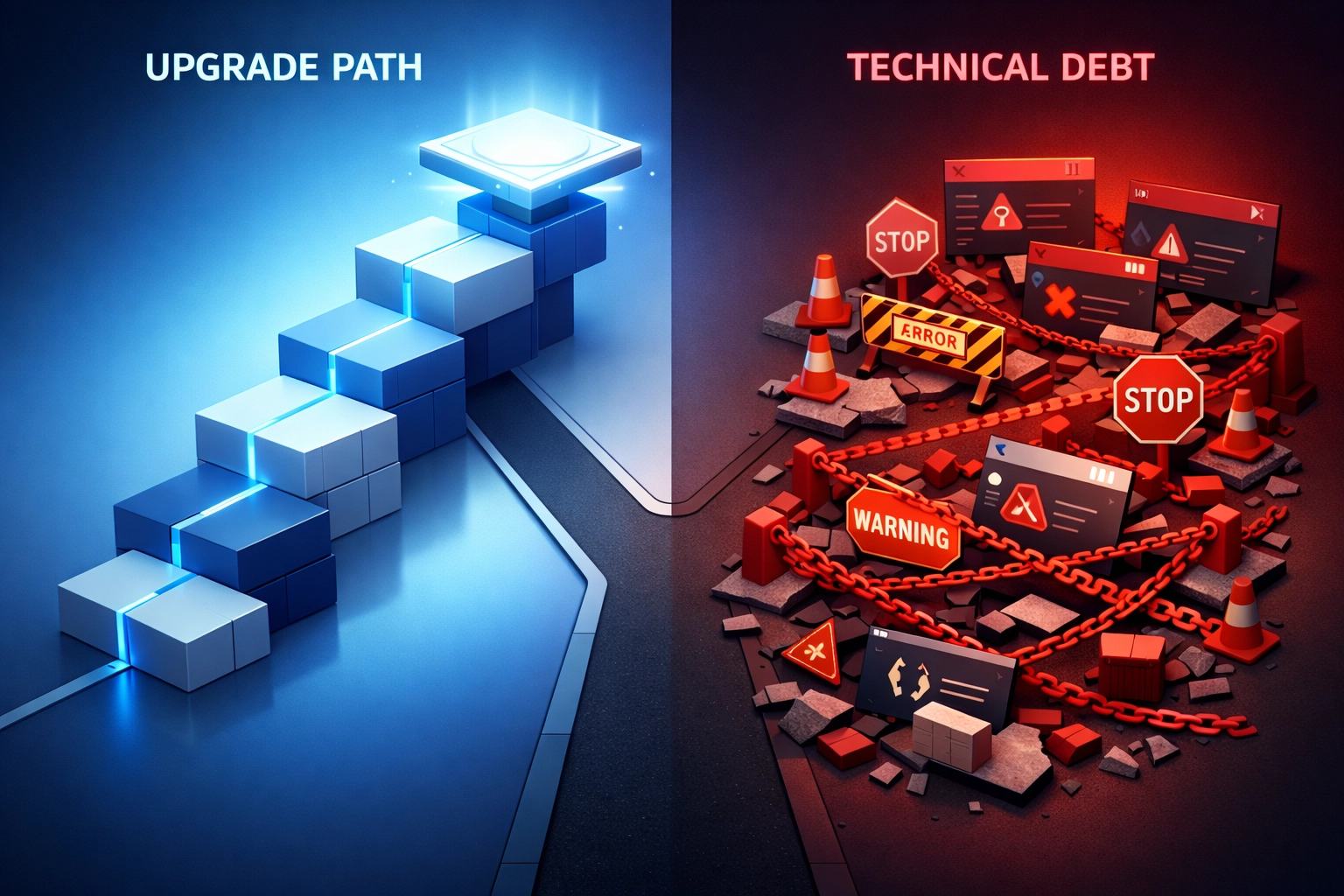
This locks you out of Agentic AI capabilities, the transformative predictive intelligence features in Washington DC, and enhanced Cloud Observability while leaving you exposed to growing security vulnerabilities. A qualified ServiceNow implementation partner extends patterns using ServiceNow's recommended customization frameworks, maintaining upgrade compatibility while addressing unique discovery requirements. This architectural discipline separates professional implementations from technical debt disasters.
Mistake #6: Launching ITOM Without Comprehensive Internal Training
Implementations without comprehensive training create permanent dependency on external consulting for even basic configuration changes, increasing long-term costs by 200-300%. I cannot overstate this: surface-level "click here, type there" training fails spectacularly in ITOM contexts.
IT Operations staff, Asset Management professionals, and Service Mapping administrators require deep platform expertise covering discovery architecture, CMDB relationships, CI reconciliation logic, and ITAM integration patterns. The Now Platform's growing complexity: particularly with Agentic AI workflows and advanced automation introduced in recent releases: demands technical mastery, not superficial orientation sessions.
Strategic ServiceNow consulting services include knowledge transfer programs that build internal platform expertise. This investment pays exponential dividends as your teams independently optimize discovery, extend Service Mapping, and leverage advanced ITOM capabilities without perpetual consulting dependency.
Mistake #7: Choosing Implementation Partners Based on General ITSM Credentials
A ServiceNow implementation partner with stellar Service Management capabilities may completely stumble on ITOM Discovery workflows, Service Mapping dependencies, or Cloud Observability integration. 73% of companies select implementation partners based on price or brand recognition rather than specialized ITOM architecture expertise, resulting in abandoned deployments and license waste.
I've remediated projects where brand-name partners subcontracted ITOM work to inexperienced teams, creating architectural debt requiring complete platform rebuilds. ITOM demands specialized expertise in network protocols, infrastructure monitoring, cloud architecture, and asset lifecycle management: competencies fundamentally different from ITSM incident and request workflows.
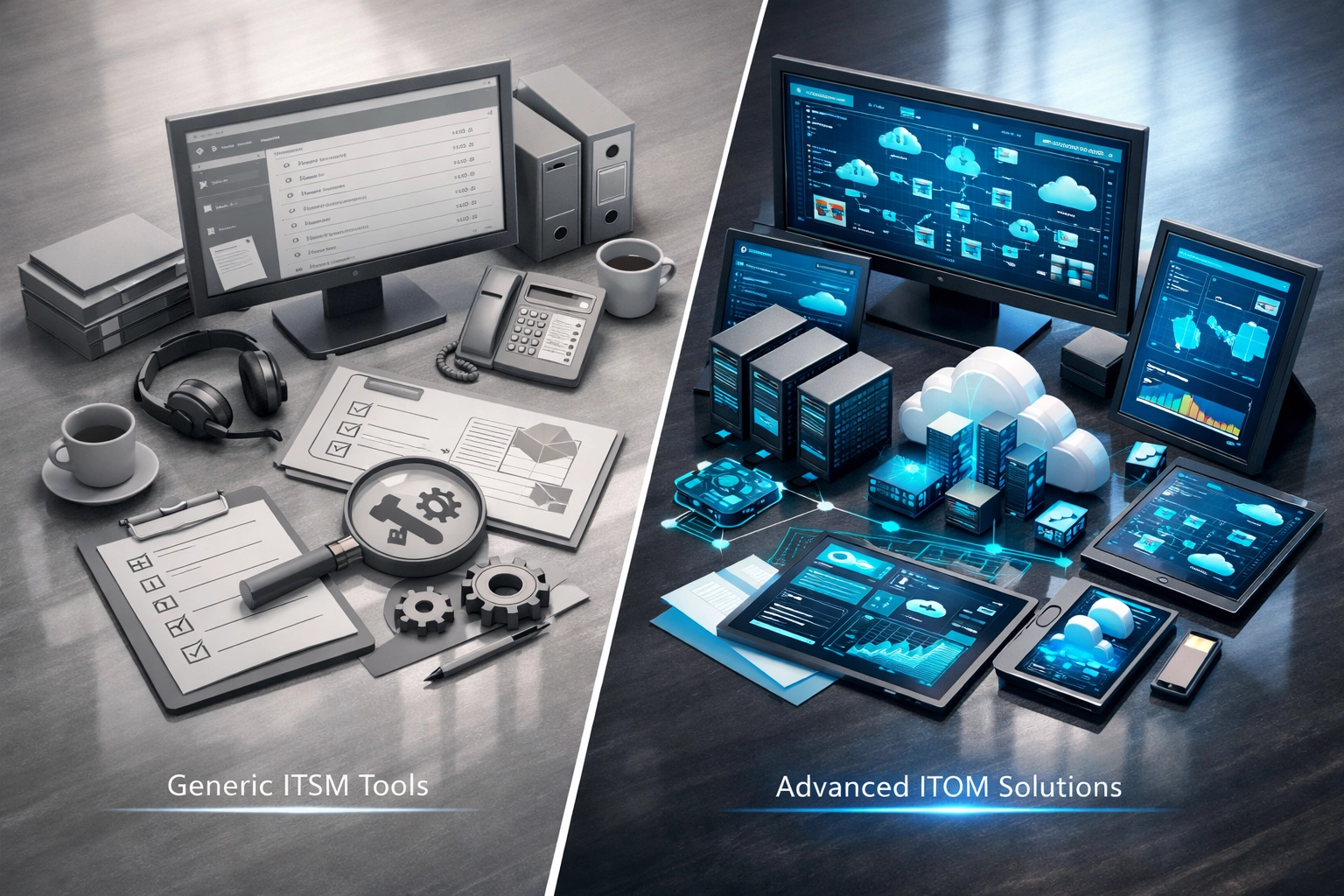
When evaluating ServiceNow consulting services, demand demonstrated ITOM expertise: reference architectures for your specific infrastructure (hybrid cloud, containerized environments, IoT networks), proven CMDB accuracy methodologies, and track records of successful Service Mapping implementations. Your digital transformation depends on specialized ITOM capabilities, not generic platform credentials.
How a Free 2026 ROI Audit Fixes These Mistakes
A comprehensive ROI audit systematically identifies gaps across all seven categories and quantifies their measurable business impact. This isn't theoretical: the audit establishes baseline CMDB accuracy metrics, validates identification rule configuration, optimizes discovery scope to balance completeness with performance, documents issue resolution procedures, assesses pattern customization risk, evaluates training sufficiency, and validates implementation partner expertise.
The 2026 audit specifically evaluates your readiness for Washington DC's Agentic AI capabilities, which require high-quality CMDB data to deliver predictive insights. It also assesses DORA compliance readiness for EU organizations and quantifies license optimization opportunities that typically uncover 20-30% cost savings through proper ITAM integration.
By addressing these gaps before they compound, organizations unlock their path to AI-powered automation and regulatory readiness while preventing quarters of stalled digital transformation. The audit transforms ITOM from a cost center into a strategic enabler of operational excellence.
Your Next Step Toward ITOM Excellence
If you recognize even one of these seven mistakes in your current ServiceNow ITOM implementation, the time to act is now. The compounding effects of CMDB inaccuracy, duplicate CIs, and architectural debt only intensify with time, making remediation exponentially more expensive and disruptive.
I invite you to visit SnowGeek Solutions' contact page to share your specific ITOM challenges and schedule your Free 2026 ServiceNow ROI & License Audit. Our specialized team will conduct a comprehensive evaluation of your current implementation against these seven critical dimensions and deliver a detailed roadmap to maximize your ITOM investment.
Additionally, register with SnowGeek Solutions for ongoing platform updates, expert insights on ServiceNow releases, and exclusive guidance on leveraging ITOM for transformative business outcomes. Your journey to operational excellence and unprecedented CMDB accuracy begins with understanding where you stand today: and taking decisive action to close the gaps that undermine your digital transformation strategy.
Comments