
The Ultimate Guide to ServiceNow Implementation: Everything You Need to Succeed in 2026
- SnowGeek Solutions
- Feb 9
- 6 min read

I have witnessed firsthand how a poorly planned ServiceNow implementation can cost organizations millions in lost productivity, while a strategic approach transforms IT operations into a competitive advantage. As we navigate 2026, the stakes have never been higher: and the opportunities never more transformative.
The ServiceNow platform has evolved dramatically with the Washington DC release, introducing unprecedented AI capabilities through Now Assist that fundamentally change how we approach implementation. This guide will walk you through the essential steps to ensure your ServiceNow implementation becomes a seamless success story that drives measurable business value.
Understanding Your ITSM Readiness in 2026
Before diving into platform selection, I always recommend conducting a comprehensive organizational readiness assessment. This critical first step determines whether your infrastructure, processes, and culture can support a transformative ITSM platform.
Start by mapping your current IT service delivery landscape. Are outdated ticketing systems creating bottlenecks that increase your Mean Time to Resolution (MTTR) beyond industry benchmarks? According to ServiceNow's 2026 ITSM benchmark data, organizations with legacy systems experience MTTR averages of 18-24 hours, while optimized ServiceNow implementations reduce this to 4-6 hours.

Document your existing workflows meticulously. I recommend involving stakeholders across IT operations, service desk teams, and business leadership. Their insights reveal pain points that might not appear in metrics alone: repetitive manual tasks consuming 60-70% of your team's capacity, approval workflows taking days instead of hours, or knowledge scattered across disconnected systems.
The assessment phase should answer three fundamental questions: What specific business outcomes do we need to achieve? What technical debt must we address before migration? And critically, what cultural readiness exists for automation and AI-assisted workflows?
Defining Strategic Objectives and Performance KPIs
Successful implementations demand crystal-clear objectives aligned with broader business strategy. I guide clients to establish specific, measurable KPIs before selecting modules or customizing workflows.
Your objectives might include reducing incident resolution times by 40% within six months, achieving First Contact Resolution (FCR) rates above 75%, or increasing employee satisfaction scores by 25 points. These targets aren't arbitrary: they're based on proven ServiceNow performance benchmarks that I've seen organizations consistently achieve with proper implementation.
Consider the Washington DC release's Now Assist capabilities when setting automation goals. Organizations leveraging AI-powered virtual agents report reducing Level 1 ticket volume by 35-45%, freeing skilled technicians for strategic initiatives. Factor these gains into your ROI calculations from day one.
Platform health scores provide another critical KPI. ServiceNow's native Performance Analytics enables real-time tracking of system performance, adoption rates, and workflow efficiency. I recommend establishing baseline metrics during your readiness assessment, then setting quarterly improvement targets.
Selecting the Right ServiceNow Package for 2026
Package selection directly impacts your implementation complexity and long-term scalability. The 2026 ServiceNow ITSM offerings provide three distinct tiers, each designed for specific organizational profiles:
ITSM Standard covers essential modules including incident, problem, change, and request management. The Washington DC release enhanced this tier with lightweight Now Assist capabilities, making it ideal for mid-market organizations starting their digital transformation journey. I typically recommend Standard for organizations with 500-2,000 employees managing straightforward service delivery.
ITSM Professional introduces advanced automation, predictive intelligence, and comprehensive analytics. This tier includes full Now Assist integration with generative AI case summarization, intelligent search, and virtual agent capabilities. Organizations processing 5,000+ monthly tickets see immediate ROI from these automation features. Professional suits growing enterprises requiring sophisticated workflow orchestration.
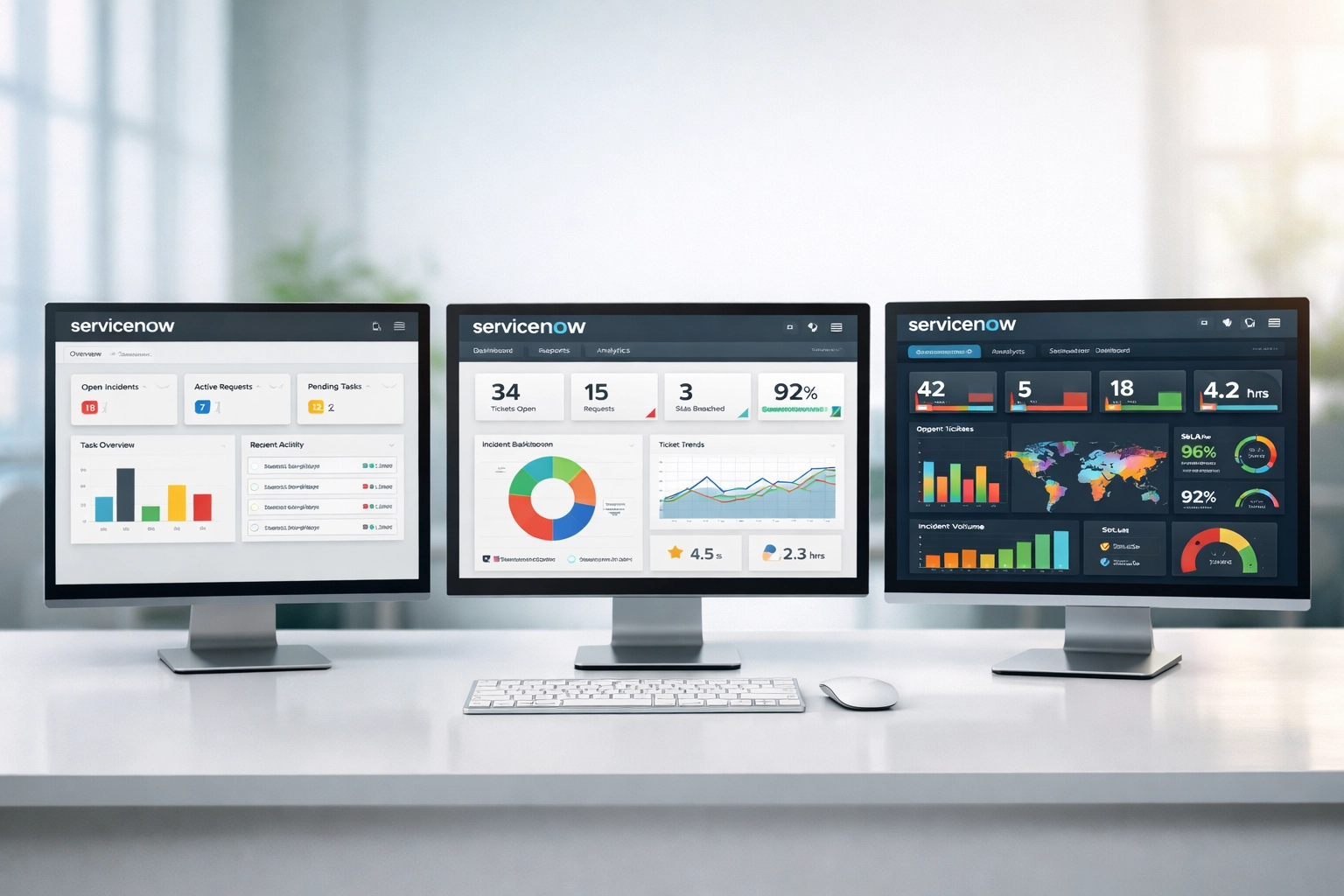
ITSM Enterprise delivers enterprise-grade capabilities including advanced compliance frameworks, global scaling features, and unlimited custom applications. The Washington DC Enterprise package includes Agentic AI workflows: autonomous agents that proactively resolve issues before users report them. I've witnessed these capabilities reduce major incident frequency by 30-40% in complex environments.
Your package selection should consider not just current needs but three-year growth projections. Upgrading between tiers mid-implementation creates unnecessary complexity and costs.
Architecting Your Implementation Roadmap
A phased implementation approach reduces risk while delivering quick wins that build organizational momentum. I structure implementations across four distinct phases, typically spanning 12-18 weeks for mid-market deployments.
Phase 1: Foundation (Weeks 1-4) focuses on core ITSM modules: incident and request management. This establishes baseline functionality quickly, demonstrating value while teams adjust to new workflows. Configure ServiceNow's out-of-box best practices rather than extensive customization. The Xanadu release enhanced these foundation modules with improved UI Builder capabilities, enabling faster configuration without technical debt.
Phase 2: Expansion (Weeks 5-8) layers in problem management, change management, and CMDB fundamentals. Integration with existing tools begins here: monitoring systems, communication platforms, and identity providers. ServiceNow's IntegrationHub provides 400+ pre-built connectors, dramatically reducing integration complexity.
Phase 3: Optimization (Weeks 9-12) activates advanced features including automation workflows, AI-powered capabilities, and self-service portals. Now Assist virtual agents deploy during this phase, trained on your organization-specific knowledge base. The WorkArena Benchmark shows properly configured virtual agents achieve 82% task completion rates.
Phase 4: Transformation (Weeks 13-18) extends beyond ITSM into adjacent service domains: HRSD, GRC, or ITOM depending on your strategic priorities. This phase transforms ServiceNow from an IT tool into an enterprise-wide service delivery platform.
Executing Flawless Data Migration
Data migration represents the highest-risk element of any ServiceNow implementation. I've seen organizations underestimate this complexity, resulting in go-live delays and data integrity issues that haunt operations for years.
Begin with comprehensive data inventory: catalog every asset, ticket, knowledge article, and configuration item requiring migration. Assess data quality ruthlessly. Legacy systems typically contain 30-50% duplicate or outdated records. Cleanse before migration, not after.

Develop a phased migration strategy prioritizing critical data. Active incidents and requests migrate first, followed by historical tickets (typically 12-24 months), then archived records. ServiceNow's Import Set tables provide staging environments for validation before production migration.
Test each migration wave extensively. I recommend pilot migrations involving 10-15% of data volume, allowing your team to identify issues while impact remains contained. Validate data accuracy using automated scripts that cross-reference source and target systems.
The Washington DC release introduced enhanced data mapping capabilities through AI-assisted field matching, reducing manual mapping effort by 60%. Leverage these tools but verify recommendations: AI accuracy improves with human oversight.
Driving Adoption Through Strategic Training
Technology alone doesn't deliver value: trained, confident users do. I structure training programs across three distinct audiences, each requiring tailored approaches.
End Users need practical, role-based training focused on daily tasks. Fifteen-minute microlearning modules demonstrating self-service capabilities, ticket submission, and knowledge base navigation prove more effective than day-long sessions. ServiceNow's Employee Center provides intuitive interfaces requiring minimal training: I've seen organizations achieve 80% adoption within 30 days.
Power Users and Service Desk Agents require deeper platform knowledge covering workflow management, advanced search, and troubleshooting techniques. Hands-on workshops using realistic scenarios build confidence. Certification paths through ServiceNow's Customer Success Center provide structured learning aligned with role requirements.
Administrators and Developers need comprehensive technical training covering platform architecture, scripting, integrations, and governance. I recommend formal ServiceNow training courses combined with mentorship from experienced partners like SnowGeek Solutions, ensuring your team develops capabilities beyond basic configuration.
Build extensive self-service knowledge bases before go-live. Organizations with robust knowledge management see 40-50% reduction in incident volume as users resolve routine issues independently. Now Assist's generative AI capabilities auto-generate knowledge articles from resolved incidents, accelerating content creation.
Establishing Continuous Improvement Frameworks
Go-live represents a beginning, not an end. The most successful implementations I've guided establish continuous optimization frameworks from day one, treating ServiceNow as an evolving capability rather than a static system.
Implement real-time performance monitoring using ServiceNow's Performance Analytics dashboards. Track KPIs daily during the first month, then transition to weekly reviews. I recommend quarterly business reviews examining trends, identifying improvement opportunities, and prioritizing enhancement backlogs.
The Washington DC release's AIOps capabilities provide predictive insights highlighting potential issues before they impact services. Organizations leveraging these capabilities report 35% reduction in major incidents through proactive resolution.
Establish governance frameworks balancing innovation with stability. Every customization request should justify business value and align with strategic objectives. I've seen organizations create technical debt through excessive customization: stay disciplined, prioritizing platform upgrades over custom code.
Plan regular platform upgrades aligned with ServiceNow's release cadence. The Xanadu and Washington DC releases demonstrate ServiceNow's commitment to innovation: each release delivers features that reduce customization needs while enhancing capabilities.
Your Next Steps Toward Implementation Success
ServiceNow implementation demands strategic foresight, technical precision, and organizational change management. The platform's capabilities grow more transformative with each release, but realizing that potential requires expert guidance and proven methodologies.
I encourage you to take two immediate actions: First, visit the SnowGeek Solutions contact page to share your specific implementation requirements. Our team will assess your readiness, recommend optimal approaches, and develop customized roadmaps aligned with your strategic objectives.
Second, register with SnowGeek Solutions for ongoing platform updates, implementation best practices, and expert insights that keep your organization at the forefront of ServiceNow innovation. The ITSM landscape evolves rapidly: staying informed ensures your investment delivers sustained competitive advantage.
Your ServiceNow implementation journey begins with a single strategic decision. Make 2026 the year you transform IT operations from cost center to strategic enabler. The results will speak for themselves.
Comments