
Strategy to Execution: Bridging the Gap with ServiceNow and IT4IT

I have witnessed firsthand how many organizations struggle with the same fundamental challenge: their IT strategy looks brilliant on paper, but somewhere between the boardroom and the service desk, it falls apart. Projects drift. Priorities conflict. And IT ends up firefighting instead of driving business value.
This disconnect between strategy and execution is not just frustrating: it is expensive. It erodes stakeholder confidence, wastes resources, and keeps IT locked in a reactive cycle that prevents genuine innovation.
At SnowGeek Solutions, I guide organizations through this transformation every day. The solution lies in combining two powerful frameworks: ServiceNow Strategic Portfolio Management (SPM) and IT4IT principles. Together, they create a unified approach that turns IT from a cost center into a strategic business partner.
This guide will walk you through how this integration works and why it matters for organizations serious about running IT as a business.
The Strategy-Execution Gap: Why It Exists
Before diving into solutions, let me explain why this gap persists in so many organizations.
Traditional IT operates in silos. Strategy lives in spreadsheets and presentation decks. Project management happens in one tool. Service delivery runs on another. And operations? That is often a completely separate world with its own priorities and metrics.
The result is predictable: strategic initiatives get lost in translation. Leaders approve a digital transformation roadmap, but six months later, nobody can tell you which projects actually support those goals or whether the investments are paying off.
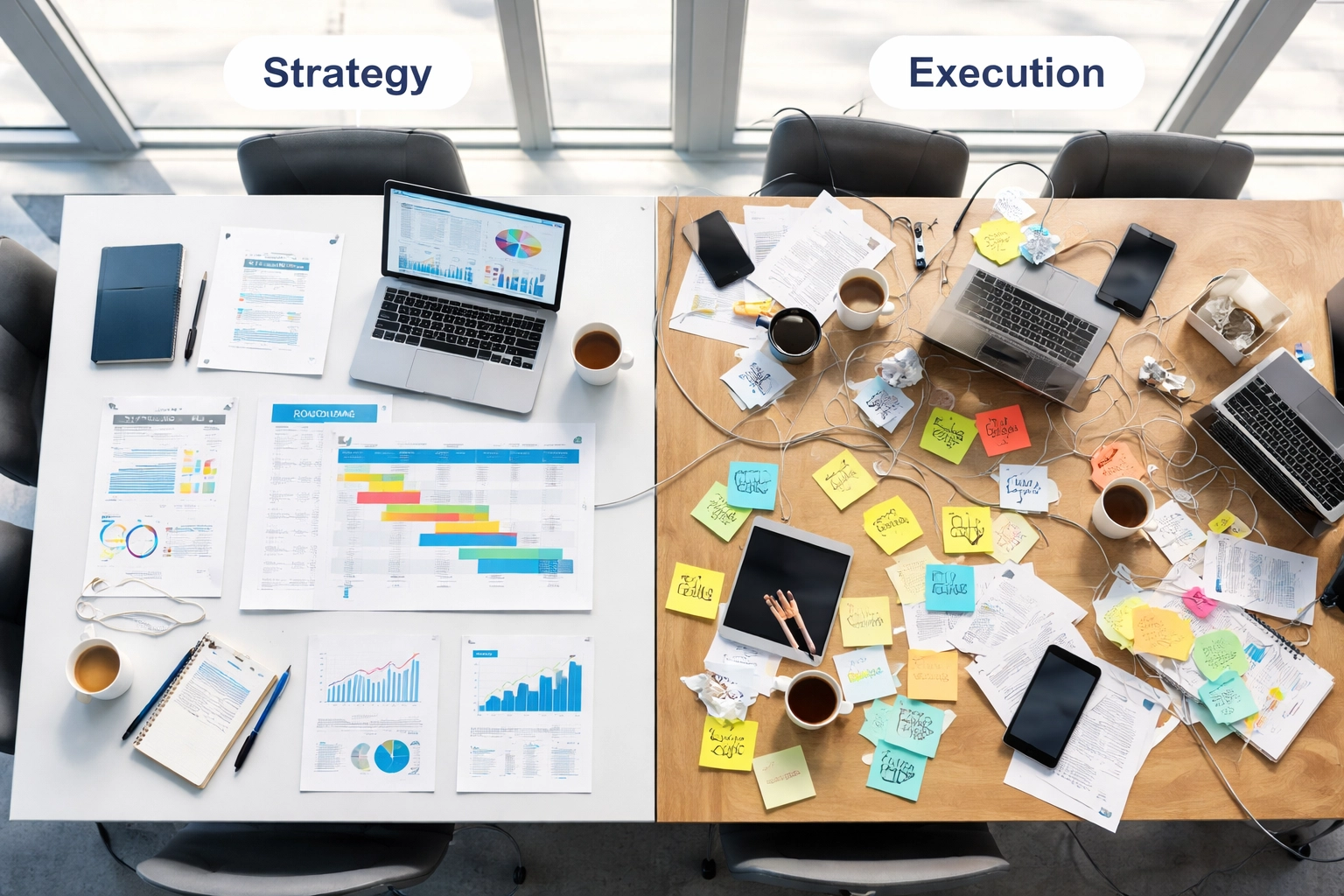
I have seen this pattern repeat across industries. The problem is not a lack of good intentions: it is a lack of connected systems and standardized processes that link strategic decisions to operational reality.
This is precisely where ServiceNow SPM and IT4IT create transformative change.
Understanding IT4IT: The Blueprint for Running IT as a Business
IT4IT is an open standard reference architecture developed by The Open Group. Think of it as a comprehensive blueprint that organizes IT management into four interconnected value streams:
1. Strategy to Portfolio (S2P) This value stream covers everything from strategic planning to investment decisions. It answers the essential question: "Are we investing in the right things?"
2. Requirement to Deploy (R2D) Here, the focus shifts to building and deploying IT services. The question becomes: "Are we building things right?"
3. Request to Fulfill (R2F) This stream handles service consumption: how users request and receive IT services. It asks: "Are we delivering value efficiently?"
4. Detect to Correct (D2C) The final stream covers operations, monitoring, and continuous improvement. The focus: "Are we maintaining service quality?"
What makes IT4IT powerful is the integration between these streams. Information flows seamlessly from strategic planning through delivery and into operations, creating complete visibility across the entire IT value chain.
ServiceNow SPM: Where Strategy Meets Platform Power
ServiceNow Strategic Portfolio Management (formerly IT Business Management) provides the platform capabilities that bring IT4IT principles to life. This is not just another project management tool: it is a comprehensive suite that connects strategic planning directly to execution and operations.
The ServiceNow SPM suite includes:
Portfolio Management for aligning investments with business strategy
Demand Management for capturing and prioritizing work requests
Project and Program Management for execution tracking
Resource Management for capacity planning and allocation
Financial Management for IT cost transparency and optimization
Innovation Management for capturing and developing new ideas

What sets ServiceNow apart is how these capabilities integrate with the broader platform. Unlike standalone tools, ServiceNow SPM shares the same underlying database and service model as IT Service Management, IT Operations Management, and every other ServiceNow application.
This means strategic planners see real-time operational data. Project managers work from the same system as service desk agents. And executives get dashboards that connect investment decisions to actual service performance.
How SnowGeek Bridges the Gap
At SnowGeek Solutions, I take a structured approach to helping organizations implement ServiceNow SPM with IT4IT alignment. This is not about deploying software: it is about transforming how IT operates.
Phase 1: Strategic Foundation
I begin by working with leadership to define the strategic objectives that IT must support. This sounds basic, but I am consistently surprised how many organizations skip this step. Without clear strategic anchors, portfolio management becomes arbitrary.
We establish the governance framework, define investment categories, and create the criteria for evaluating and prioritizing initiatives. This foundation ensures every subsequent decision traces back to business value.
Phase 2: Portfolio Visibility
Next, we implement ServiceNow's portfolio management capabilities to create complete visibility into all IT investments. This includes:
Active projects and programs
Planned initiatives in the pipeline
Ongoing operational work
Technical debt remediation efforts
For the first time, many organizations can see their entire IT portfolio in one place. This visibility alone drives better decisions by exposing redundant efforts, misaligned investments, and resource conflicts.
Phase 3: Demand and Resource Integration
With the portfolio visible, we connect demand management and resource management capabilities. This integration ensures that strategic priorities drive resource allocation: not the other way around.
When a new request enters the pipeline, the system evaluates it against strategic criteria, checks resource availability, and identifies potential conflicts with existing commitments. Decision-makers get the information they need to make informed choices.

Phase 4: Execution and Delivery Connection
Here is where IT4IT integration becomes truly powerful. We connect project delivery workflows to service creation processes, ensuring that what gets built actually makes it into the service catalog and operational support model.
ServiceNow's Common Service Data Model (CSDM) provides the standardized structure for this connection. Every project output maps to a service, application, or technology component that operations teams can manage and support.
Phase 5: Feedback and Continuous Improvement
The final phase closes the loop by connecting operational performance data back to strategic planning. Service metrics, incident trends, and customer satisfaction scores inform future investment decisions.
This continuous feedback creates a learning organization where IT constantly improves its ability to deliver value.
The Business Impact: From Reactive to Strategic
Organizations that successfully implement ServiceNow SPM with IT4IT alignment achieve measurable improvements across multiple dimensions:
Faster Decision-Making With integrated data and clear governance, investment decisions that once took months now happen in weeks. Leaders have the information they need when they need it.
Improved IT-Business Alignment Business stakeholders see exactly how IT investments support their objectives. This transparency builds trust and positions IT as a genuine strategic partner.
Reduced Waste Portfolio visibility exposes redundant projects, conflicting initiatives, and investments that no longer align with strategy. Organizations consistently find 15-20% of their portfolio can be eliminated or consolidated.
Enhanced Agility When priorities shift, organizations can quickly assess the impact on the portfolio and reallocate resources accordingly. This strategic agility is essential in today's fast-changing business environment.
Better Service Quality By connecting strategy to operations, IT delivers services that actually meet business needs. Incident resolution times decrease, customer satisfaction improves, and IT personnel redirect their energy toward innovation rather than firefighting.
Making the Shift: Where to Start
I understand that transforming IT from reactive to strategic feels like a massive undertaking. But it does not have to happen all at once.
At SnowGeek Solutions, I recommend starting with a focused pilot: perhaps a single business unit or strategic program. Demonstrate value quickly, learn from the experience, and expand systematically.
The critical first step is acknowledging that spreadsheets and disconnected tools will never bridge the strategy-execution gap. You need an integrated platform, standardized processes, and a clear framework for connecting strategic intent to operational reality.
ServiceNow SPM and IT4IT provide that foundation. SnowGeek Solutions provides the expertise to make it work in your organization.
Ready to transform how your IT organization delivers value? Visit SnowGeek Solutions to start the conversation about running IT as a business.
Comments