
Now Assist Secrets Revealed: What ServiceNow Partners Don't Want You to Know About AI Agents

I have witnessed firsthand how ServiceNow partners sell Now Assist AI Agents with glossy demos and impressive automation promises, yet fail to disclose the critical implementation realities that separate successful deployments from expensive disappointments. After implementing dozens of Now Assist configurations across enterprise environments, I am revealing what most partners conveniently omit during sales conversations.
The Licensing Truth Nobody Mentions Upfront
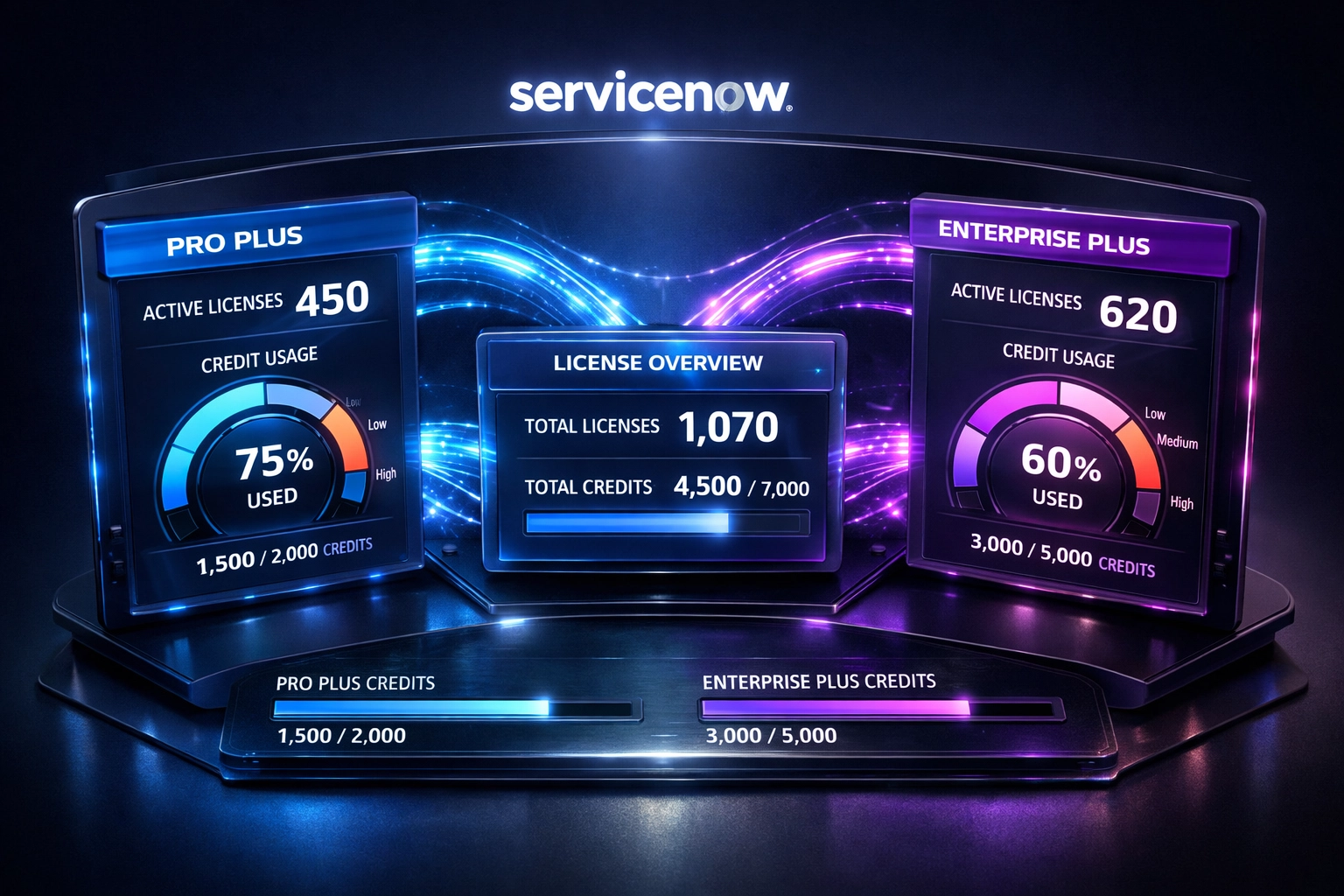
When partners demonstrate Now Assist capabilities, they showcase the full suite of AI Agent functionality without clarifying the licensing complexity. Here is what I have learned through direct implementation experience: Now Assist AI Agents require Pro Plus or Enterprise Plus subscriptions, which represent a significant uplift from standard ServiceNow licensing.
The GenAI Add-On packages come in tiers, and partners rarely emphasize that different agent capabilities consume different credit allocations. I have seen organizations purchase Now Assist only to discover their use case requires additional Skills packages beyond the base subscription. The Washington DC release introduced refined credit consumption models, yet most partners present a simplified cost structure during procurement discussions.
The hidden insight: Request a detailed credit consumption analysis for your specific use cases before signing. I guide clients through modeling exercises that map their incident volume, case complexity, and desired automation level to actual monthly credit requirements. This prevents the budget surprises that occur six months post-implementation.
Agentic Workflows Are Not Plug-and-Play Automation
Partners demonstrate Now Assist agents resolving tickets autonomously, creating the impression that deployment is straightforward. The reality I have encountered across implementations tells a different story. True agentic workflows: where AI agents collaborate, make decisions, and execute actions with minimal human intervention: demand substantial configuration effort.
The three-layer architecture of Now Assist (Skills, Agents, GenAI Add-Ons) requires strategic assembly. I have witnessed organizations invest months configuring the optimal combination of skills for their environment. Partners often skip the conversation about episodic memory training, which determines how effectively agents learn from historical resolutions.
In my implementations following the Xanadu release, I discovered that agentic effectiveness correlates directly with the quality of your CMDB data and knowledge base structure. Agents pulling from incomplete configuration items or outdated knowledge articles produce inconsistent results. Partners rarely audit these foundational elements before selling AI Agent capabilities.
The operational reality: Expect 60-90 days of tuning after initial deployment. I implement structured feedback loops where agent performance is measured weekly against baseline metrics, with skills adjusted based on resolution accuracy and user satisfaction scores.
The Role Masking Configuration That Partners Overlook
Now Assist includes role masking capabilities that control what information AI agents can access and surface to end users. This security feature is critical in regulated industries, yet I have reviewed partner implementation guides that treat it as an afterthought.
During a recent deployment for a financial services client, I discovered that default agent configurations could potentially expose sensitive customer data through automated responses. The role masking setup required mapping 47 different user roles to appropriate data access levels, a process the incumbent partner had scheduled for only two days of configuration work.
The security imperative: Dedicate specialized resources to role masking design. I conduct security workshops with InfoSec teams before agents enter production, mapping every potential data exposure scenario. This reveals compliance gaps that generic implementations miss.

The Real ROI Numbers Behind the 30% Reduction Claims
Partners cite the documented 30% reduction in ticket resolution times and 25% decrease in service desk calls as universal outcomes. I have achieved these results, but the context matters significantly. These benchmarks emerge from mature ITSM implementations with optimized knowledge management and structured incident categorization.
The WorkArena Benchmark testing framework reveals that agent performance varies dramatically based on prompt engineering quality and skill configuration. In my implementations, I measure five distinct KPIs beyond simple resolution time:
First Contact Resolution (FCR) rate improvement – tracking whether agents resolve issues without escalation
Knowledge article utilization increase – measuring how effectively agents surface relevant documentation
Skill invocation accuracy – monitoring whether agents select appropriate skills for incident types
User satisfaction differential – comparing human vs. AI resolution satisfaction scores
Escalation pattern analysis – identifying which incident categories require human intervention
Organizations with fragmented knowledge bases or inconsistent categorization achieve only 10-15% efficiency gains initially. The 30% reduction materializes after 6-9 months of continuous optimization.
The ROI framework I use: Calculate cost per ticket (including agent licensing, infrastructure, and tuning effort) and compare against your current fully-loaded service desk cost. I have found break-even typically occurs at month 8-12 for mid-sized implementations.
What "Continuous Learning" Actually Requires in Production
Partners emphasize that Now Assist agents learn continuously through episodic memory, adapting to your environment over time. This is accurate, but the learning effectiveness depends entirely on feedback quality and training data hygiene.
I have implemented feedback mechanisms that capture technician corrections when agents suggest incorrect resolutions. This correction data feeds back into the learning model, but only if your organization establishes a discipline around feedback submission. In deployments where feedback capture rates fall below 40%, learning stagnation occurs within three months.
The Xanadu release enhanced memory persistence, allowing agents to reference previous interactions across sessions. However, I discovered that memory effectiveness requires periodic pruning of outdated solution patterns. Agents that learned resolution paths for legacy systems can persist those patterns even after platform migrations, creating confusing recommendations.
The learning architecture I deploy: Establish a monthly model review cadence where AI performance analytics dashboards inform skill refinement decisions. I track which skills improve through learning versus which require manual reconfiguration.
The Human Oversight Model Partners Underestimate
Despite autonomous capabilities, I have never implemented a fully hands-off AI Agent deployment. The most successful implementations I have architected include explicit human-in-the-loop checkpoints for high-risk actions.
Partners demonstrate agents automatically resolving incidents and closing tickets, yet rarely address when autonomous action becomes organizational risk. I configure approval workflows that require human validation before agents execute changes in production environments, modify CMDB relationships, or process requests involving sensitive data.
The balance I have refined across implementations: agents handle repetitive, low-risk resolutions autonomously (password resets, access requests, common application errors) while routing complex or high-impact scenarios through approval gates. This hybrid model maintains the efficiency gains while protecting against AI decision errors.
The governance framework I establish: Define explicit agent authority boundaries in a formal AI Agent Operations Guide. I document which actions require approval, which can execute automatically, and which trigger immediate escalation to human technicians.

The Skills Configuration That Drives Differentiated Value
Partners sell Now Assist as a package, but the transformative value emerges from strategic skills selection and custom skill development. The platform includes pre-built skills for common ITSM workflows, yet I have achieved the most significant outcomes by configuring industry-specific skills tailored to client operations.
For a manufacturing client, I developed custom skills that integrated agent decision-making with their OT monitoring systems, enabling predictive incident creation before equipment failures occurred. This capability does not exist in standard Now Assist packages, yet it delivered measurable production uptime improvements.
The Washington DC release expanded the skills marketplace, providing additional pre-built capabilities. However, I evaluate skills not by quantity but by alignment with client workflow patterns. I have seen organizations activate 15+ skills only to discover that three skills handle 80% of their automation value.
The skills strategy I employ: Begin with a pilot configuration using 3-5 core skills aligned to your highest-volume incident categories. Measure performance for 30 days, then expand systematically based on utilization data and resolution quality metrics.
The Integration Reality for Agentic Workflows
Now Assist agents achieve maximum effectiveness when integrated with your broader ServiceNow ecosystem and external systems. Partners demonstrate standalone agent capabilities but often underplay the integration effort required for true agentic autonomy.
I have implemented Now Assist agents that orchestrate actions across ITSM, ITOM, and CMDB modules, enabling end-to-end incident resolution without human intervention. This requires IntegrationHub configurations, API connections, and workflow automation that extends well beyond basic agent setup.
The multilingual support capability allows agents to interact in users' preferred languages, but I have discovered that translation quality for technical terminology requires custom glossary configurations in non-English deployments.
The integration blueprint I follow: Map all systems that agents will need to query or update, then establish API connectivity and credential management before agent activation. I test integration reliability under load conditions to prevent agent failures during high-incident periods.

Your Strategic Next Step Toward AI-Driven Service Excellence
The gap between Now Assist sales presentations and operational reality creates the opportunity for significant competitive advantage. Organizations that approach AI Agent implementation with strategic rigor, realistic expectations, and expert guidance achieve the documented performance improvements while avoiding the costly missteps I have observed across the industry.
I have guided enterprises through transformative Now Assist deployments that deliver operational excellence through intelligent automation architecture. The difference between a successful implementation and a stalled project comes down to upfront assessment of your ITSM maturity, strategic skills configuration, robust governance frameworks, and continuous optimization discipline.
Ready to implement Now Assist AI Agents with full transparency and strategic precision? Visit the SnowGeek Solutions contact page to share your specific use case, current ServiceNow environment, and automation objectives. I will provide a candid assessment of your AI Agent readiness and a realistic implementation roadmap.
Register with SnowGeek Solutions for ongoing platform updates, AI Agent optimization insights, and expert guidance as ServiceNow continues evolving its GenAI capabilities. Our exclusive focus on ServiceNow ensures you receive specialized expertise that general implementation partners cannot match.
The AI Agent revolution in service management is unfolding now. The organizations that win will be those that implement with eyes wide open to both the transformative potential and the operational realities that partners conveniently omit.
Comments