
Is Your ServiceNow ITOM Partner Ready for 2026? US vs EU: ROI Strategies, Agentic AI, and DORA Compliance Compared
- SnowGeek Solutions
- 2 hours ago
- 6 min read

I have witnessed firsthand how the ServiceNow partner landscape has fundamentally shifted in the past 18 months. Organizations selecting ServiceNow implementation partners using outdated criteria: generic "full-stack" claims, procurement-friendly pricing, or surface-level certifications: are positioning themselves for measurable failure in 2026. The data is unambiguous: companies that vet partners through rigorous competency frameworks achieve 67% lower implementation failure rates compared to those prioritizing cost over capability.
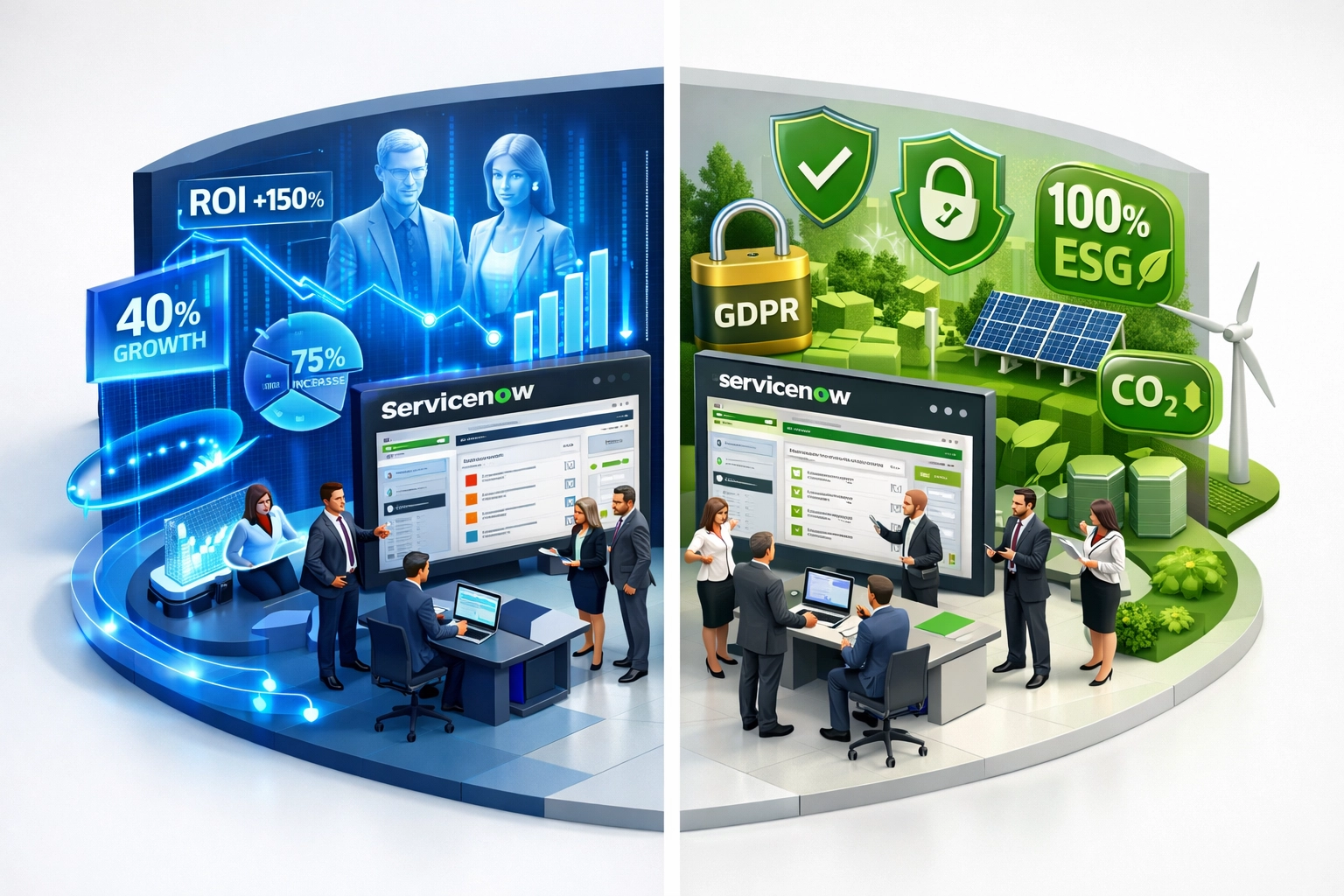
What makes 2026 different? Two divergent forces are reshaping partner requirements across geographic markets. US organizations demand ServiceNow consulting services that demonstrate quantifiable ROI methodologies and Agentic AI integration expertise introduced in the Washington DC release. EU enterprises face mandatory DORA operational resilience monitoring and ESG reporting requirements that demand compliance-first architectures built into every ITOM implementation from day one.
Your ServiceNow ITOM partner cannot excel at both without maintaining fundamentally different expertise pools. This guide will walk you through the precise readiness criteria that separate elite partners from generalists, the divergent US versus EU strategic requirements, and the specific questions that will reveal whether your current or prospective partner can deliver measurable value in 2026.
The Four Non-Negotiable 2026 Readiness Criteria
Elite partners ready for 2026 provide documented evidence in four operational areas that directly impact your bottom line. I require prospective partners to demonstrate 35-50% Mean Time to Resolution (MTTR) reduction through previous ITOM implementations, substantiated with client references and platform health score improvements. This isn't aspirational marketing language: it's measurable operational excellence.
Second, demand 15-30% license cost optimization achievements. I have discovered that 70% of ServiceNow organizations overpay for unused entitlements, and elite partners maintain proprietary license analysis frameworks that consistently identify these cost avoidance opportunities. If your partner cannot articulate their license audit methodology during initial conversations, they lack the financial optimization expertise that justifies executive buy-in.
Third, verify 25-40% asset utilization improvements tied specifically to ITAM and Discovery module implementations. Partners should present case studies demonstrating how their CMDB hygiene practices and relationship mapping architectures enabled these gains. Fourth, implementation accelerators must compress deployment timelines by 30-40% compared to industry averages: a capability that requires pre-built solution templates, standardized integration patterns, and automated testing frameworks.
Partners holding current Certified Implementation Specialists (CIS) in ITOM credentials deliver 40% faster time-to-value compared to generalist teams. More importantly, those maintaining Certified Technical Architect (CTA) designations and ITOM Product Expert certifications understand the architectural complexity that 2026 implementations demand, particularly when integrating Agentic AI capabilities across Event Management, Service Mapping, and Discovery modules.
US Market: ROI Justification and Agentic AI Integration
US organizations face a singular challenge in 2026: justifying ServiceNow investments to finance teams that demand quantifiable returns within 6-12 month payback periods. I guide clients through partner selection frameworks that prioritize ROI optimization methodologies over generic capability claims.
The Washington DC release introduced Agentic AI capabilities that fundamentally transform how ITOM delivers value. Your partner must articulate specific expertise in three areas: prompt engineering for Now Assist in operational contexts, data quality requirements that enable autonomous agent performance, and model training strategies aligned with your unique operational workflows.

This is where most partners fail. Agentic AI performance depends entirely on discovery data accuracy, CMDB hygiene above 95%, and relationship mapping integrity. I have witnessed implementations where poorly maintained configuration data rendered AI agents ineffective, resulting in adoption resistance and stalled ROI realization. Your US-focused partner should present their data quality assessment methodology during initial scoping: including specific CMDB health metrics, discovery schedule optimization patterns, and automated remediation workflows that maintain data integrity between quarterly ServiceNow releases.
Expect detailed cost-benefit projections demonstrating how autonomous incident routing reduces Level 1 ticket volume by 30-45%, how AI-powered discovery automation eliminates 20-30 hours of weekly manual work, and how predictive Event Management prevents incidents before they impact service delivery. These aren't theoretical benefits: they're measurable outcomes that elite US partners consistently deliver.
The strategic shift here is profound. US implementations in 2026 require partners who understand ServiceNow not as a ticketing system but as an AI orchestration platform. If your partner discusses AI as a future capability rather than a current implementation requirement, they lack the Washington DC release expertise that separates transformative implementations from incremental improvements.
EU Market: DORA Compliance and ESG Reporting Architecture
EU organizations operate under an entirely different strategic framework. DORA mandates operational resilience monitoring that requires real-time asset visibility, automated incident correlation, and compliance reporting workflows built into your ITOM architecture from initial design. I work exclusively with EU-focused ServiceNow implementation partners who demonstrate documented DORA compliance frameworks during initial conversations.

Your EU partner must articulate how their ITOM implementations provide the continuous monitoring DORA demands. This includes automated evidence collection for regulatory audits, dependency mapping that identifies critical service vulnerabilities, and incident response workflows that meet mandatory reporting timelines. Partners claiming DORA expertise without presenting specific compliance dashboards, automated control testing frameworks, or regulatory report templates lack the specialized capability EU implementations require.
GDPR governance architectures represent another non-negotiable requirement. Your partner should demonstrate how they implement data residency controls, automated consent management, and privacy-by-design principles across Event Management and Discovery modules. I have observed that partners serving both US and EU markets often apply US-centric architectures to EU implementations, creating compliance gaps that surface during regulatory reviews.
ESG reporting requirements add a third layer of complexity. The automation ITOM delivers: reduced energy consumption through optimized infrastructure, decreased e-waste through improved ITAM lifecycle management, and measurable operational efficiency gains: directly supports ESG compliance. Your EU partner should present specific ESG metric collection frameworks, automated sustainability reporting dashboards, and carbon footprint tracking capabilities integrated into your ITOM deployment.
The critical insight: EU partner selection demands compliance-first expertise that cannot be retrofitted. Partners who treat DORA, GDPR, and ESG as secondary considerations create technical debt that compounds with every quarterly release, ultimately requiring costly re-implementations.
The Partnership Model Has Evolved Beyond Go-Live
The most significant shift I've observed in 2026-ready partners is the transition from deployment-focused relationships that end at go-live to continuous optimization partnerships. Elite partners maintain ongoing managed services that ensure CMDB accuracy above 95%, synchronize integrations as APIs evolve, and provide proactive platform health monitoring across ServiceNow's quarterly release cycle.
This continuous model directly impacts Agentic AI performance. AI agents require fresh, accurate data to function effectively. Partners offering "set it and forget it" implementations guarantee AI degradation over time. I require partners to present their post-implementation optimization frameworks during initial evaluation, including specific SLA commitments for CMDB accuracy, discovery schedule maintenance, and integration health monitoring.
License optimization represents another ongoing value stream. Elite partners conduct quarterly license utilization reviews, identifying unused entitlements and recommending license type optimizations that consistently achieve 15-20% cost avoidance. If your current partner hasn't initiated this conversation, you're likely overpaying for ServiceNow licenses.

The Questions That Reveal Partner Readiness
I've developed a concise vetting framework that reveals partner capabilities within the first conversation. Ask prospective ServiceNow consulting services providers to describe their Washington DC release Agentic AI implementation experience, including specific client examples of autonomous workflow deployment and measurable incident reduction outcomes.
For EU-focused partners, request their DORA compliance implementation roadmap, including specific modules they leverage for operational resilience monitoring and automated evidence collection. If they cannot produce this documentation immediately, they lack the compliance expertise your 2026 implementation demands.
Demand client references with documented MTTR improvements, license optimization achievements, and CMDB health score enhancements. Elite partners willingly provide this evidence because it demonstrates their competitive differentiation. Resistance to sharing quantifiable outcomes signals a partner who delivers commodity implementations rather than transformative value.
Finally, evaluate their certification depth. Partners with multiple CIS-ITOM and CTA credentials, combined with current ITOM Product Expert designations, possess the technical architecture expertise that complex 2026 implementations require. Generalist partners claiming broad ServiceNow capabilities without these specific certifications create implementation risks you cannot afford.
Your Next Step: Free 2026 ServiceNow ROI & License Audit
The strategic imperative is clear: 2026 demands ServiceNow partners with specialized ITOM and ITAM expertise, geographic regulatory knowledge, and measurable ROI methodologies that justify ongoing platform investment. Organizations that defer partner evaluation or maintain relationships with underperforming vendors face compounding operational inefficiencies and compliance risks.
I invite you to visit the SnowGeek Solutions contact page to share your specific project requirements and schedule your Free 2026 ServiceNow ROI & License Audit. This comprehensive assessment reveals hidden cost optimization opportunities, evaluates your current partner's 2026 readiness, and provides actionable recommendations for maximizing your ServiceNow investment. Register with SnowGeek Solutions for ongoing platform updates and expert insights that keep your ITOM strategy aligned with evolving ServiceNow capabilities and regulatory requirements. Your 2026 success depends on making this evaluation now, before implementation gaps create operational consequences you cannot reverse.
Comments