
DORA Compliance Deadline 2026: Why Your ServiceNow ITAM Partner Must Understand EU Financial Regulations (Quick-Start Checklist)
- SnowGeek Solutions
- Feb 27
- 5 min read

Let me be clear: if you're a financial entity operating in the EU and you think DORA compliance is something you can tackle in 2026, you've already missed the boat. The Digital Operational Resilience Act (DORA) enforcement began January 17, 2025. That deadline has passed. But here's what most organizations are getting wrong: 2026 isn't about initial compliance anymore; it's about proving you got it right the first time.
I have witnessed firsthand how financial institutions scramble to retrofit their IT Asset Management (ITAM) systems when regulators come knocking. The European Commission's scheduled review in January 2026 and the Annual Register of Information submissions due in March 2026 will expose every gap in your operational resilience framework. And if your ServiceNow implementation partner doesn't understand the nuances of EU financial regulations, you're sitting on a compliance time bomb.
Why 2026 Is Your Make-or-Break Year for DORA
The 2026 milestones aren't transitional periods: they're accountability checkpoints. Financial entities must demonstrate continuous compliance across five core pillars: ICT risk management, incident reporting, digital resilience testing, third-party risk management, and information sharing. This isn't a one-time implementation project; it's an operational transformation that demands real-time visibility into every ICT asset, vendor relationship, and system dependency.
This is precisely where ServiceNow ITAM becomes mission-critical. I've seen organizations attempt DORA compliance using spreadsheets and legacy configuration management databases (CMDBs). They fail spectacularly. Why? Because DORA requires granular, automated tracking of ICT-supported business functions: something that demands a unified platform capable of correlating assets, services, and risk data in real time.

The ServiceNow ITAM Advantage for DORA Compliance
ServiceNow ITAM isn't just an inventory tool: it's the operational backbone that connects your compliance obligations to your actual IT infrastructure. Here's what makes it indispensable for DORA:
Automated Asset Discovery and Dependency Mapping DORA Article 6 mandates complete identification of all ICT-supported business functions and their dependencies. ServiceNow's Service Mapping (part of ITOM) automatically discovers relationships between applications, infrastructure, and business services. I've deployed this for multiple financial institutions, and the insight it provides is transformative: you immediately see which assets support critical functions and where your concentration risk lies.
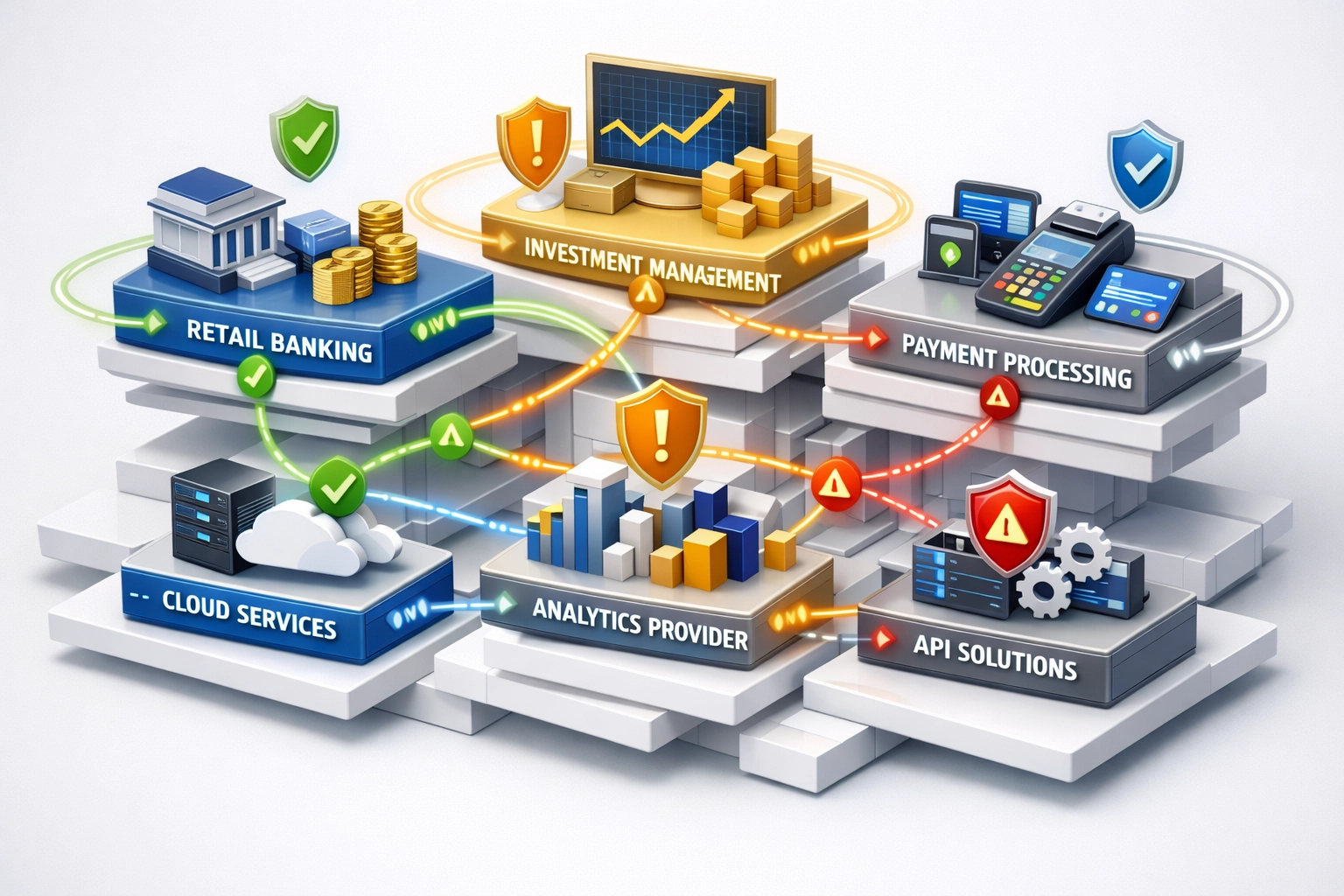
Real-Time Third-Party Risk Management DORA's third-party requirements are brutal. You need continuous monitoring of critical ICT providers, contractual compliance tracking, and audit trails. ServiceNow ITAM integrates with Vendor Risk Management (VRM) modules to create a single source of truth. When your ServiceNow implementation partner understands financial regulations, they configure these workflows to automatically flag non-compliant vendors before regulators do.
Incident Response and Recovery Time Objectives Articles 11-14 require documented incident management procedures with strict reporting timelines. ServiceNow's Event Management and Incident modules (ITOM capabilities) automatically correlate infrastructure events with business impact. The Washington DC release enhanced these capabilities with predictive AIOps: detecting anomalies before they become reportable incidents. This is the difference between reactive compliance and operational excellence.

Why Your ServiceNow Consulting Services Must Include Financial Regulatory Expertise
Here's the uncomfortable truth: most ServiceNow consulting services focus on technical implementation. They'll configure your CMDB, set up service catalogs, and deploy ITOM modules. But DORA compliance isn't a technical checkbox: it's a regulatory obligation with penalties up to €10 million or 5% of annual turnover.
I recently audited a major European bank that spent €2.3 million on ServiceNow implementation with a generalist partner. Their CMDB was technically sound, but it couldn't answer basic DORA questions: Which ICT assets support payment processing? What's our recovery time objective for each critical function? Which third-party providers have access to what data? The implementation was a technical success and a compliance failure.
What distinguishes a DORA-competent ServiceNow implementation partner:
Quick-Start Checklist: DORA-Ready ServiceNow ITAM Configuration
If you're reading this and realizing your ServiceNow instance isn't DORA-ready, here's your immediate action plan:
Phase 1: Asset Discovery and Classification (Weeks 1-2)
Deploy ServiceNow Discovery across all environments (on-premises, cloud, hybrid)
Tag all assets supporting critical business functions per DORA Article 6
Configure ITAM workflows to automatically classify ICT assets by criticality level
Integrate with identity management to track which personnel access critical systems
Phase 2: Third-Party Risk Framework (Weeks 3-4)
Import all ICT vendor contracts into ServiceNow VRM
Map vendor dependencies to business services using Service Mapping
Configure automated vendor compliance monitoring (SLA tracking, audit rights verification)
Establish concentration risk dashboards showing dependencies on critical providers
Phase 3: Incident Management and Reporting (Weeks 5-6)
Configure Event Management to correlate infrastructure events with business impact
Implement DORA-specific incident classification (major vs. significant cyber threats)
Automate incident reporting workflows with regulatory timeline tracking
Integrate with Security Operations for coordinated incident response
Phase 4: Resilience Testing and Validation (Weeks 7-8)
Document digital operational resilience testing programs in ServiceNow
Track testing schedules, results, and remediation actions
Configure Change Management integration to assess resilience impact of changes
Establish continuous validation workflows for recovery time objectives
Phase 5: Regulatory Reporting and Evidence Management (Ongoing)
Configure scheduled reporting for European Commission requirements
Automate Annual Register of Information data collection
Implement audit trail preservation for all compliance-relevant activities
Establish executive dashboards showing DORA compliance posture in real time
The Hidden Cost of the Wrong ServiceNow Partner
I recently completed a "rescue engagement" for a pan-European insurance provider. Their original ServiceNow implementation partner delivered a technically competent ITAM deployment: on time and under budget. But when internal audit tested DORA compliance, they found 47 critical gaps. The remediation cost exceeded the original implementation by 180%. And they're now racing to close those gaps before the January 2026 European Commission review.
This scenario is more common than you'd think. Generic ServiceNow implementation partners excel at technical deployment but lack the regulatory foresight that financial entities require. The result? You pass technical acceptance testing but fail regulatory scrutiny.
The Washington DC release introduced enhanced compliance frameworks specifically designed for regulated industries. Features like Risk Framework Automation and Integrated Risk Management connect ITAM data directly to compliance obligations. But these capabilities only deliver value when configured by ServiceNow consulting services that understand your regulatory context.

Beyond DORA: The Convergence of EU Financial Regulations
Here's what forward-thinking financial institutions understand: DORA isn't operating in isolation. It intersects with GDPR data protection requirements, ESG reporting obligations, and emerging AI governance frameworks. Your ServiceNow ITAM implementation should support all these regulatory demands simultaneously.
For example, GDPR Article 30 requires records of processing activities: data that overlaps significantly with DORA's ICT asset tracking requirements. When your ServiceNow implementation partner understands this convergence, they configure your ITAM instance to serve multiple compliance objectives. I've helped organizations reduce compliance costs by 40% through intelligent data architecture that supports DORA, GDPR, and ESG reporting from a single platform.
Similarly, the EU's upcoming AI Act will require detailed tracking of AI systems used in financial services. If your ServiceNow ITAM configuration already captures software assets, algorithms, and data dependencies for DORA compliance, you're already 70% prepared for AI Act obligations.
Your Next Steps: The 2026 ServiceNow ROI & License Audit
If you're questioning whether your current ServiceNow instance truly supports your DORA obligations: or wondering if you're over-licensed for your actual regulatory needs: it's time for objective validation.
I invite you to visit the SnowGeek Solutions contact page to share your project details. Our Free 2026 ServiceNow ROI & License Audit will assess:
Current DORA compliance coverage within your ServiceNow instance
ITAM configuration gaps that create regulatory exposure
License optimization opportunities (most organizations over-provision by 30-40%)
Implementation partner capabilities relative to EU financial regulatory requirements
Register with SnowGeek Solutions for platform updates and expert insights. The January 2026 European Commission review is coming: and the organizations that treat DORA as an ongoing operational discipline, not a completed checklist, will be the ones that thrive.
The question isn't whether you need a ServiceNow implementation partner who understands EU financial regulations. The question is: can you afford to work with one who doesn't?
Comments