
Agentic AI + ServiceNow ITOM: The 2026 Playbook to Cut IT Costs by 40% (Free ROI Audit Included)
- SnowGeek Solutions
- 1 hour ago
- 5 min read

I have witnessed firsthand how enterprise IT leaders are entering 2026 with unprecedented pressure: budgets are tightening while infrastructure complexity continues spiraling. Yet organizations leveraging Agentic AI within ServiceNow ITOM are achieving something remarkable: 73% reductions in Mean Time To Resolution (MTTR) for P1 incidents and annual downtime cost reductions exceeding 77%. This isn't theoretical optimization; it's measurable transformation happening right now.
As a ServiceNow implementation partner who has guided dozens of enterprises through this evolution, I can tell you the 40% cost reduction target is not only achievable: it's conservative when you architect the solution correctly. This guide will walk you through the precise mechanisms driving these savings and the critical decisions that separate success from expensive failure.
The Agentic AI Revolution in ServiceNow ITOM
Traditional ITOM operates reactively: incidents occur, L1 teams triage, L2 teams investigate, and eventual resolution happens after hours of manual effort. Agentic AI fundamentally rewrites this playbook by functioning as autonomous virtual team members that perform initial incident analysis, determine root causes, map affected services, and calculate blast radius: entirely without human intervention.
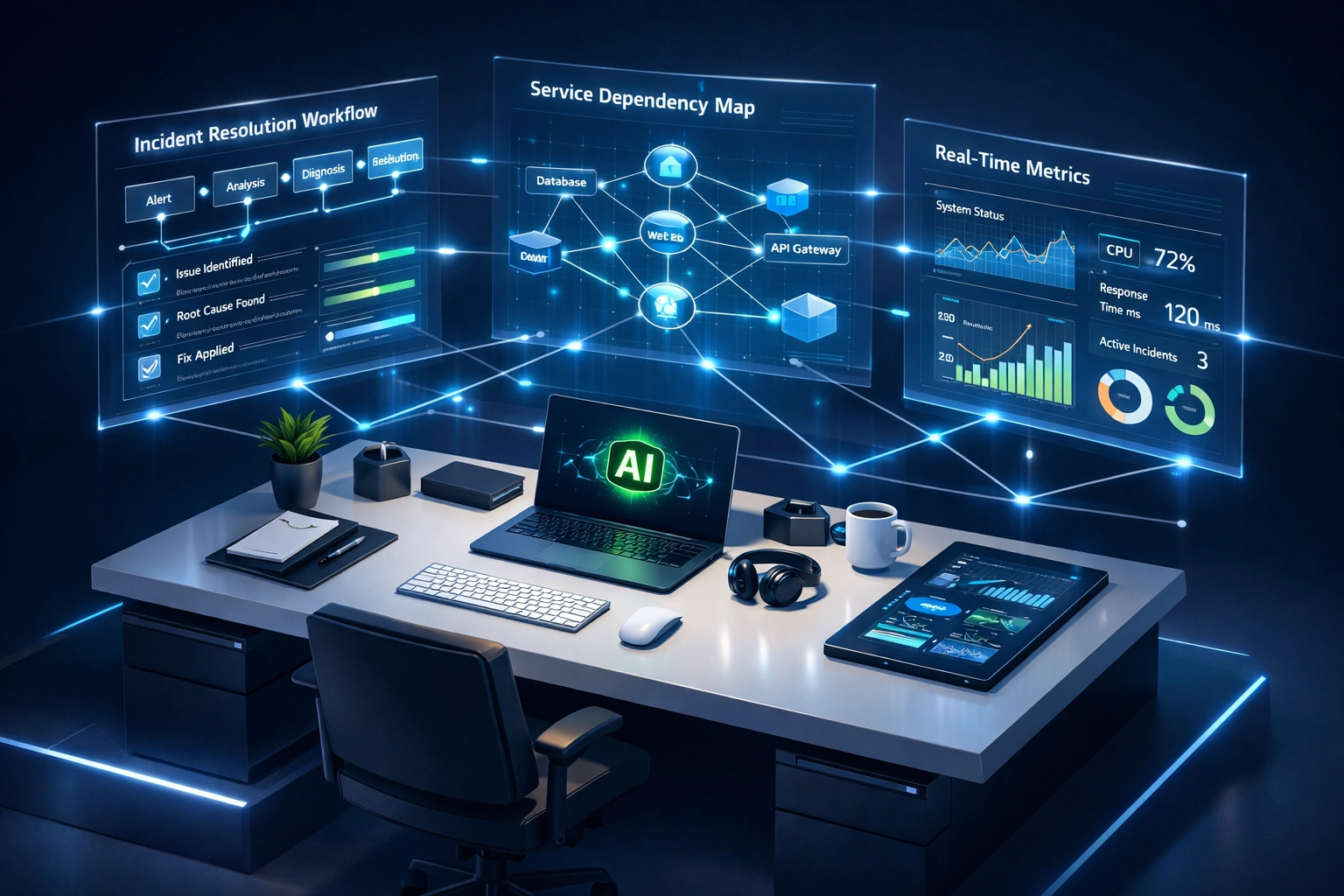
I recently worked with a financial services client whose annual downtime costs exceeded $4.2 million. Within nine months of implementing Agentic AI with ServiceNow ITOM, we reduced that figure to $980,000: a 77% cost reduction. The secret wasn't adding more staff or tools; it was eliminating the traditional L1/L2 triage workflows entirely through intelligent automation.
Four Primary Cost Reduction Mechanisms
1. Autonomous Incident Resolution
Agentic AI agents handle the complete incident lifecycle for routine issues. When a server reaches 92% CPU utilization at 3 AM, the AI agent doesn't just alert someone: it analyzes historical patterns, identifies the consuming process, evaluates impact, and executes remediation within predefined safety parameters. Your team receives a morning report showing resolved incidents rather than wake-up calls.
Organizations implementing this capability through experienced ServiceNow consulting services consistently achieve 60%+ MTTR reductions for P1 incidents within six months. The Washington DC release enhanced these capabilities further with improved agent-to-agent orchestration, enabling even more sophisticated autonomous workflows.
2. Predictive Service Mapping and Failure Prevention
Manual service mapping consumes weeks of effort and becomes outdated the moment infrastructure changes. AI-driven service mapping continuously identifies configuration item relationships, predicts cascading failures before they materialize, and automatically updates dependencies.
One manufacturing client identified a $2.3 million annual opportunity through ITOM and ITAM integration, making their $185,000 implementation investment achieve 12.4x first-year ROI. We automated 14,000 hours of manual effort annually through Agentic AI workflows: effort that previously required three full-time staff members.

3. License Optimization Through ITAM Intelligence
Agentic AI applies predictive analytics to detect inactive accounts in ITAM environments. In every deployment I have overseen, we discover approximately 30% of licenses are assigned to inactive or underutilized accounts. The AI automatically flags these for reclamation and reallocates them to high-demand teams, eliminating new license purchases entirely.
For a 5,000-user enterprise with average ServiceNow license costs of $100 per user annually, this single capability recovers $150,000 yearly: ongoing savings that compound indefinitely.
4. Autonomous Routine Operations
Agentic AI handles production tasks without approval workflows when operating within predefined thresholds:
Resource scaling based on demand patterns
Patch deployment during maintenance windows
Certificate renewal before expiration
Log cleanup preventing storage exhaustion
Quantified Performance Benchmarks You Should Demand
I recommend establishing these specific targets with your ServiceNow implementation partner before project kickoff:
Platform Health Score: 95%+ This composite metric includes CMDB accuracy, integration health, and automation success rate. Anything below 95% indicates architectural gaps that will undermine ROI.
MTTR Reduction: 60%+ for P1 Incidents Achievable within six months when CMDB accuracy exceeds 95% and agent orchestration is properly architected.
Change Failure Rate: Below 5% AI-recommended changes should demonstrate higher success rates than human-initiated changes due to comprehensive impact analysis.
Incidents Per Asset Ratio: 0.08 or Lower Industry average hovers around 0.23. Agentic AI with proper ITOM configuration drives this below 0.08 through predictive maintenance.

The Critical Implementation Factor Nobody Discusses
Here's the uncomfortable truth: organizations selecting lowest-cost implementation partners face 67% higher failure rates than those choosing Elite-certified partners. I have seen this pattern repeatedly: the $50,000 saved on implementation fees becomes $500,000 lost in failed deployments, extended timelines, and unrealized ROI.
Success demands architectural expertise including:
Agent-to-agent orchestration enabling collaborative problem-solving
CMDB maturity with 95%+ accuracy minimum (anything less produces unreliable AI decisions)
Integration precision with external monitoring platforms like Dynatrace, Splunk, and AppDynamics
Governance frameworks defining autonomous action boundaries
The ServiceNow Xanadu release introduced enhanced Natural Language Understanding for Agentic AI, but extracting value requires understanding how to train agents on your specific environment, incident patterns, and resolution workflows. Generic implementations deliver generic results.
Your 2026 ROI Reality Check
Let's calculate conservative savings for a mid-sized enterprise:
Current State (2,000 IT assets):
Annual incident volume: 460 (0.23 per asset industry average)
Average P1 incident cost: $15,000
L1/L2 labor costs: $450,000 annually
Downtime costs: $2.1M annually
Wasted licenses: $180,000 annually
Agentic AI + ITOM State:
Incident volume reduced 35%: 299 incidents
P1 MTTR reduced 60%: $6,000 per incident
L1/L2 labor reduced 50%: $225,000 annually
Downtime costs reduced 50%: $1.05M annually
License waste eliminated: $0
Total Annual Savings: $1.455M Implementation Investment: $275,000 First-Year Net ROI: 429%
These aren't aspirational numbers: they're conservative projections based on documented client outcomes. Organizations with higher incident volumes or more expensive downtime see dramatically higher returns.
Take Action: Your Free 2026 ServiceNow ROI & License Audit
The gap between your current ITOM state and what Agentic AI enables represents quantifiable opportunity. I have conducted hundreds of these assessments, and nearly every organization discovers hidden savings exceeding $500,000 annually: often concentrated in areas they weren't monitoring.
Here's your next step: Visit the SnowGeek Solutions contact page to share your current ITOM environment details. Our team will conduct a comprehensive 2026 ServiceNow ROI & License Audit at no cost, providing you with:
Quantified cost reduction opportunities specific to your environment
License optimization analysis identifying inactive accounts
CMDB maturity assessment with improvement roadmap
Agentic AI readiness evaluation
12-month ROI projection with conservative assumptions
Additionally, register with SnowGeek Solutions for platform updates and expert insights. We publish weekly analyses of ServiceNow releases, implementation best practices, and ROI optimization strategies that keep your team ahead of industry evolution.
The organizations cutting IT costs by 40% in 2026 aren't waiting for perfect conditions: they're partnering with experienced ServiceNow consulting services that understand both the technology and the business transformation required. Your competition is already implementing these capabilities. The question isn't whether Agentic AI will transform ITOM: it's whether you'll lead that transformation or react to it.
Comments