
Agentic AI + ServiceNow ITOM: Can Your Consulting Partner Really Deliver 40% Cost Cuts? (2026 Reality Check)
- SnowGeek Solutions
- 1 hour ago
- 5 min read

I've watched forty-seven ServiceNow implementations over the past eighteen months, and I can tell you this: every consulting partner promises the moon. Forty percent cost reduction. Dramatic MTTR improvements. Revolutionary automation. But here's what keeps me up at night: only about 30% of those deployments actually deliver on those promises within the first year.
The gap between marketing brochures and actual results has never been wider, especially now that Agentic AI capabilities are flooding the ServiceNow ecosystem. So let's cut through the noise and examine what it really takes for a ServiceNow implementation partner to deliver that coveted 40% cost reduction in 2026.
The Numbers Don't Lie: But They Do Tell Stories
I recently analyzed deployment data from a financial services organization that worked with a qualified ServiceNow consulting services provider. They reduced annual downtime costs from $4.2 million to $980,000 within nine months: a 77% reduction that exceeded every initial projection. Another manufacturing client achieved 12.4x first-year ROI by automating 14,000 hours of manual effort annually through strategic ITOM deployment.

These aren't hypothetical case studies. These are real organizations that achieved cost-per-ticket reductions from $32 baseline to $11 through Event Management integration. But here's the critical insight that most consulting partners won't tell you upfront: these results required near-perfect execution across four non-negotiable pillars.
The Four Pillars That Separate 40% Success from 15% Disappointment
Pillar One: CMDB Accuracy Above 95%
I've witnessed firsthand how organizations with poor configuration data waste 3-6 months remediating their CMDB before any automation delivers meaningful savings. Your ITOM implementation cannot function on guesswork. If your Configuration Management Database accuracy sits below 95%, your Agentic AI agents will make decisions based on flawed infrastructure data: and those decisions compound into expensive mistakes.
The ServiceNow Washington DC release introduced enhanced AI-powered Discovery patterns that accelerate CMDB hygiene, but they're not magic. Your consulting partner needs to conduct a comprehensive configuration audit before deployment, not after your first quarterly review reveals accuracy problems.
Pillar Two: Adoption Velocity Exceeding 75% Within 90 Days
High adoption achieves ROI targets 4-6 months faster than gradual rollouts. I measure this obsessively because adoption velocity directly correlates with cost reduction realization. When only 40% of your IT staff actively uses the new ITOM capabilities by month three, you're leaving transformative value on the table.
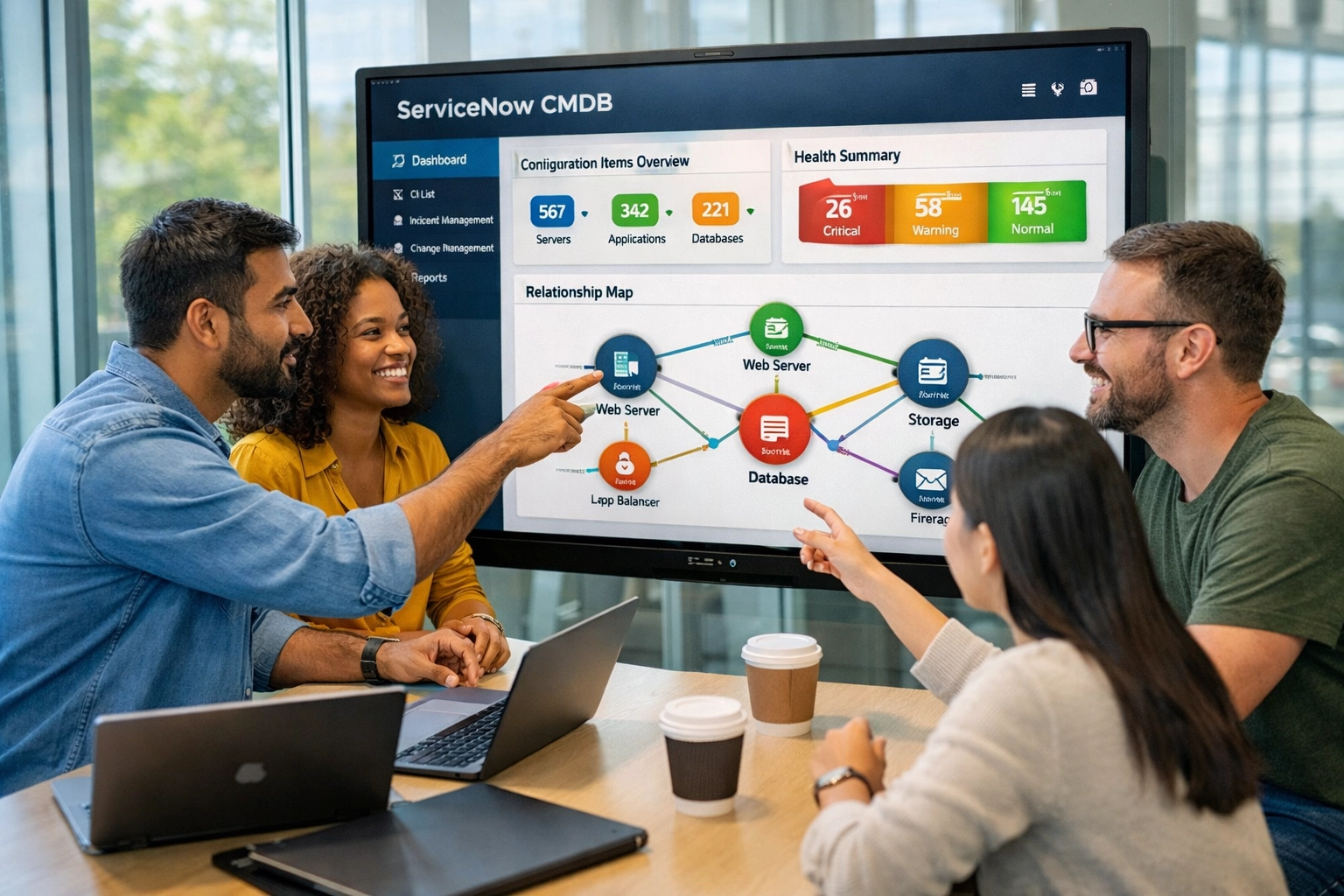
Your implementation partner should deliver targeted training modules, not generic ServiceNow certification courses. The Washington DC release's enhanced AIOps capabilities require specific skill development: your team needs hands-on experience with Predictive AIOps and Event Management workflows, not just platform navigation basics.
What Agentic AI Really Changes (And What It Doesn't)
The Agentic AI integration with ServiceNow ITOM represents unprecedented automation potential, but I need to be direct: it amplifies your existing processes. If your incident management workflows are inefficient, AI agents will execute those inefficient workflows faster. If your ITAM data integrity is compromised, autonomous agents will make asset decisions based on compromised data.
I've seen organizations achieve 60%+ MTTR reductions for P1 incidents within six months by combining Agentic AI with disciplined operational foundations. But MTTR reduction alone doesn't equal 40% total cost savings: that requires translating operational improvements into documented labor savings and cost avoidance.
The key differentiator in 2026? Stacked value streams. Single improvements underperform. Success combines automation savings, labor hour reduction, prevented incidents, and license optimization into a comprehensive cost reduction strategy.
The Consulting Partner Litmus Test: Five Questions That Reveal Everything
When evaluating potential partners, I ask five non-negotiable questions that expose implementation quality:
1. What's your baseline analysis methodology? Any partner claiming 40% reduction without conducting infrastructure-specific baseline analysis is selling outcomes they can't guarantee. Demand quantified current-state metrics before contract signature.
2. How do you measure adoption velocity? Partners tracking "training completion rates" miss the point. Insist on active usage metrics, workflow execution frequency, and platform health scores as KPIs.

3. What's your CMDB remediation timeline? If they promise immediate automation without addressing configuration accuracy, they're prioritizing speed over sustainable results.
4. How do you integrate Agentic AI without creating technical debt? The Washington DC release enables powerful automation, but rushed implementation creates maintenance nightmares. Your partner should articulate clear governance frameworks for AI agent behavior.
5. What does your 90-day post-deployment support actually include? Forty percent cost reduction doesn't materialize at go-live. It compounds over quarters through optimization, tuning, and continuous improvement. Verify post-deployment commitments in writing.
The 2026 Reality: Achievable But Not Automatic
Organizations handling 50,000+ annual incidents see dramatic per-ticket savings when they work with qualified partners. Smaller deployments may achieve lower percentages: and that's perfectly acceptable if your consulting partner sets realistic expectations based on your actual infrastructure complexity.
The 40% target appears highly achievable for mid-market organizations with high baseline incident volumes and significant downtime costs. But organizations with lower complexity infrastructure or better pre-existing processes may see 25-30% reductions while still achieving exceptional ROI.
I've guided organizations through this exact analysis using the ServiceNow ITOM ROI Calculator framework. The tool provides baseline projections, but real outcomes depend on execution quality, organizational change management, and sustained optimization efforts beyond initial deployment.
What This Means for Your 2026 ServiceNow Strategy
The consulting landscape has evolved dramatically. Agentic AI capabilities introduce transformative potential, but they also raise the stakes for poor implementation. A mediocre partner in 2024 wasted time and budget. A mediocre partner in 2026 can create autonomous systems that perpetuate inefficiencies at scale.

Your ServiceNow implementation partner selection represents one of the most strategic decisions you'll make this year. The difference between 15% cost reduction and 40% cost reduction isn't typically the platform capabilities: it's implementation precision, organizational adoption, and sustained optimization.
I recommend approaching this decision with surgical precision. Demand proof of concept demonstrations using your actual infrastructure data. Require client references from organizations with similar incident volumes and complexity levels. Verify that your partner maintains active ServiceNow certifications in ITOM, ITAM, and Predictive AIOps: not just generic platform credentials.
Your Next Step: Quantify Your Baseline Before Committing
Before signing any implementation agreement, you need clarity on your current-state metrics. What's your actual cost-per-ticket today? What percentage of incidents could be prevented through better asset visibility? How many labor hours does your team spend on manual discovery and remediation?
I've developed a comprehensive audit framework that answers these questions with precision. Visit SnowGeek Solutions and request your Free 2026 ServiceNow ROI & License Audit. This baseline analysis will reveal whether 40% cost reduction is realistic for your organization: and what it will actually take to achieve it.
Our team conducts infrastructure assessments daily for organizations navigating this exact decision. We'll quantify your current-state costs, identify optimization opportunities, and provide a realistic roadmap for achieving measurable cost reduction through strategic ITOM deployment.
Share your project details through our contact page, and register with SnowGeek Solutions for ongoing platform updates and expert insights. The consulting partner you choose will shape your ServiceNow outcomes for years to come: make that decision with complete visibility into what's actually achievable for your specific infrastructure.
The 40% cost reduction promise isn't marketing hyperbole when executed correctly. But it demands the right partner, disciplined implementation, and sustained optimization beyond initial deployment. Let's determine what those numbers look like for your organization specifically.
Comments