
Agentic AI in ServiceNow: Can Your Current Implementation Partner Deliver Real ROI? (Quick 3-Minute Check)
- SnowGeek Solutions
- Feb 16
- 5 min read

ServiceNow's March 2026 rollout of enhanced agentic AI capabilities: including the AI Agent Orchestrator and pre-built agents for Enterprise Plus customers at no additional cost: presents an unprecedented opportunity. Yet I have witnessed firsthand how organizations squander this potential by partnering with ServiceNow implementation partners who lack the strategic depth to deliver measurable returns.
The difference between a transformative deployment and a costly misstep often comes down to three critical questions. This guide will walk you through a quick assessment framework that separates partners capable of driving real ROI from those who will leave you with underutilized licenses and missed opportunities.
Why Your Partner Choice Matters More Than Ever
Agentic AI in ServiceNow represents a fundamental shift from traditional automation. Unlike scripted workflows, these autonomous agents make decisions, orchestrate across domains, and adapt to context: but only when your ServiceNow consulting services provider understands the architecture beneath the surface.
Early adopters like Rolls-Royce have already achieved streamlined operations and accelerated decision-making through strategic implementations. Meanwhile, organizations with poorly executed deployments report minimal time savings and governance headaches that erase any efficiency gains.
The stakes are straightforward: partners who grasp agentic AI orchestration, data fabric integration, and governance frameworks deliver 30-50% process time reductions. Those who treat it as another ITSM module waste your investment.

The 3-Minute Partner Capability Check
I've developed this rapid assessment based on hundreds of ServiceNow implementations across enterprise environments. Each question targets a capability gap that directly impacts your ROI timeline.
Question 1: Can They Articulate Your Agent Orchestration Strategy?
Ask your current ServiceNow implementation partner to describe how agentic AI will coordinate across your IT, HR, customer service, and security workflows: not in generic terms, but specific to your environment.
What to listen for:
References to AI Agent Orchestrator capabilities launching with the Washington DC release
Concrete use cases: incident resolution with ITOM context, service request fulfillment with ITAM validation, employee onboarding across HR and IT systems
Understanding of ServiceNow's Workflow Data Fabric for cross-platform orchestration
Discussion of agent handoffs and escalation patterns
Red flag: If they focus solely on chatbot functionality or describe agents as isolated automation tools, they're missing the orchestration layer that drives real efficiency gains. Effective agentic AI requires seamless coordination: a helpdesk agent must access ITAM data to validate asset availability before fulfilling requests, while ITOM agents need to trigger incident workflows when anomalies appear.
I have witnessed organizations achieve 40% faster incident resolution when partners design orchestration patterns that connect monitoring agents, asset databases, and knowledge management. Those who deploy siloed agents see minimal improvement because each interaction still requires manual coordination.

Question 2: Do They Have a Governance Framework Ready?
ServiceNow's AI Control Tower provides centralized policy enforcement, but only partners with governance expertise can configure it to protect your organization while enabling autonomy.
What to evaluate:
Specific policies for human-in-the-loop controls at critical decision points
Risk classification schemes for different agent actions
Audit trails and explainability requirements for compliance
Integration with your existing security and compliance frameworks
Green flag: Partners who discuss governance before deployment understand that agentic AI without guardrails creates liability. The best ServiceNow consulting services teams build approval workflows for high-impact actions, configure observation periods for new agents, and establish rollback procedures.
Organizations rushing to deploy without governance frameworks face two outcomes: either they severely restrict agent capabilities (negating ROI), or they expose themselves to unauthorized actions that damage operations and compliance posture.
Question 3: How Will They Ensure Data Readiness?
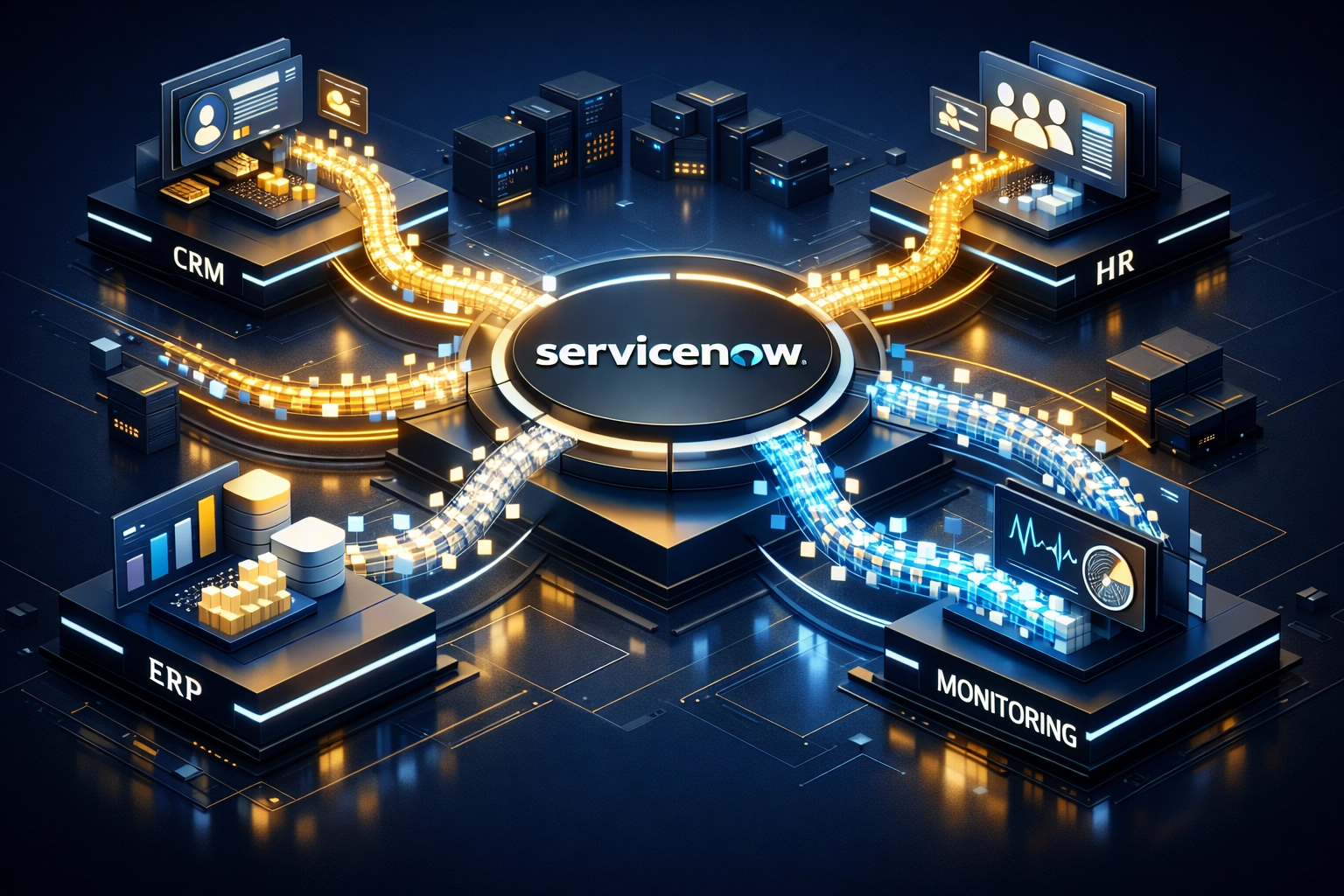
Agentic AI quality depends entirely on the data it accesses. Partners must demonstrate competence in integrating ServiceNow with your CRM, ERP, HR systems, and monitoring tools through Workflow Data Fabric.
Critical capabilities:
Assessment methodology for your current data landscape
Integration patterns for your specific technology stack
Data quality validation processes
Performance optimization for real-time agent queries
Red flag: Vague promises about "AI will figure it out" signal dangerous inexperience. I have seen implementations fail because partners assumed existing CMDB data was sufficient, only to discover outdated asset records and broken relationships that rendered agents unreliable.
The best partners conduct data readiness audits before proposing agent deployments. They identify gaps in your ITAM and ITOM data, remediate quality issues, and establish refresh processes that maintain agent accuracy over time.
Beyond the Basics: Strategic ROI Indicators
If your partner passes the three-minute check, these advanced indicators separate good from exceptional:
Modular Agent Design Philosophy
Top-tier partners avoid monolithic agent deployments. Instead, they identify high-value starting points: typically incident resolution, service request fulfillment, or employee onboarding: and build incrementally with clear ROI validation at each phase.
This approach delivers several advantages: faster time-to-value, easier troubleshooting, and the ability to prove ROI before expanding scope. Organizations that deploy comprehensive agent networks without phased validation often struggle to identify which components drive value and which consume resources without returns.
Cross-Functional Coordination Expertise
Agentic AI transcends traditional ServiceNow modules. Your ServiceNow implementation partner must coordinate with stakeholders across IT operations, HR, customer service, security, and finance to design agents that respect organizational boundaries while optimizing cross-functional workflows.
I have witnessed this capability make the difference between 15% efficiency gains and transformative 50% process time reductions. When agents can securely access data and trigger actions across domains: an IT incident agent that notifies finance about budget implications or an HR onboarding agent that provisions access through security systems: they eliminate the manual coordination that consumes the majority of process time.
Release-Specific Technical Depth
Partners delivering real ROI stay current with ServiceNow's rapid innovation cycle. They should articulate how Washington DC release features: specifically the enhanced AI Agent Orchestrator, expanded pre-built agents, and improved natural language understanding: will benefit your specific use cases.
Generic promises about "AI transformation" without release-specific details indicate surface-level understanding. The partners who maximize your investment know exactly which new capabilities apply to your environment and have deployment plans ready for March 2026 availability.

ROI Timeline Expectations
Based on implementations across diverse industries, here's what realistic ROI looks like with competent partners:
Months 1-3: Data readiness assessment, governance framework configuration, first agent deployment in controlled environment. Expect 10-15% efficiency gains in pilot workflows.
Months 4-6: Expanded agent deployment with orchestration patterns. ROI accelerates to 25-35% time reductions as agents begin coordinating across domains.
Months 7-12: Full orchestration network operational with continuous optimization. Organizations typically achieve 40-50% process time reductions while freeing staff for strategic initiatives that compound returns.
Partners who promise faster timelines often skip critical governance and data readiness steps. Those who propose longer timelines without clear phase gates may lack the technical depth to deploy efficiently.
Your Next Strategic Step
The difference between transformative agentic AI deployment and wasted investment comes down to partner capability. If your current ServiceNow implementation partner couldn't confidently address the three core questions above, you're at risk of underdelivering on ServiceNow's most significant capability advancement in years.
I encourage you to take two actions today:
First, visit the SnowGeek Solutions contact page to share your specific implementation requirements. Our team will conduct a complimentary capability assessment of your current partner relationship and identify gaps that could impact your agentic AI ROI.
Second, register for our Free 2026 ServiceNow ROI & License Audit. This comprehensive analysis evaluates your current platform utilization, identifies optimization opportunities with upcoming Washington DC release capabilities, and provides a roadmap for maximizing your ServiceNow investment through strategic agentic AI deployment.
The organizations that will dominate their industries over the next three years are those deploying agentic AI with strategic precision today. The question isn't whether to embrace these capabilities: March 2026 makes them available to every Enterprise Plus customer at no additional cost. The question is whether your partner has the depth to transform availability into measurable operational excellence.
Your ServiceNow consulting services provider should be your strategic advisor in this transformation, not merely a configuration resource. Make sure you're partnering with a team that can deliver the ROI your organization deserves.
Comments