
5 Steps to Choose a ServiceNow Implementation Partner That Actually Delivers ITAM ROI (2026 License Audit Template Inside)
- SnowGeek Solutions
- Feb 27
- 6 min read

I have witnessed firsthand how organizations invest six or seven figures in ServiceNow ITAM implementations only to discover twelve months later that they're still hemorrhaging budget on unused licenses, struggling with CMDB accuracy below 60%, and watching their ROI projections evaporate. The difference between transformative success and expensive failure almost always comes down to one critical decision: choosing the right ServiceNow implementation partner.
After consulting on dozens of ITAM deployments across healthcare, financial services, and enterprise manufacturing, I can tell you that generic ServiceNow knowledge simply does not translate to IT Asset Management success. This guide will walk you through the five essential steps to select a partner who will actually deliver measurable ITAM ROI: not just promises and PowerPoints.
Step 1: Define Strategic Requirements and Establish Your Baseline
Before evaluating a single ServiceNow consulting services provider, you must understand your current state with brutal honesty. I always begin client engagements with a comprehensive baseline assessment that reveals the truth about where you stand today.
Your baseline assessment should include three critical components:
License Utilization Analysis: The average organization carries $180,000 to $340,000 in preventable annual license waste from unused or misallocated subscriptions. I recently worked with a pharmaceutical company that discovered 427 Adobe Creative Cloud licenses assigned to employees who had never logged in. That's $171,000 annually evaporating into thin air.
CMDB Health Scoring: Your Configuration Management Database is the foundation of effective ITAM. If your CMDB accuracy sits below 85%, your asset management decisions are built on quicksand. Use ServiceNow's Health Scan capabilities from the Washington DC release to measure relationship mapping quality and identify data integrity gaps.
Operational Efficiency Benchmarking: Document current metrics across your Asset Management processes: time to provision new assets, license reconciliation cycle times, audit preparation duration, and compliance exception rates.

This baseline serves three strategic purposes: it enables meaningful ROI projections grounded in your actual current state, provides objective criteria for comparing partner proposals, and reveals quick wins that can help fund your implementation. When you can demonstrate that optimizing software licenses will recover $200,000 annually, securing budget approval becomes significantly easier.
Step 2: Demand ITAM-Specific Expertise and Certifications
Generic ServiceNow implementation experience does not equal ITAM competency. I cannot emphasize this enough. The partner who successfully deployed ITSM incident management may be completely unprepared for the complexities of Hardware Asset Management lifecycle optimization, software license compliance, and contract management integration.
When evaluating potential partners, require them to demonstrate these specific qualifications:
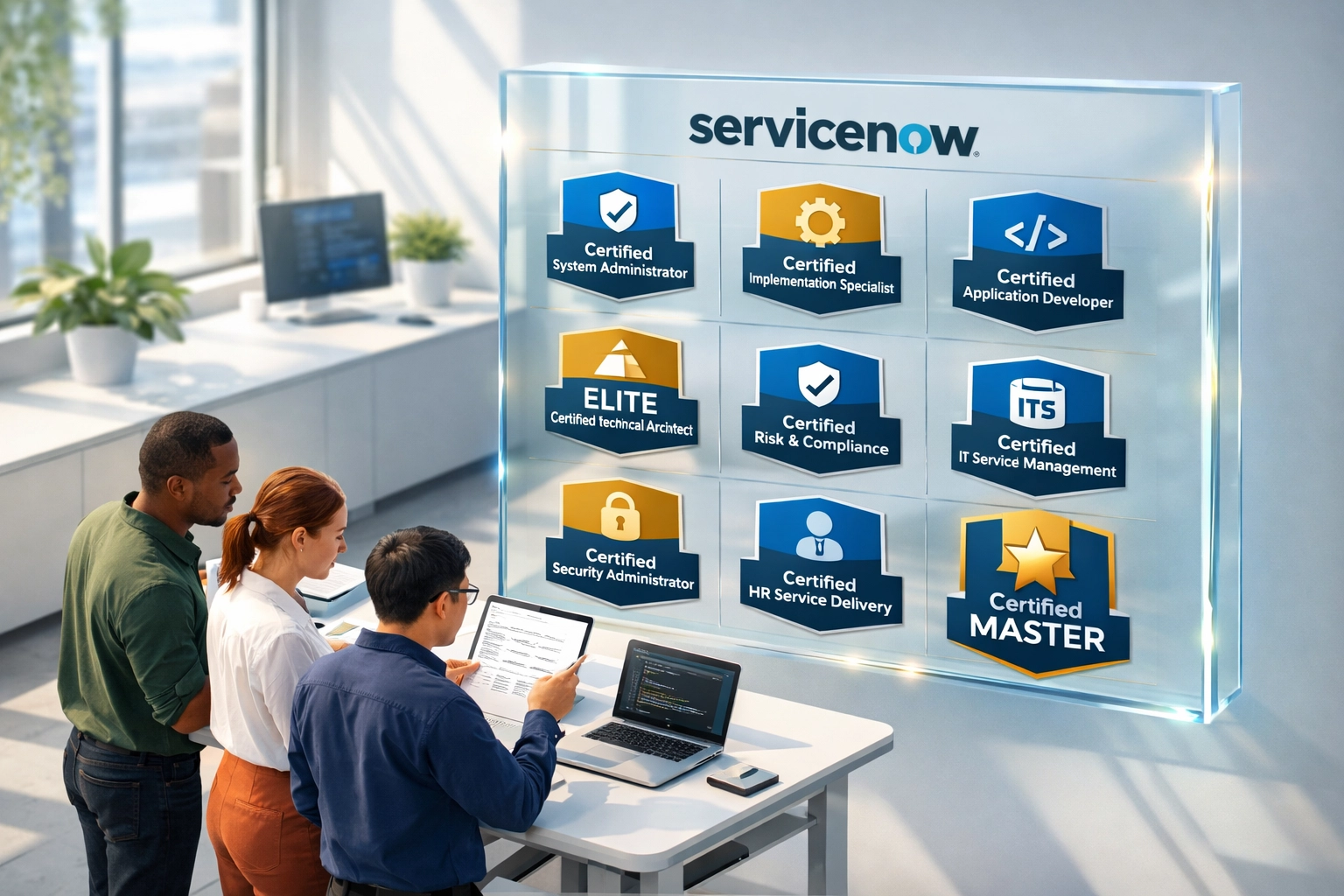
Certified Implementation Specialists (CIS) in IT Asset Management: Ask exactly how many active CIS-ITAM certified professionals will work on your implementation team: not how many the firm employs globally, but how many will actually touch your project. I recommend a minimum of two dedicated CIS-ITAM resources for enterprise deployments.
Proven ITOM Integration Experience: ITAM and ITOM (IT Operations Management) must work together seamlessly. Your partner should demonstrate expertise in integrating Discovery, Service Mapping, and Cloud Management with your ITAM implementation to ensure accurate asset visibility across hybrid environments.
Ask these essential questions during partner evaluation:
What's your average CMDB accuracy rate six months post-implementation?
Demonstrate your methodology for Hardware Asset Management optimization and license compliance
How do you leverage ServiceNow's AI-powered license optimization capabilities introduced in the Xanadu release?
Show me three examples where you reduced Total Cost of Ownership by optimizing the software asset lifecycle
Partners unable to answer these questions with specific data and documented case studies should be immediately eliminated from consideration.
Step 3: Build a Cross-Functional Evaluation Committee
Procurement-driven partner selection without cross-functional input consistently produces failed implementations. I have seen it repeatedly: when IT Operations doesn't have a voice in partner selection, you end up with solutions that look impressive in demos but crumble under real-world workflow demands.
Your evaluation committee must include:
IT Operations Leaders: They understand how asset management integrates with incident, problem, and change management processes. Their input ensures the solution supports operational excellence rather than creating additional friction.
Asset Management Professionals: These stakeholders focus on license optimization, compliance risk, and cost control. They can evaluate whether a partner truly understands software asset management complexities versus surface-level knowledge.
Security Teams: With GDPR, DORA, and expanding regulatory requirements across the EU market, your ITAM implementation must support compliance objectives. Security professionals ensure asset tracking meets audit requirements and vulnerability management integration.
Finance Stakeholders: CFO organizations care about one thing: measurable ROI. Finance representatives keep evaluation criteria focused on cost optimization, contract management efficiency, and budget predictability.
When ServiceNow implementation partners demonstrate relevant use cases to each stakeholder group during evaluation, user adoption rates increase by 40% and time-to-value accelerates by 35%. This cross-functional buy-in is not optional: it's the foundation of sustainable success.
Step 4: Verify Industry-Specific Experience and Track Record
Healthcare organizations managing medical device assets face completely different challenges than financial services firms tracking trading floor technology or manufacturers optimizing OT/IT convergence. Generic consulting approaches fail because they ignore these critical industry nuances.
Your ServiceNow implementation partner must demonstrate:
Relevant Industry Certifications: For healthcare, look for HIPAA compliance expertise and understanding of FDA-regulated medical device tracking. Financial services require knowledge of SOX controls and regulatory audit requirements. Manufacturing demands expertise in IoT asset management and operational technology integration.
Documented Case Studies: Require at least three case studies from organizations in your industry vertical with similar complexity and scale. I always ask partners to explain specific challenges they encountered in those implementations and how they resolved them. Surface-level answers indicate thin experience.
Pre-Built Industry Accelerators: Industry-specialized partners develop reusable components: workflow templates, compliance reporting dashboards, and integration patterns: that dramatically reduce implementation time. These accelerators should align with your sector's operational reality from day one.

Industry-specialized partners reduce implementation time by 30%, improve user adoption by 45%, and deliver solutions that don't require extensive customization post-go-live. This translates directly to faster ROI realization and lower Total Cost of Ownership.
Step 5: Assess Partner Capacity, Competency, and Customer Success Metrics
The final evaluation step demands rigorous assessment across four dimensions:
Capacity: How many ServiceNow-certified employees does the partner maintain on staff? Small boutique firms may provide personalized attention but lack resources to scale if your implementation grows in scope. Large SIs offer deep benches but may assign junior resources to your project while showcasing senior talent during sales cycles.
Competency: Beyond base certifications, evaluate workflow certifications, solution certifications, and digital badging achievements. ServiceNow's partner tiering system provides useful guidance, but dig deeper into specific technical competencies aligned with your requirements.
Customer Success Metrics: Request the partner's average customer satisfaction scores from ServiceNow's surveyed metrics. Ask for client references from implementations completed in the past twelve months: not cherry-picked success stories from three years ago. I always contact at least three references and ask identical questions to identify patterns.
Capability Assessment: Beyond credentials, evaluate the partner's quality-based assessment of industry-specific experience and digital transformation skills. Ask them to describe a past implementation where user adoption started below 40% at go-live, how they diagnosed root causes, and how they improved adoption to acceptable levels. Partners unable to answer have not managed real-world adoption challenges.
Additionally, assess the partner's approach to change management, training methodology, and post-implementation support. The best technical implementation fails without effective user enablement and organizational change management.
The 2026 License Audit Template That Reveals Hidden ROI
As you evaluate ServiceNow consulting services providers, use our comprehensive 2026 ServiceNow ROI & License Audit template to quantify exactly where you're losing money today and what recovery opportunities exist. This audit template examines:
Software license utilization across all enterprise applications
Hardware asset lifecycle efficiency and replacement cost optimization
Contract management effectiveness and vendor consolidation opportunities
CMDB accuracy impact on operational decision-making
Compliance risk exposure and audit preparation costs
Organizations using this template before partner selection report 60% more accurate ROI projections and significantly better alignment between partner proposals and actual business outcomes.

Your Next Steps Toward ITAM Excellence
Choosing the right ServiceNow implementation partner represents one of the most consequential decisions in your digital transformation journey. The difference between a partner who simply implements software and one who drives measurable business value determines whether your ITAM investment becomes a competitive advantage or an expensive disappointment.
I have guided dozens of organizations through this selection process, and the pattern is consistent: companies that follow these five steps methodically achieve 40-50% higher user adoption rates, realize ROI 6-8 months faster, and maintain significantly healthier platform instances long-term.
Ready to make an informed partner selection decision grounded in data rather than sales presentations? Visit the SnowGeek Solutions contact page to share your project details and receive your complimentary 2026 ServiceNow ROI & License Audit. Our team will conduct a comprehensive baseline assessment that reveals exactly where you're losing money today and quantifies the recovery opportunities available through optimized ITAM implementation.
Additionally, register with SnowGeek Solutions for platform updates and expert insights delivered directly to your inbox. Stay ahead of ServiceNow release innovations, regulatory compliance requirements, and implementation best practices that drive operational excellence.
Your ITAM transformation starts with one critical decision. Choose your ServiceNow implementation partner wisely, and the ROI will follow.
Comments